/Dining · Rome
Hostaria Isidoro al Colosseo: Authentic Roman Cooking Since 1960, Two Steps from the Colosseum
A family hostaria in a former seventeenth-century convent on the old papal road.
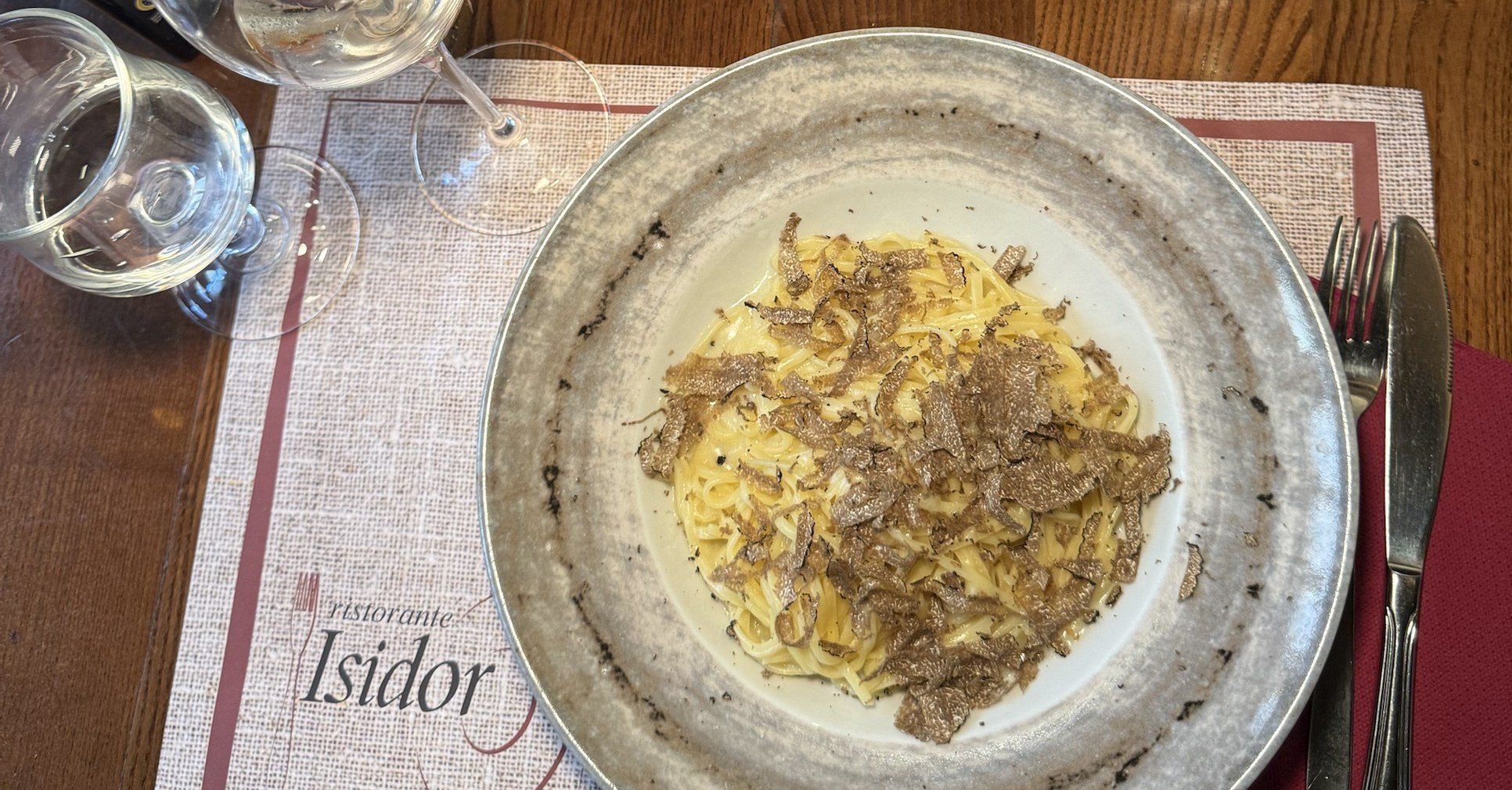
Pasta made every morning, artichokes fried to order and tagliolini under a blanket of black truffle. We sat in its stone corner for a long lunch.
By Alex Tugender · Mandale Luxury Magazine
Quick answer
Hostaria Isidoro al Colosseo (Via di San Giovanni in Laterano 59/A, Rome) is a family-run Roman hostaria open since 1960, set in part of a former seventeenth-century convent two minutes from the Colosseum. Fresh pasta is made in house daily, fish arrives from Anzio, and the “assaggini” let a table taste two to ten first courses. Order the tagliolini al tartufo nero, the frittura with parsley mayonnaise and the carciofi; book by phone (+39 06 7008266) or OpenTable.
There is a particular silence that falls on a table in Rome when the pasta arrives. It happened to us at Hostaria Isidoro al Colosseo a little after one in the afternoon, when a plate of house-made tagliolini came out from the kitchen under a dark blanket of grated truffle and the conversation simply stopped. Nobody reached for a phone. Nobody said anything clever. The fork went in, the strands lifted, and the room, with its walls of rough tufa stone and its brick vault, did what Roman rooms have done for centuries: it made the moment feel older and more permanent than it was.
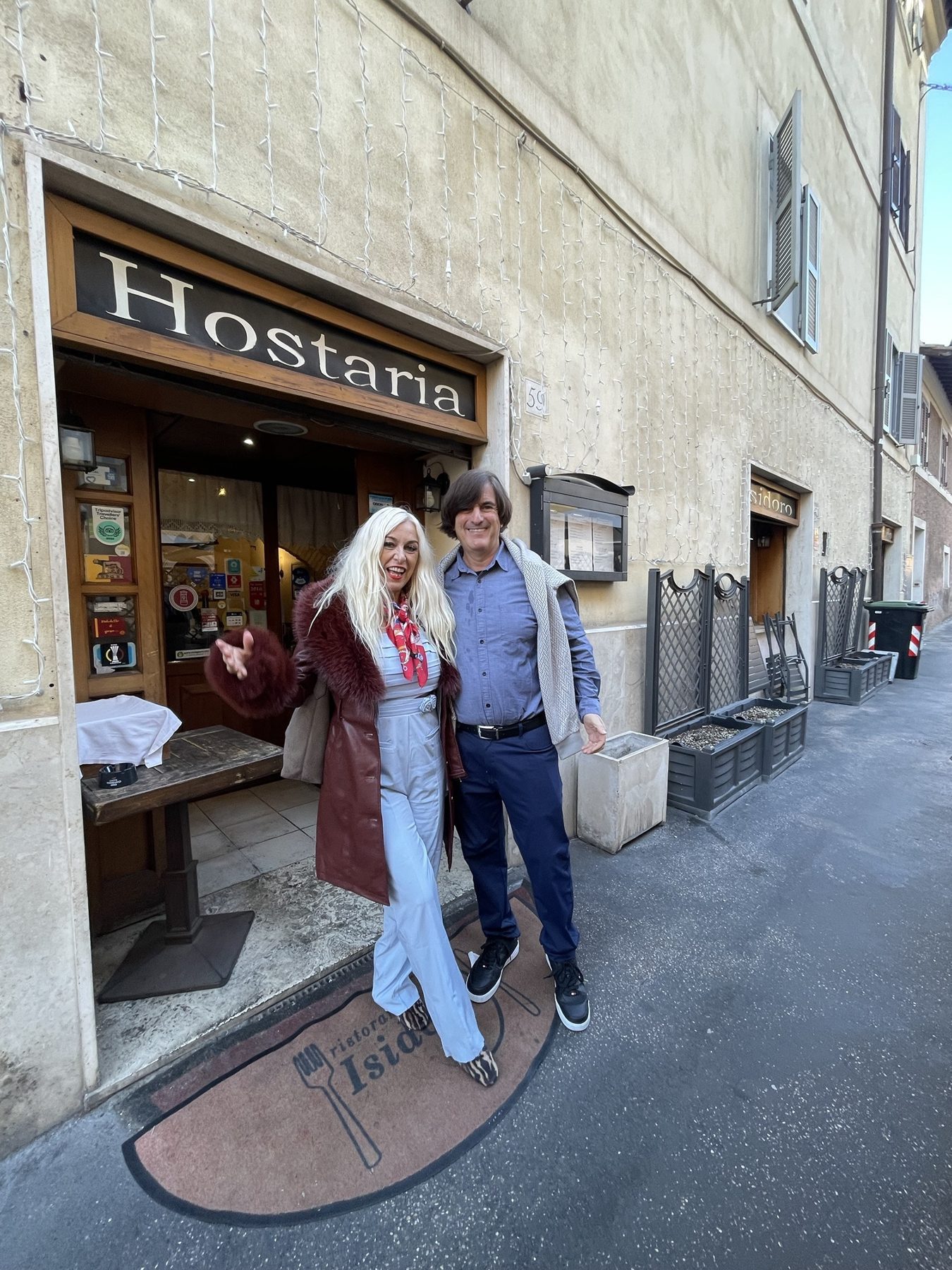
Hostaria Isidoro sits at number 59 on Via di San Giovanni in Laterano, in the rione Monti where it meets the Celio, a two-minute walk from the Colosseum. The Instagram bio says it in four lines: authentic Roman cooking since 1960, a selected cellar, pasta made in house, two steps from the Colosseum. All four claims survived our lunch.
What Is the Story Behind Via di San Giovanni in Laterano?
The street outside the door is one of the oldest ceremonial routes in the city. Romans call it the Stradone di San Giovanni, and it was the final stretch of the Via Papalis, the road along which a newly elected pope processed from Saint Peter’s to the Lateran Basilica to take formal possession of Rome as its bishop. Until the late fourteenth century it was narrow, winding and almost deserted; Pope Urban VI had to grant privileges to persuade anyone to live on it. In 1588 Sixtus V, the great straightener of Roman streets, widened and paved it so that it ran in a single clean line from the Colosseum to the Lateran. He imagined extending it all the way to the Capitoline and, by a new bridge, to Saint Peter’s. Only this stretch was ever built.
After Sixtus, the road filled with churches, hospices and the villas of curial officials, which is why its older names include Via Santa, Via Maestra, Via Papale and Via Maggiore. Fragments of that world are still standing between the trattorias and the souvenir shops: the seventeenth-century Casino Fini at number 10, the late Baroque facade of Santa Maria delle Lauretane at number 33, rebuilt by Giuseppe Sardi in 1739, a small eighteenth-century oil painting of the Immaculate Conception in an oval frame near number 55, and the nineteenth-century Oratorio del Preziosissimo Sangue at number 71. The dining room at Isidoro belongs to this same layer of history: the restaurant occupies part of a building that was once a seventeenth-century convent, and the exposed brick and stone you eat against were not installed by a designer.
A Family Hostaria in a Former Convent
Isidoro has been feeding this corner of Rome for more than sixty years. It began in the Celio and later moved, within the same rione, to its present home in the old convent building, where the low vaults, the window grilles and the wooden bottle rack set the tone before a single dish is served. Today it is run by the Muscianesi brothers, a young generation who treat the hostaria not as an inheritance to be modernised but as a tradition to be kept honest.
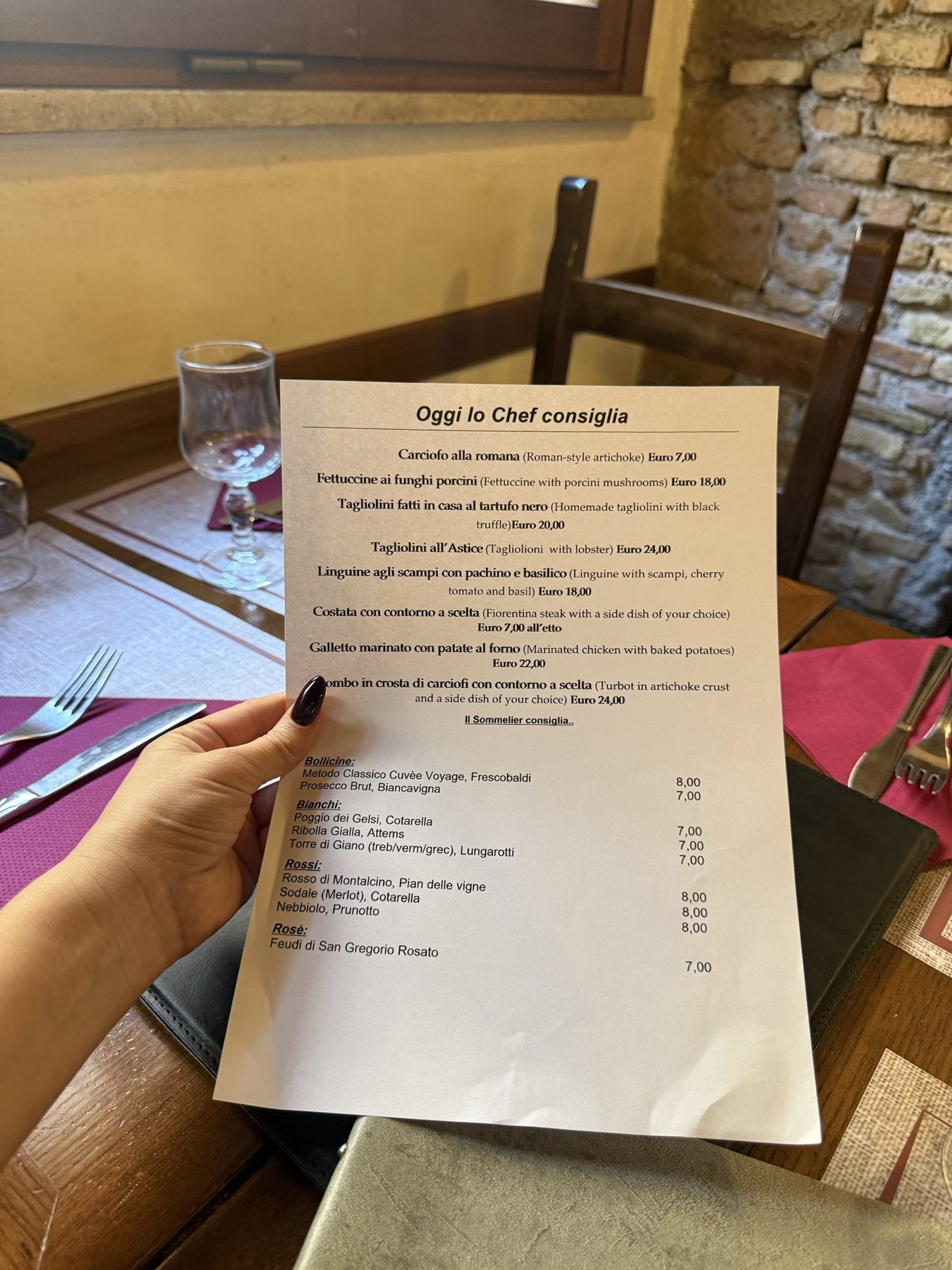
The discipline shows in the kitchen rather than in the decor. Fresh pasta is made every day. Fish arrives daily from Anzio, on the coast south of Rome, with raw seafood coming up from Sicily. The classic Roman primi are all here, tonnarelli cacio e pepe with pecorino romano DOP, pici all’amatriciana with guanciale from Amatrice, carbonara, saltimbocca alla romana among the secondi, a chef’s sheet that changes with the market (the day we visited: carciofo alla romana, fettuccine ai funghi porcini, tagliolini all’astice, turbot in an artichoke crust), and the house has built a small reputation on its “assaggini”, tasting portions of the first courses that let a table work through anywhere from two to ten pastas in one sitting, fish versions included. Desserts are made in house each morning, and the cellar holds a selection of Italian labels with a bias toward Lazio.
A plate of house-made tagliolini came out under a dark blanket of black truffle, and the conversation simply stopped.
What We Ate
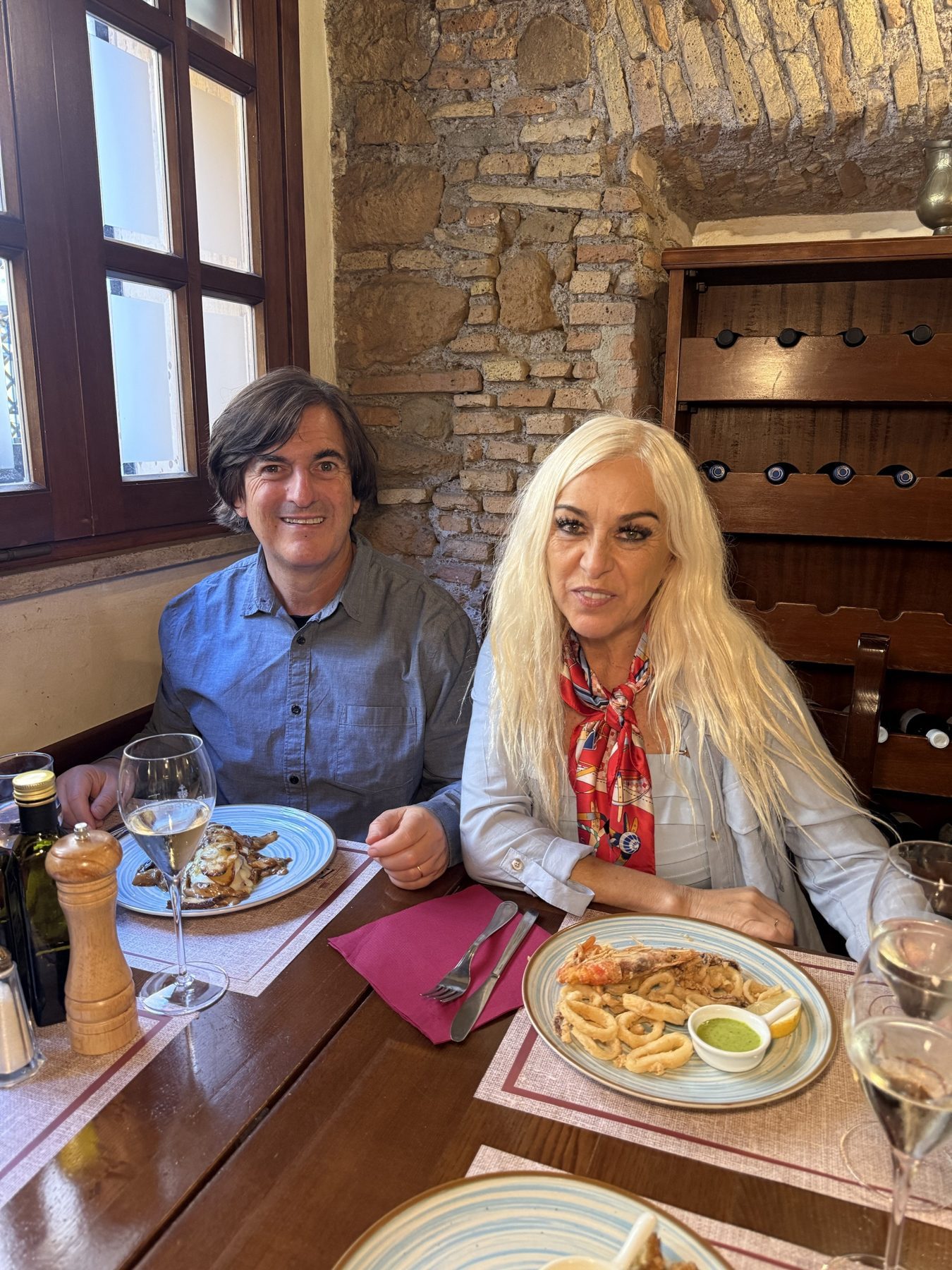
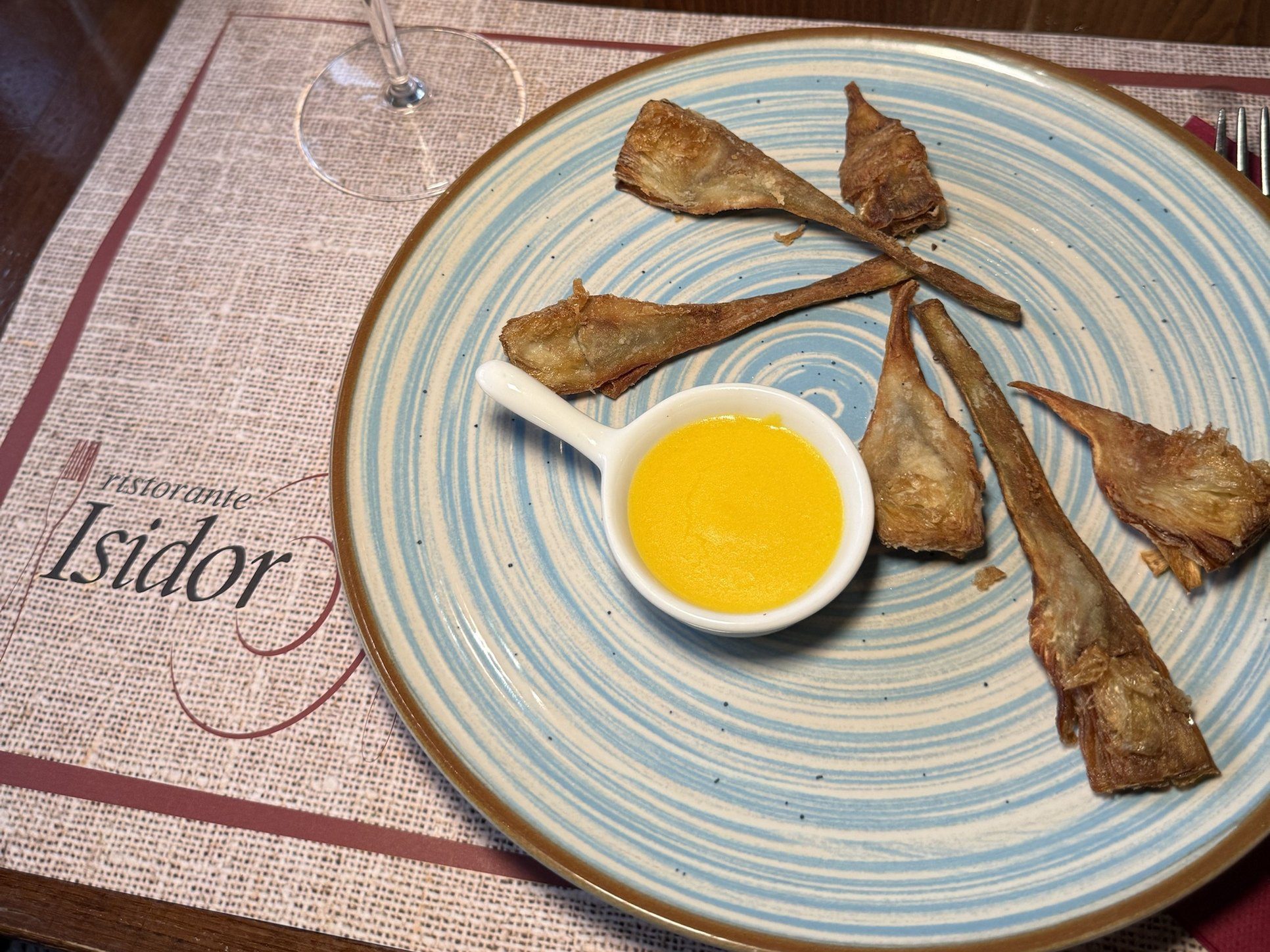
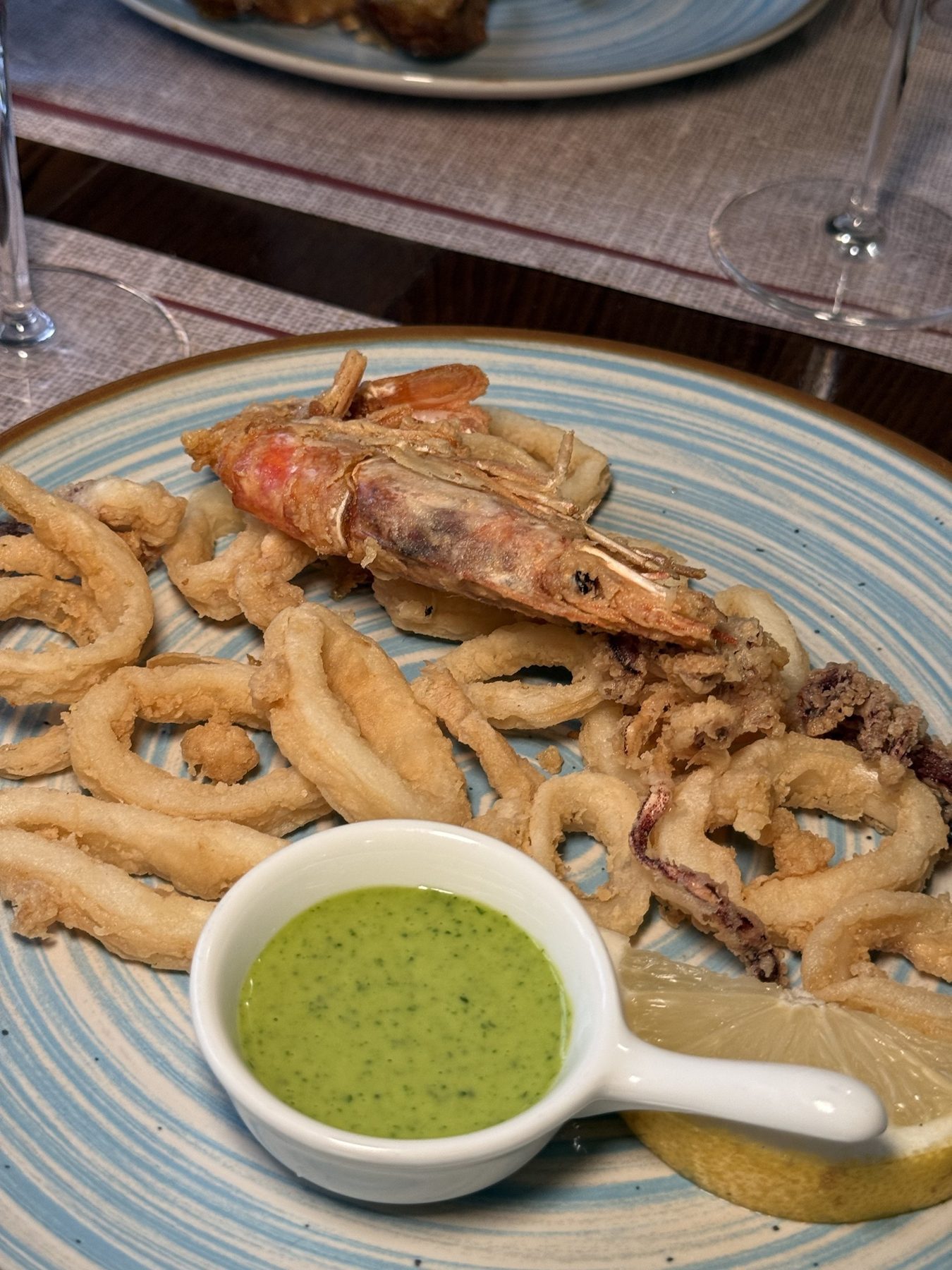
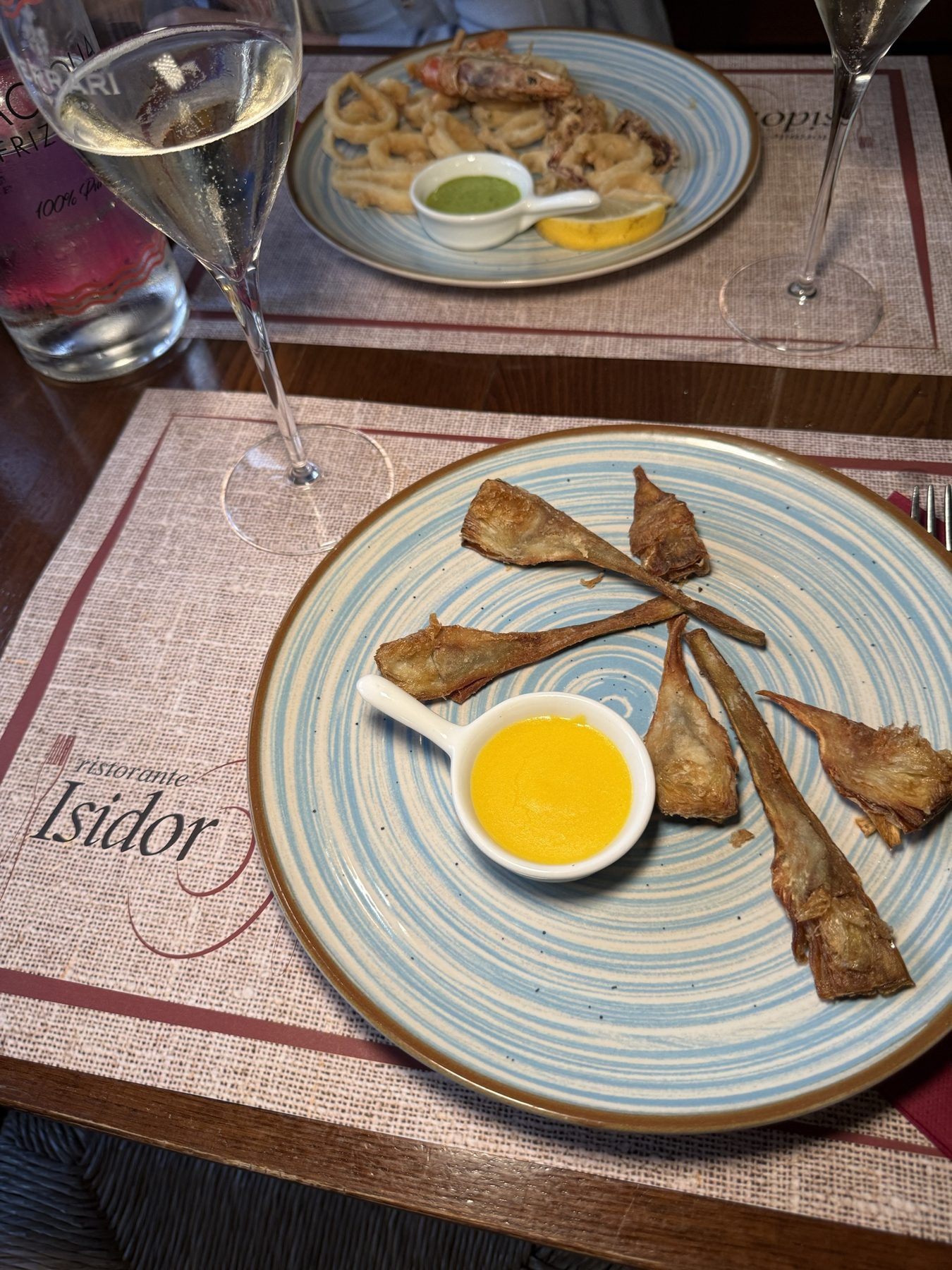
We began with the fritti, because in Rome one does. The frittura di calamari e gamberoni, fried calamari rings and a red prawn fried whole in its shell, arrived with a wedge of lemon and a small cup of bright green parsley mayonnaise, the house’s own twist on the Roman fritto. The batter was thin and dry, the squid tender under it, and the prawn, eaten head and all, tasted of the sea it had left that morning. Beside it came carciofi fritti, Roman artichokes cut into long wedges and fried until the leaves turned to crisp amber, served with a warm yellow sauce for dipping. It is a dish that only works when the artichokes are good, and these were.
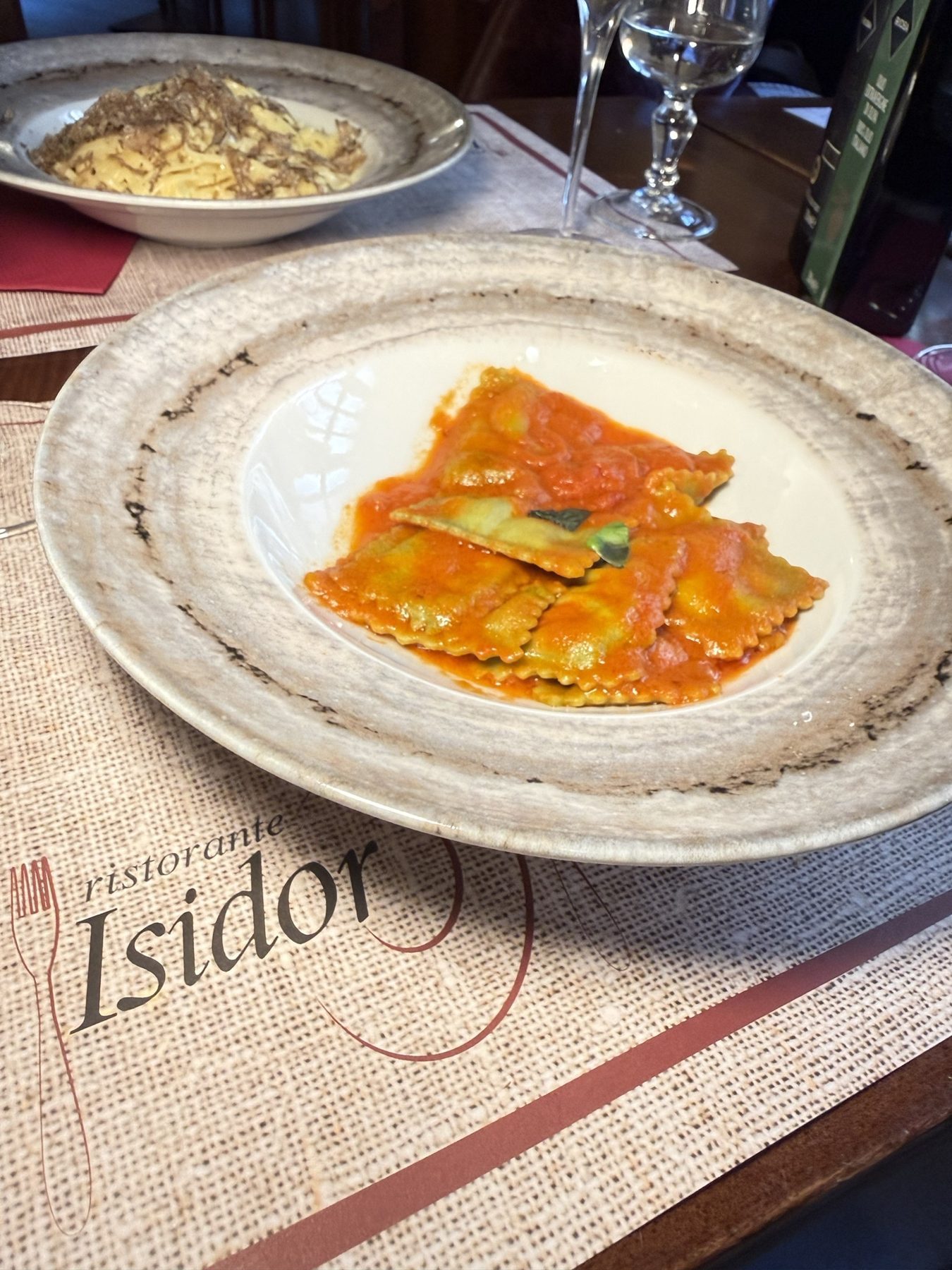
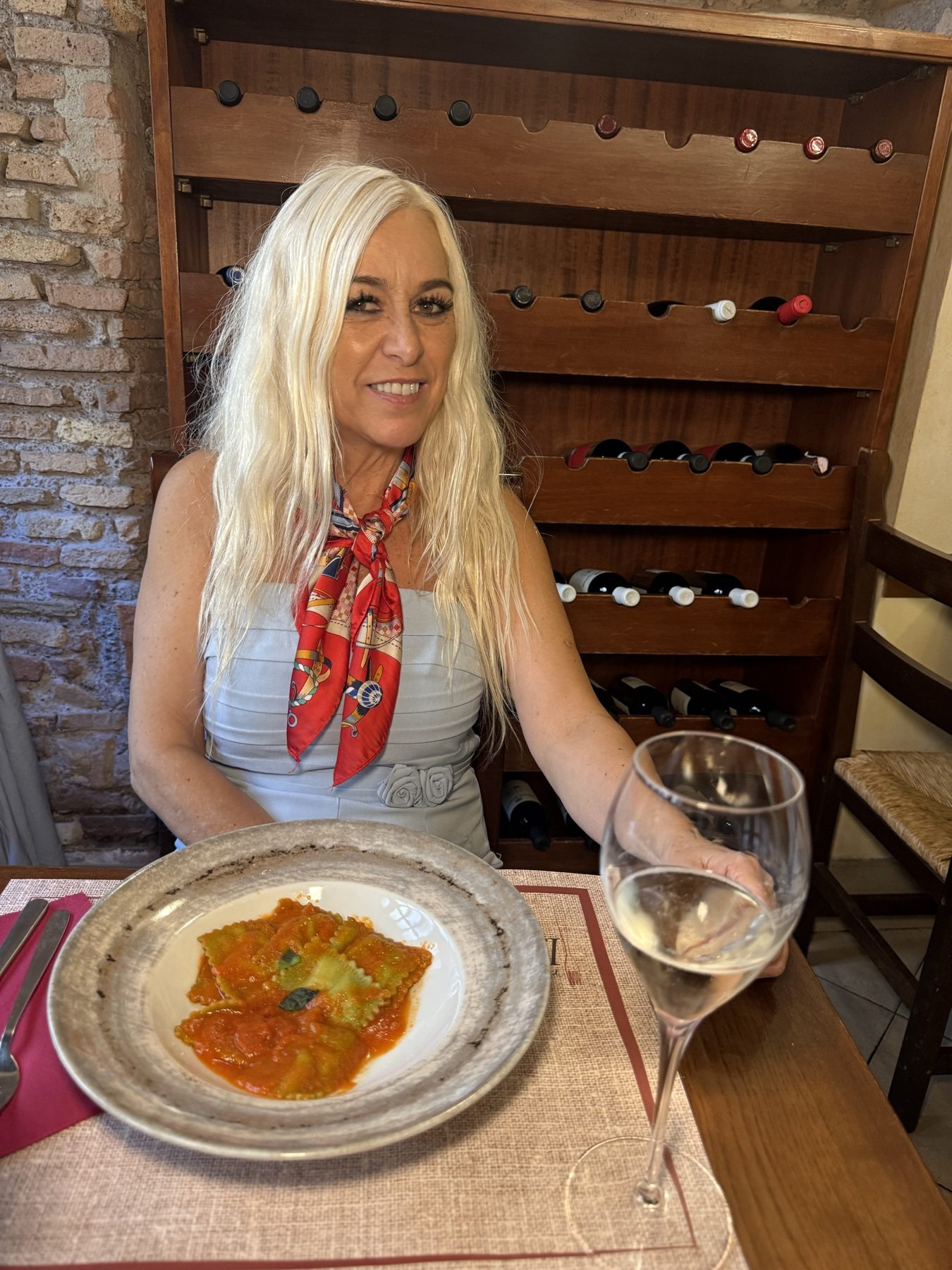
Then the pasta. The tagliolini fatti in casa al tartufo nero, on the chef’s daily sheet at twenty euros, is the plate we will remember from this trip: thin ribbons of fresh egg pasta turned in butter and cheese and then buried, generously, under shaved black truffle until the pasta all but disappeared. It is not a subtle dish and does not pretend to be. The second primo was a plate of green spinach ravioli, their edges crimped by hand, in a sweet, slow tomato sauce finished with a leaf of basil. Where the tagliolini were all perfume, the ravioli were comfort, the kind of dish a Roman grandmother would put in front of you without asking whether you were hungry. The waiter came back with a bowl of grated pecorino and finished the plate at the table, which is how it should be done.
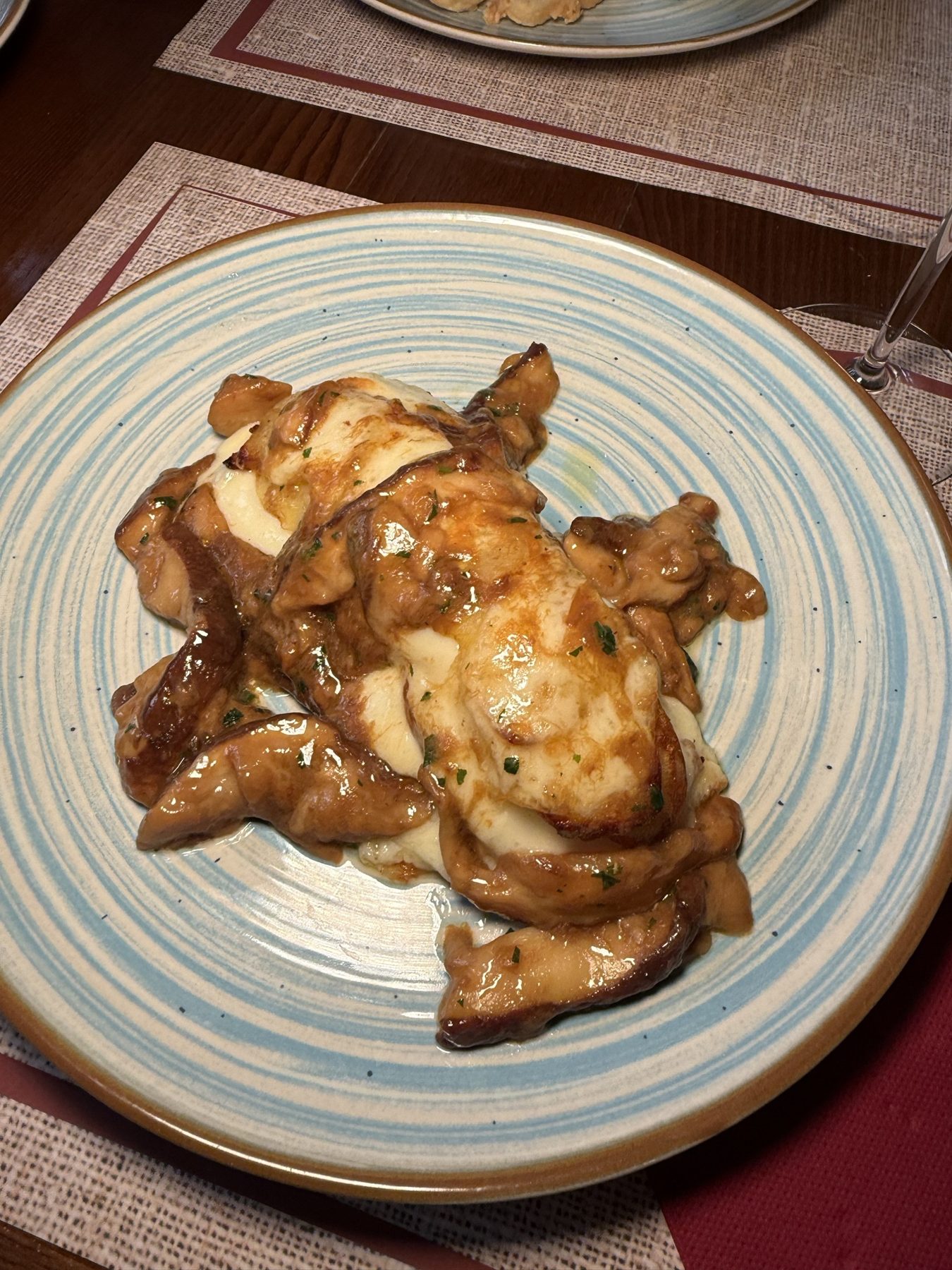
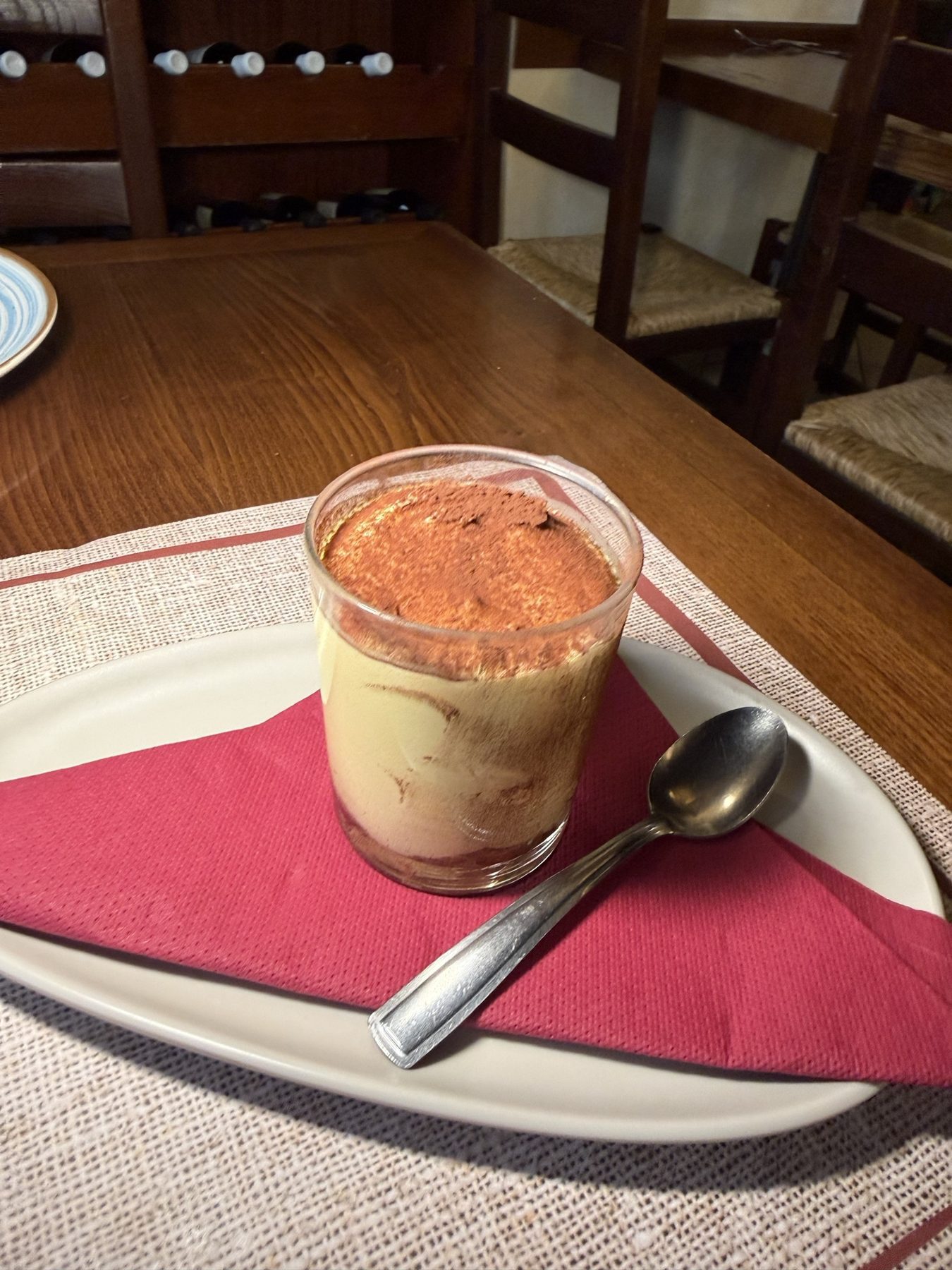
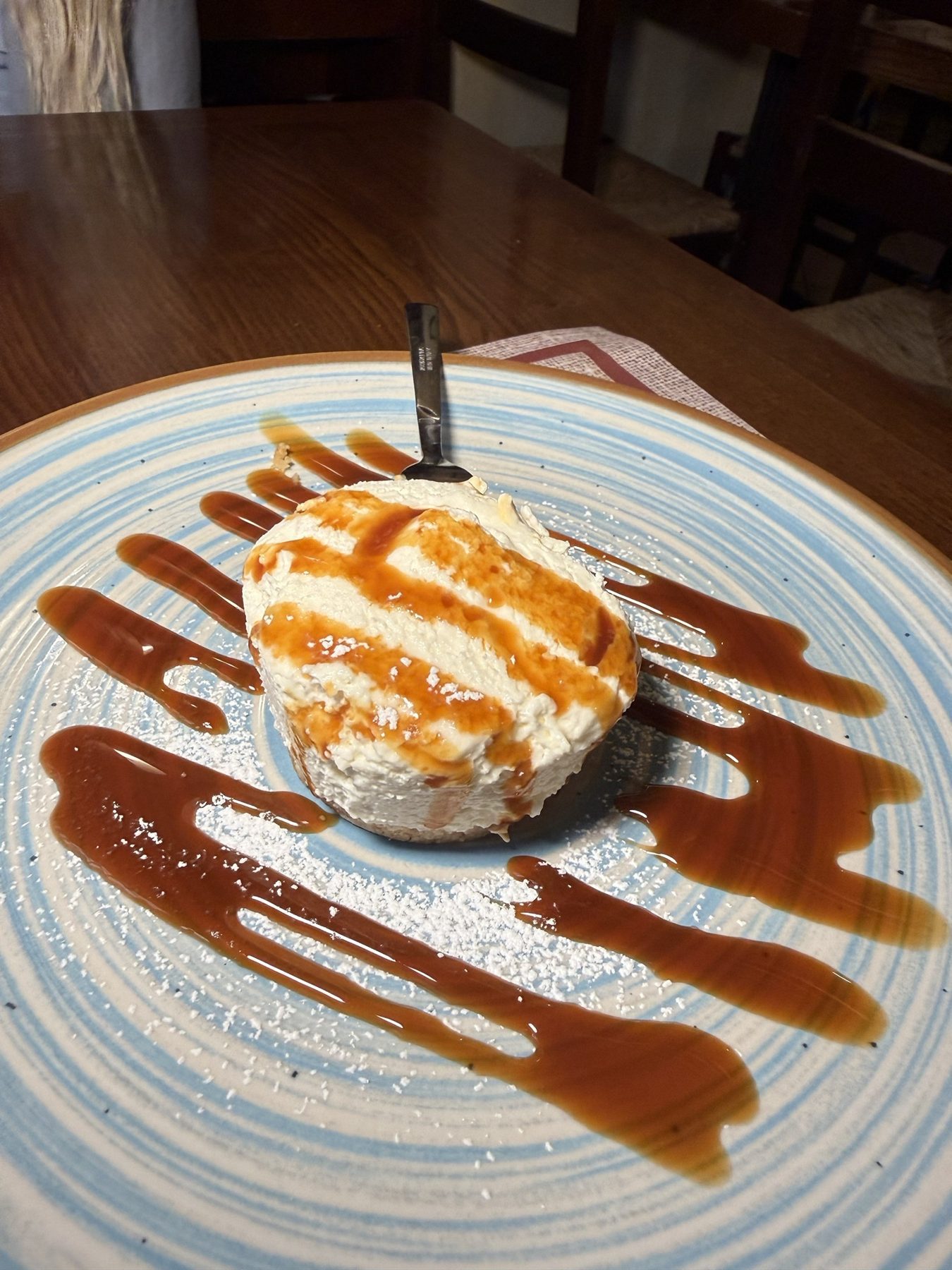
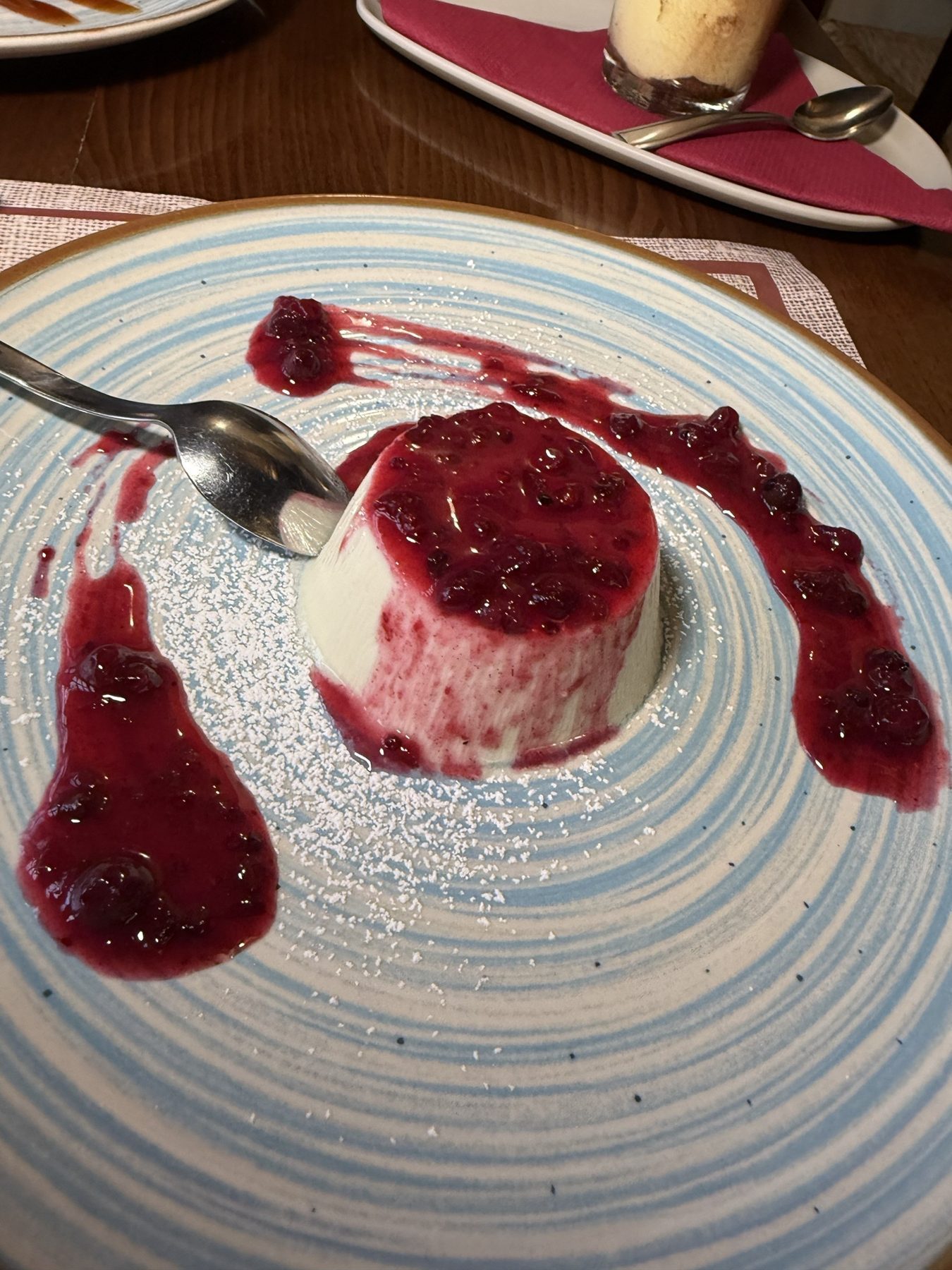
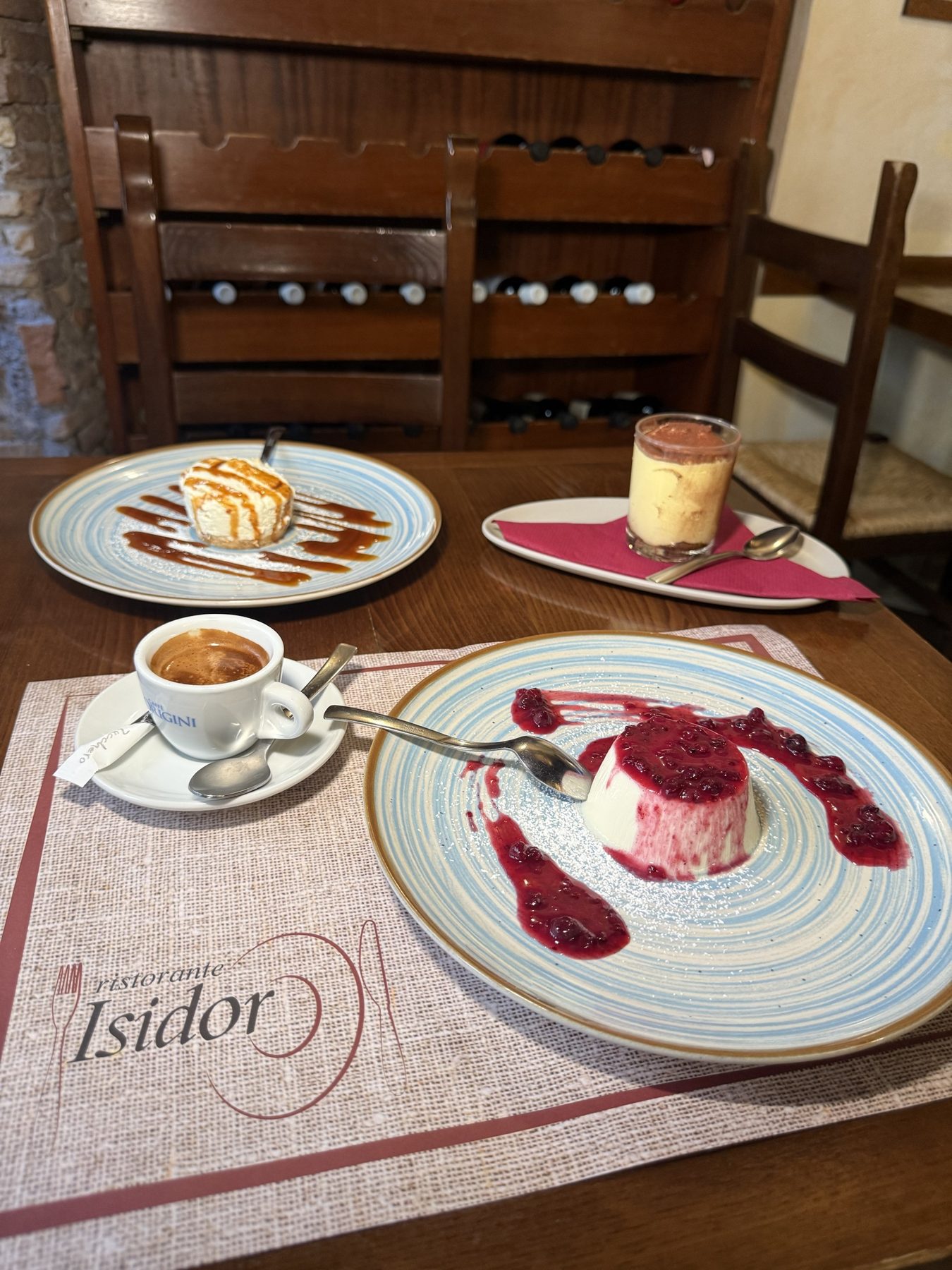
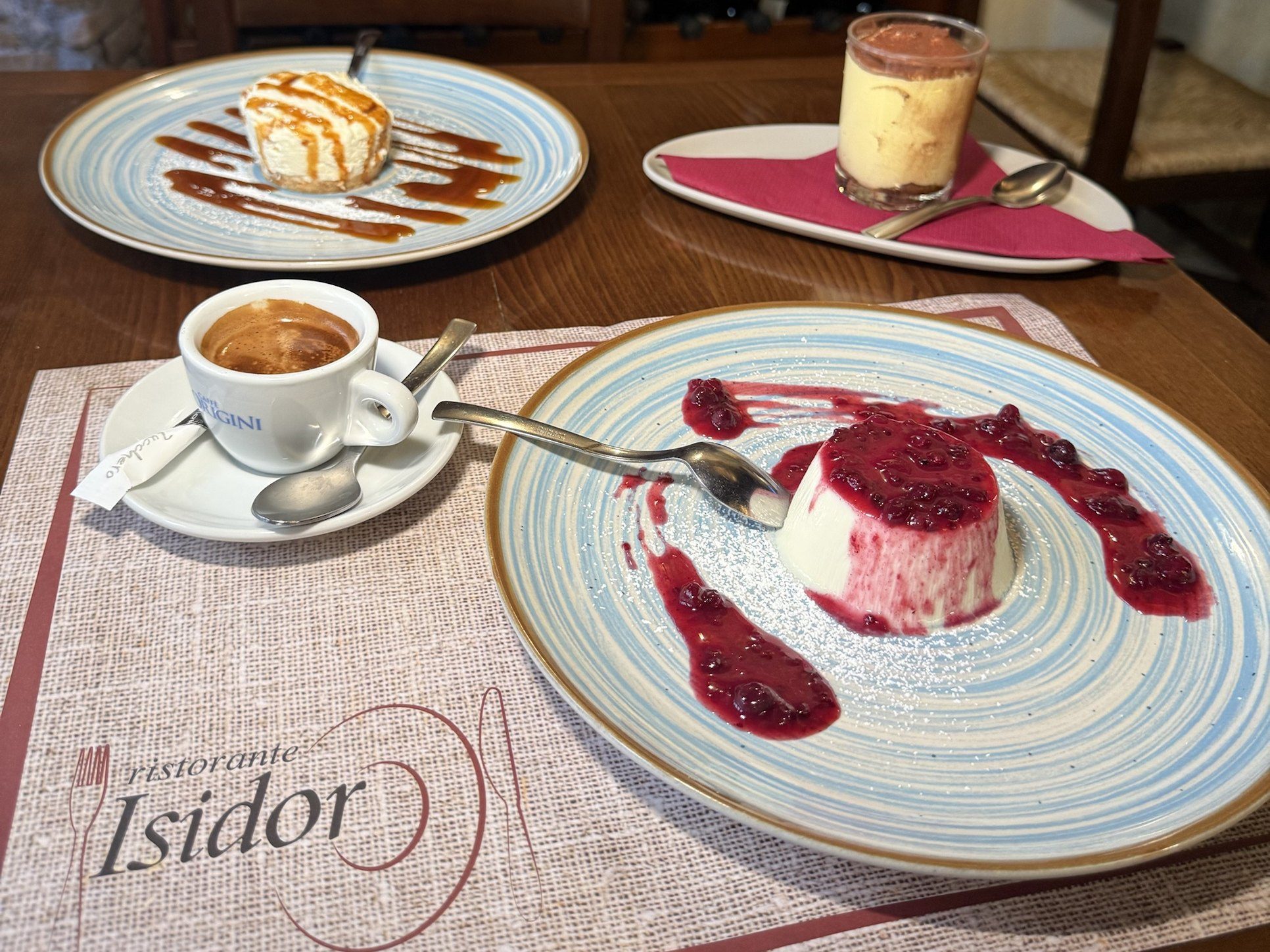
Between the pasta and the sweets came a plate of melanzane, slices of eggplant baked under a blanket of melted cheese and a dark, glossy sauce of porcini mushrooms, a dish that belongs to the autumn table and arrived at precisely the right season. Dessert was three plates and an espresso: the house tiramisù served in a glass, its mascarpone layered with coffee-soaked biscuit under a thick dusting of cocoa; a pear cheesecake striped with salted caramel and powdered sugar; and a trembling panna cotta under a spoonful of red fruits. All three are made in house. We drank Ferrari Trento, Italy’s benchmark metodo classico, poured in tall flutes, which went through the fritti and into the pasta without complaint; the sommelier’s sheet that day also listed Frescobaldi’s Cuvée Voyage, a Ribolla Gialla from Attems, Lungarotti’s Torre di Giano and a Rosso di Montalcino by the glass, all between seven and eight euros.
Dolci, made in house every morning
What Is It Like to Dine There?
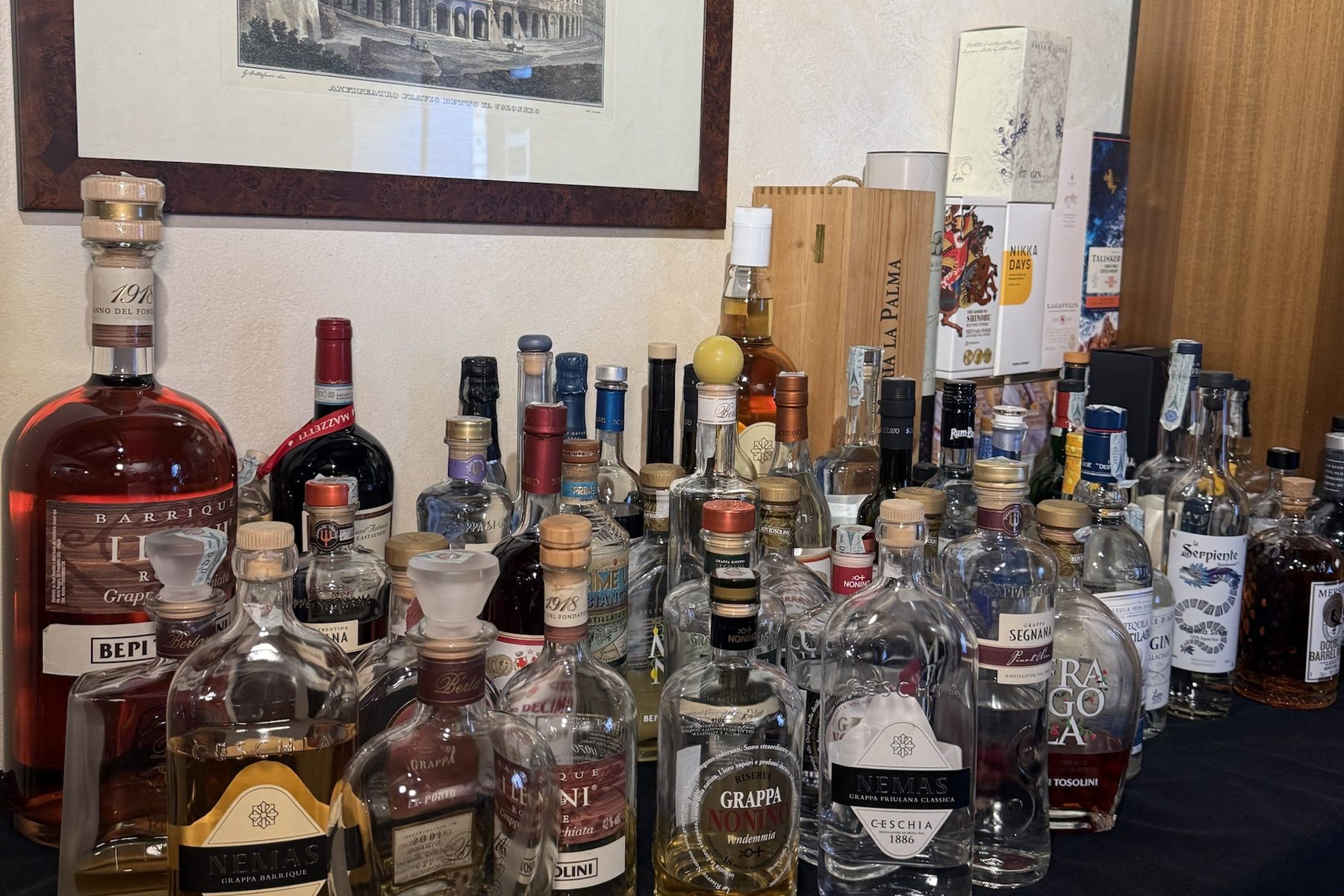
The room is small and feels smaller in the best way. The walls are bare tufa and Roman brick, the ceiling a shallow barrel vault, the windows set deep with iron grilles. A wooden rack of bottles runs along one wall and doubles as the only decoration, and by the entrance a sideboard carries the house’s collection of grappa, Nonino, Berta and Ceschia among them, under a framed engraving of the Flavian Amphitheatre. Tables are dressed with linen placemats printed with the fork-and-plate logo of the house, red paper napkins and plain, good glassware, which tells you where the money has gone: into the kitchen. Service is attentive and unhurried, in the Roman manner where nobody rushes you toward the bill, and when we asked for a quieter table the staff found us the corner under the vault that appears in these photographs.
It is not a hushed, white-tablecloth restaurant, and it should not be read as one. It is a hostaria in the old sense, a place to eat well for a fair price a few metres from the most famous ruin on earth, and that combination is rarer than it sounds. The tourist strip around the Colosseum is full of menus with photographs; Isidoro is one of the few doors on the street where Romans still book a table.
“Cooking is like loving: either you abandon yourself completely or you give up.”
Where Is Hostaria Isidoro?
Via di San Giovanni in Laterano 59/A, 00184 Rome, on the stretch of the Stradone closest to the Colosseum. From the Colosseo metro station (line B) it is a two-minute walk uphill along the street; the Basilica of San Clemente, with its three layers of history, is a few doors further on, and the fortified Santi Quattro Coronati is up the side street. Visitors staying in Monti, on the Celio or around the Forum can reach it on foot; from the centro storico a taxi takes about ten minutes.
Who Should Book It?
Anyone who wants the Roman classics made properly, in a historic room, without paying the Colosseum premium. It works for a long lunch after the Forum, for a first dinner in Rome with children who need pasta, and for the kind of traveller who collects trattorias the way others collect hotels. The “assaggini” tasting of first courses is the obvious order for a table that cannot choose; the truffle tagliolini is the order for a table that already knows.
Via di San Giovanni in Laterano 59/A, 00184 Rome, Italy
Open daily for lunch and dinner, roughly 12:00 to 15:00 and 19:00 to 23:00, with later closing on Friday and Saturday
Roman cuisine · fresh pasta · daily fish from Anzio · Italian cellar
Reservations: +39 06 7008266 or OpenTable
Instagram: @hostariaisidoro
Hostaria Isidoro al Colosseo
Rome has no shortage of restaurants that sell tradition. It has far fewer that practise it. A hostaria that has made its pasta by hand for more than sixty years, in a building that was a convent when Sixtus V’s road was still new, run by a second generation that could have cashed in on the Colosseum and chose not to, is a small act of cultural stewardship. For Mandale Luxury Magazine, luxury in Rome is not the gilded hotel lobby; it is the certainty that the artichoke was fried for you and the tagliolini were cut this morning. Hostaria Isidoro offers exactly that certainty, two steps from the amphitheatre.
Frequently Asked Questions
Is Hostaria Isidoro close to the Colosseum?
Yes. It is at Via di San Giovanni in Laterano 59/A, about two minutes on foot from the Colosseum and the Colosseo metro station.
What is Hostaria Isidoro known for?
House-made fresh pasta, the classic Roman primi (cacio e pepe, amatriciana, carbonara), the “assaggini” tasting of several first courses, fried artichokes and fish that arrives daily from Anzio.
Does Hostaria Isidoro make its pasta in house?
Yes. Fresh pasta is made daily, and desserts such as the tiramisù are also made in house.
What is the building like?
The dining room occupies part of a former seventeenth-century convent, with exposed tufa stone and brick walls, a low vault and deep windows.
Do I need to book?
Booking is recommended, particularly for dinner and weekends. Reservations are taken by phone and through OpenTable.
Is there sparkling wine or an aperitivo?
Yes. The sommelier’s sheet lists bubbles, whites, reds and a rosé by the glass at seven to eight euros, and we started our lunch with Ferrari Trento metodo classico.
The Mandale Luxury Magazine Newsletter
Travel, design, people and places, in your inbox.