Updated November 25, 2026
Miami Luxury Real Estate: Branded Residences, Lifestyle Living & Market Intelligence
A 2027 outlook for the neighborhoods, residences and operating realities reshaping Miami’s luxury property market.
This article is published as a 2027 outlook with data available through November 2026. It will be completed in February with the annual close, when the market narrative can be tested against the full year rather than a preliminary read.
Miami luxury real estate for 2027 calls for attention to location, branded-residence operations, reserves and resilience. Florida Statutes section 718.112(2)(g) requires structural integrity reserve studies at least every 10 years for residential condominium buildings of three habitable stories or higher.
Last updated: November 25, 2026
Key facts
- Annual close: The outlook will be completed in February with the annual close. Source: Mandale Luxury Magazine editorial desk.
- Geographic scope: Miami-Dade County, with particular attention to Miami, Miami Beach, Brickell, Coconut Grove, Coral Gables and nearby luxury districts. Source: Miami-Dade County government and local property records.
- Regulatory reference: Florida condominium structural integrity reserve studies are required under section 718.112(2)(g) of the Florida Statutes. Milestone inspections are required under section 553.899. Source: Florida Legislature, official 2026 statutes.
- Price and inventory note: No preliminary year-end price, inventory, volume, absorption or days-on-market total is presented as final. Source: Mandale Luxury Magazine annual-close verification policy.
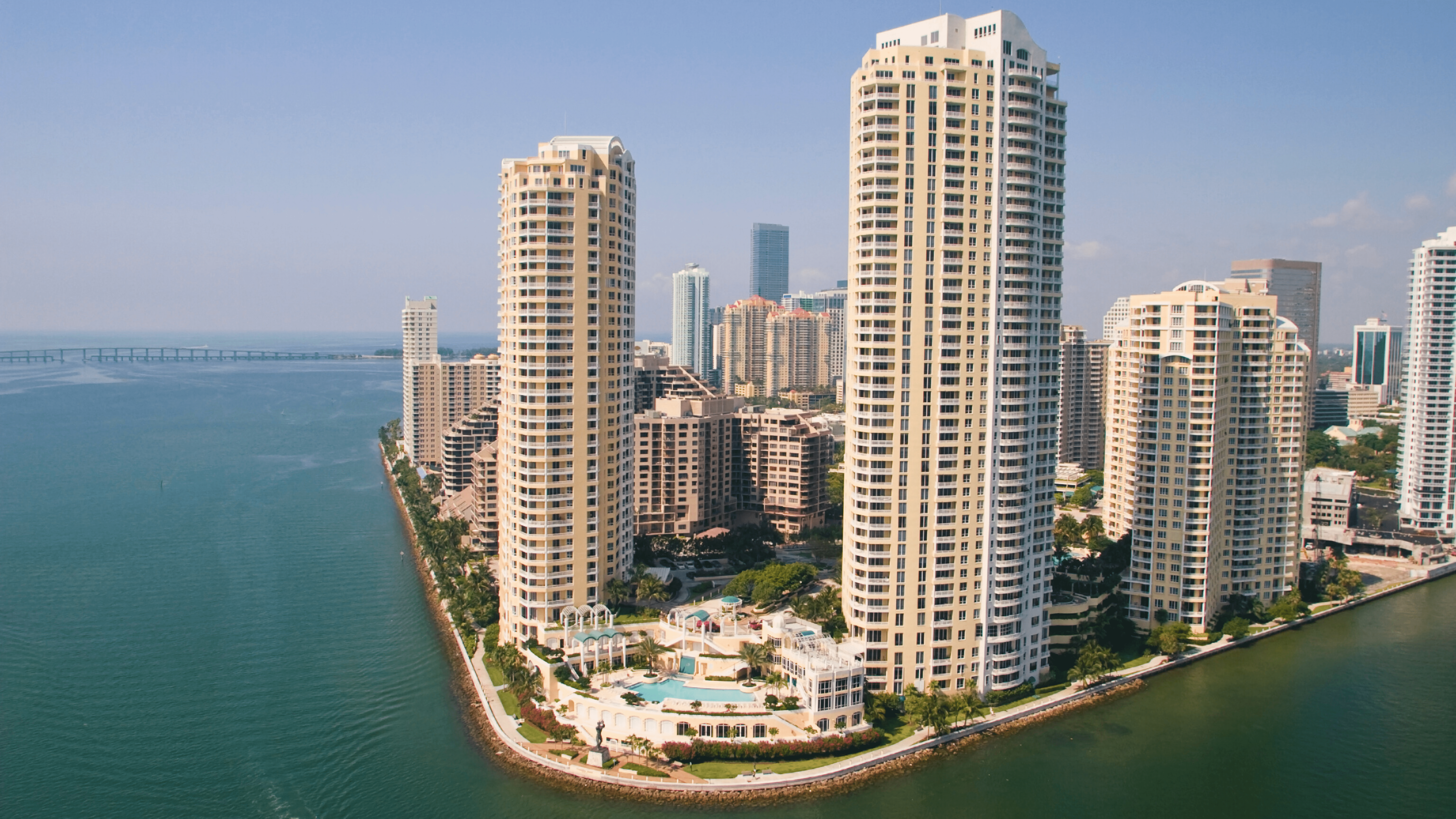
Miami’s luxury market is entering 2027 as a study in the distance between visibility and certainty. Branded towers, waterfront estates, urban residences and low-density legacy homes are all visible in the same skyline, but they do not trade as one asset class. Their buyers, financing structures, operating models, exposure to insurance and resilience, and expectations for service are different.
This article is published as a 2027 outlook with data available through November 2026. It will be completed in February with the annual close. Until then, preliminary readings should be treated as market intelligence in progress. The framework below identifies what the available reporting supports, what remains provisional, and what responsible buyers, sellers and family offices should verify before making a decision.
What Does the 2027 Miami Luxury Market Look Like?
The most defensible description of Miami luxury real estate for 2027 is selective and service-led.
Branded residences occupy an important place in the conversation because they package architecture, service, hospitality and brand recognition into a single residential proposition. Their appeal is not simply the name above the entrance. Buyers are paying for a defined operating environment, from arrival and security to concierge programming, resident events and the way shared spaces are managed. The strongest offerings will be judged on whether those systems work every day, not on the rendering that opened the sales campaign.
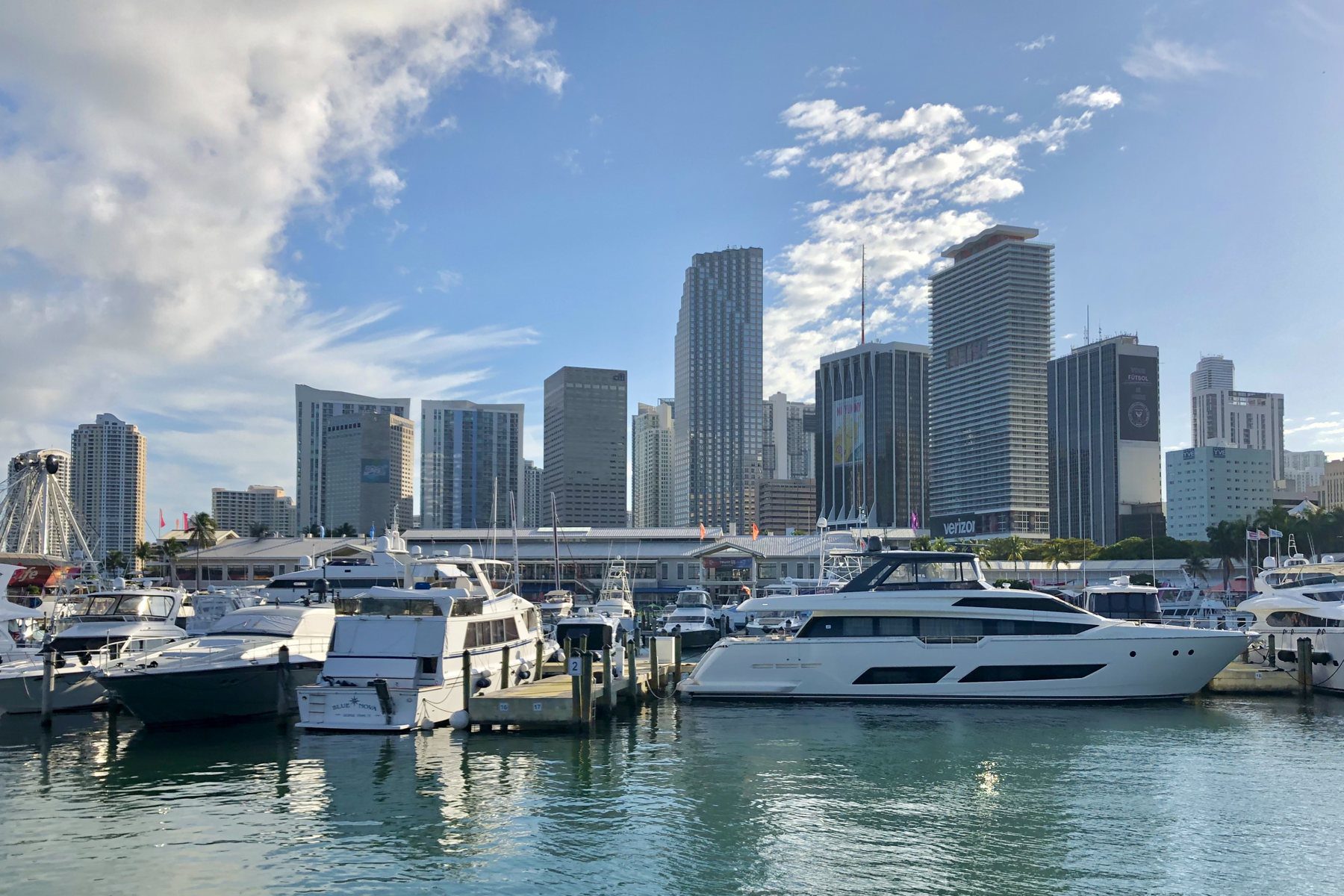
Waterfront property remains a distinct category. Its value is tied to location, water access, views, privacy, construction quality, insurance and the practical realities of ownership. Miami’s yacht economy is part of that proposition, and our guide to the Miami yacht charter circuit explains how the city’s marine leisure calendar shapes access and lifestyle demand.
Low-density districts offer a different form of scarcity. In Coconut Grove and Coral Gables, a buyer may be purchasing land, canopy, established neighborhood context and a stronger connection to daily routines rather than a branded address. In Brickell, the comparable proposition is vertical density, proximity to business, finance, dining and a building designed around service. Edgewater, Miami Beach and the broader waterfront add their own access patterns and operating calendars.
For 2027, the market’s dividing line will be between properties that offer a coherent experience and properties that merely offer expensive features.
Price, inventory, volume, absorption and days-on-market conclusions are deliberately held open until the annual close. The fourth quarter is incomplete, and its Florida Realtors figures have not been assembled for this article. Publishing an estimated total as though it were final would create false precision, particularly in a market where a small number of exceptional properties can distort headline comparisons.
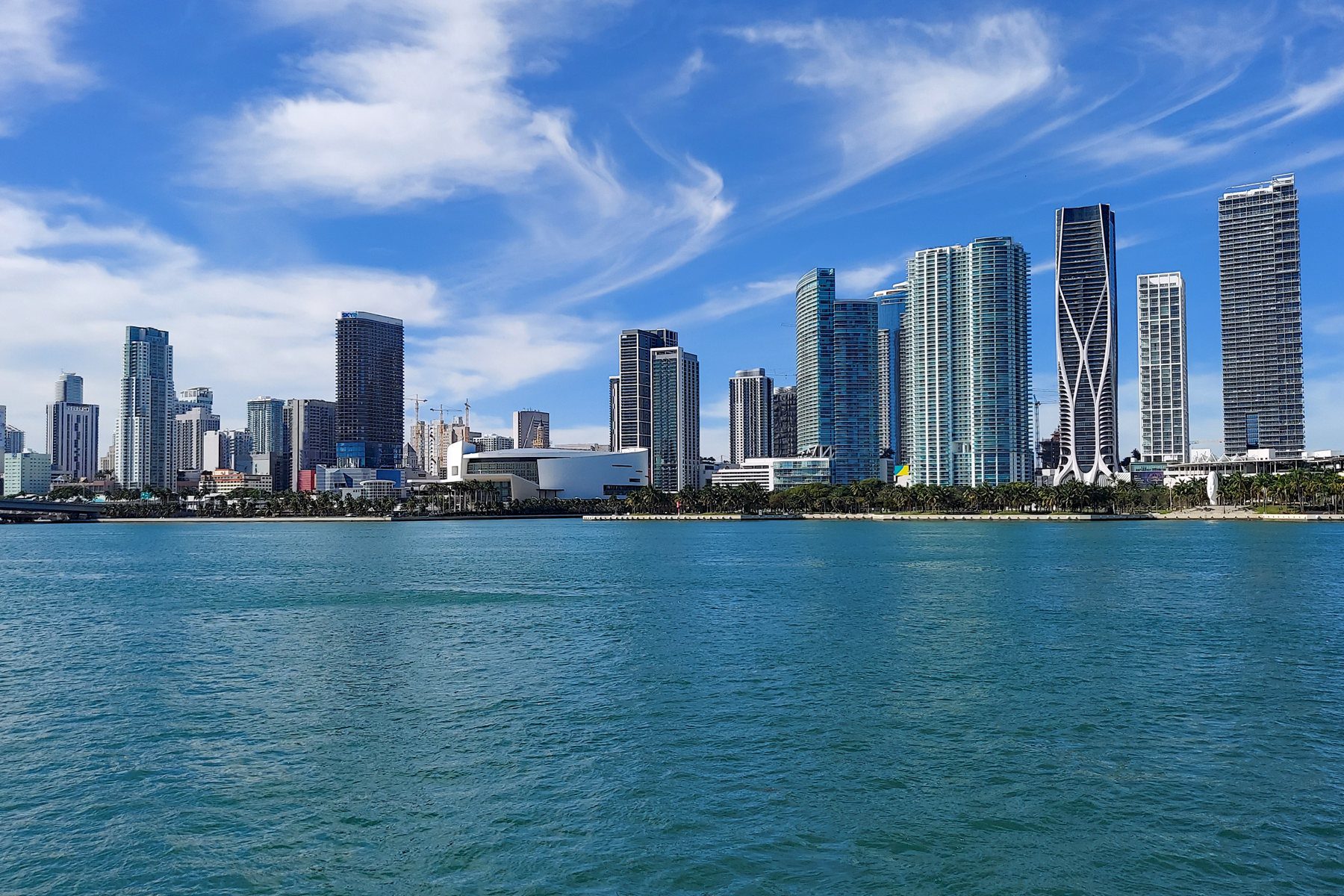
For 2027, the strongest luxury residence is not simply rare. It is coherent in design, operation and setting.
Why Do Branded Residences Still Matter?
Branded residences matter because they respond to a change in what ownership means for time-poor buyers. A conventional property may offer square footage, a view and a list of amenities. A branded residence attempts to add consistency: a recognized design language, a service model, a hospitality sensibility and a community identity that continues whether or not the owner is in residence.
That proposition is especially relevant to Miami because the city has several distinct buyer missions. One buyer wants proximity to the business life of Brickell. Another wants a secure base for a family, with schools, parks and staff accommodation nearby. A third wants a winter or seasonal retreat with yacht, dining and cultural access. A fourth is preparing a property for eventual transfer to family members or trusts. A strong brand system can support all four missions, but it cannot compensate for poor siting or an overstretched operating model.
The best due diligence therefore asks operational questions. How are management fees structured? Are the services actually staffed? How does the building handle private events, deliveries and vehicle access? Are resident spaces used or merely photographed? Does the board have a credible plan for insurance, reserves, common-area capital work and technology? Has the developer delivered the promised service standard, and can the operating company sustain it?
Brand recognition also raises the standard for discretion. Buyers who value privacy want to know whether the brand’s event calendar, communications and guest policies are compatible with their own. The best hospitality is not the most visible hospitality. It is service that anticipates a preference without requiring the owner to explain it repeatedly.
Miami’s power and finance ecosystem reinforces the appeal of this model. Our profile of Ken Griffin and the growth of Miami as a financial center provides context for the city’s changing relationship with global capital, although that shift does not guarantee success for any individual property.
The conclusion for 2027 is straightforward: branding can lower the friction of owning a sophisticated residence, but it cannot create durable value by itself. The underlying location, construction, governance and service economics still determine whether a tower becomes a durable address or simply a conspicuous launch.
Who Is Buying Miami Luxury Property in 2027?
That shift from occasional use to lived-in ownership changes the property equation. A seasonal buyer may accept compromise in space, service and convenience. A resident with children, staff or a demanding business schedule cannot. The relevant question becomes whether the building supports the owner’s actual pattern of arrival, privacy, work, entertaining and recovery.
Off-market intelligence also matters in this category. Our reporting on Miami real estate’s quietest billionaires shows why the most consequential property decisions can happen without a public sales campaign. Private transactions, trust structures and discreet brokerage work complicate conventional market narratives, which is another reason to rely on official records for verified facts.
Family offices and multi-generational households are likely to continue separating the question of use from the question of investment. An owner may want a Miami residence for the family, but view capital appreciation as only one part of the return. Accessibility, hospitality, privacy, education, wellness and the ability to host can justify a property even when the purchase is not framed as a short-term trading decision.
For owners, that means the highest-value asset may be operational. A well-run house, responsive management team and calm presentation can influence the next sale more effectively than a dated renovation. For buyers, it means the total carrying cost deserves as much attention as the acquisition price, particularly insurance, taxes, assessments, utilities, management and the capital work required to maintain the property.
Which Miami Neighborhoods Offer the Strongest Luxury Proposition?
There is no single answer because each neighborhood solves a different part of the Miami equation. Brickell is the clearest choice for vertical luxury and immediate business proximity. Coconut Grove offers a more established, low-density atmosphere with a strong connection to the bay. Coral Gables combines formal urbanism, leafy residential streets and access to major institutions and services. Miami Beach provides direct oceanfront living and a distinctive resort culture. Edgewater offers bay views and a more residential waterfront identity.
These distinctions are more useful than ranking neighborhoods with a single score. A buyer who works in finance and wants a full social calendar may prefer Brickell. A family seeking shade, gardens and long-term continuity may prefer Coconut Grove or Coral Gables. A yacht owner may place greater weight on protected-water access and marine infrastructure. Another buyer may simply want a polished rental asset in a market that visitors already understand.
Neighborhood change also requires street-level attention. New towers, restaurants, cultural institutions and public-space improvements can alter demand, but they can also change the character that attracted a buyer in the first place. Official planning documents, Miami-Dade property records and local market reports should be consulted for parcel-level conclusions rather than relying on a broad citywide label.
The luxury housing question also intersects with the broader ecosystem around a home. Our guide to luxury wellness in Miami and Regenerative Miami spa edit illustrate the growing role of clinics, recovery, longevity and restorative travel in the ownership experience. For some buyers, access to that ecosystem is now as important as proximity to the bay.
The right neighborhood is therefore a personal allocation of time. Some owners want to move effortlessly between appointments and social commitments. Others want the feeling of leaving a dense city center behind. The strongest 2027 strategy is to choose a district that matches how the property will actually be used, then evaluate the building at the level of the individual residence and its management.
How Are Resilience and Climate Risk Changing the Luxury Buyer?
Resilience is no longer a specialist concern at the top of the Miami market. A buyer paying for an elevated view, private dock, pool garden or glass wall is also making a decision about water, heat, insurance continuity, power reliability and the cost of maintaining a property over time. The question is not whether the climate affects a property. It is whether the property’s design, location and operating plan respond to the conditions that can reasonably be anticipated.
Buyers should obtain the actual project documentation rather than relying on marketing language about resilience, because the performance of a building depends on design, siting, materials, maintenance and local conditions together.
The market consequence is a shift in due diligence. Elevators, backup power, drainage, flood barriers, emergency access, roof systems, windows, landscaping and generator capacity should be inspected as parts of one connected system. A building can have an attractive lobby and still carry disproportionate operating risk if its mechanical systems, insurance or reserve planning are not sound.
Insurance is especially important for owners and should be treated as a property characteristic rather than a remote financial detail. Before closing, buyers should obtain current quotes with the same care they apply to title and inspection. A property’s replacement value, construction type, roof, flood exposure and protection features can all affect the coverage available.
Resilience can also be an amenity. Our reporting on Miami’s biophilic skyline and luxury estates as longevity sanctuaries explores the larger design shift, including our guide to AI-integrated estate standards.
The point is not to buy a sealed bunker. It is to buy a property whose systems have been considered together and maintained honestly. That is becoming a defining feature of credible 2027 luxury.
What changed for 2027
1. The Florida Building Code, Ninth Edition (2026), takes effect on December 31, 2026. Miami-Dade County’s Regulatory and Economic Resources department notified builders and design professionals that permit applications and plans submitted on or after that date must comply with the new edition. Buyers reviewing 2027 work should ask which code edition applied to each permit and major alteration rather than assuming every element of a building was reviewed under the same rules. Source: Miami-Dade County notice, October 7, 2026.
This is the substantiated change retained for this outlook. Reserve studies, milestone inspections and elevation-certificate documentation remain continuing diligence matters, discussed below.
What Should a Buyer Verify Before Purchasing?
Continuing obligation: Condominium structural integrity and reserve requirements remain central to ownership diligence. Florida Statutes section 718.112(2)(g) requires residential condominium associations to complete a structural integrity reserve study at least every 10 years for each building that is three habitable stories or higher. Milestone inspections are required under section 553.899. These obligations affect the financial condition of a condominium and the work a board must plan. Source: Florida Statutes section 718.112 (2026).
Continuing documentation: Official flood-elevation documentation remains part of due diligence in Miami-Dade. For a 2027 purchase, the important distinction is between a property with current official flood-elevation documentation and a marketing claim about resilience. Buyers should review the applicable elevation certificate, permits and engineering reports with qualified local professionals. Source: Miami-Dade County elevation certificates.
Start with the legal and financial record. Review title, liens, contracts, association documents, budgets, reserves and minutes with appropriate counsel and financial professionals. For a condominium, obtain the structural integrity reserve study and milestone inspection records when applicable. For a private residence, document the condition and capital plan for the roof, HVAC, pool, seawall, dock, generator and other systems that are material to use.
Next, test the operating model. Ask how the building or management company handles staffing, security, concierge requests, private events, maintenance, deliveries and guest access. In a branded residence, confirm which promises are contractual, which are discretionary and which depend on a separate operator. If a high-touch service is central to the purchase, speak with residents and staff who can describe delivery rather than repeat the sales language.
Insurance deserves a separate workstream. Obtain current pricing for the exact property and the contemplated use, with attention to deductibles, exclusions, coverage limits and the effect of deductibles on the ownership structure. Do not rely on an old quote, a general citywide rate or an estimate from a listing presentation.
For a buyer who expects to use the property as a platform for entertaining, inspect the route from arrival to the principal entertaining spaces. Privacy failures, service conflicts and poor circulation can be more damaging than the absence of a fashionable feature. For an owner who will be away frequently, test remote monitoring, house management, climate management and vendor access with the same seriousness applied to a yacht’s operating program.
Finally, separate facts from narrative. Ask for official documents, permits, assessments, financial statements and current insurance information. A polished prospectus can establish intent. It cannot establish performance. The right purchase is the one whose documented systems match the lifestyle the buyer intends to lead.
Is Miami Luxury Real Estate a Strong Long-Term Choice?
Miami luxury real estate can be a strong long-term choice for a buyer whose objectives include both property utility and capital participation. It is not automatically a strong choice because it is branded, because the city is growing or because a headline market report describes demand as resilient. Those are inputs, not conclusions.
Long-term performance depends on scarcity that remains relevant, a building that retains its operating quality, a neighborhood that continues to offer what the owner values, and a purchase price and cost structure that can withstand periods of slower demand. In the current luxury market, those variables differ sharply between properties.
That makes selective acquisition more important than broad optimism. The best opportunities in 2027 may be found where the seller’s timing, property presentation or capital requirement creates negotiation space, while the underlying location and building still meet the buyer’s long-term brief. The worst outcome is buying a conspicuous asset at the peak of attention without examining its service economics, resilience or resale audience.
No forecast can remove the need for due diligence. The market intelligence in this article is designed to improve the questions asked and the documents reviewed. February’s annual close will add the verified full-year context, but it cannot personalize the decision for a particular residence.
What Is the Mandale View of Miami’s Next Chapter?
Miami’s next chapter will not be defined by height alone. The more durable luxury story is one in which the address, architecture, service, landscape and surrounding culture reinforce one another. A tower must make the city easier to navigate. An estate must make privacy and wellness tangible. A branded residence must deliver consistency without becoming theatrical. A legacy home must remain emotionally useful to the family that owns it.
The market’s best opportunities for 2027 will belong to properties that are deeply considered and carefully operated. They will not necessarily be the newest or largest. They will be the ones whose advantages survive a change in weather, a change in taste, a change in staffing and a change in the owner’s calendar.
Miami neighborhoods in context
Neighborhood descriptions: Greater Miami Convention & Visitors Bureau.
That is the luxury advantage Miami can offer when the market moves beyond the simple spectacle of arrival. The city does not need every building to compete on scale. It needs each address to deliver a reason that is specific, durable and worth maintaining.
Miami Luxury Real Estate, Answered
What is the outlook for Miami luxury real estate in 2027?
Miami’s 2027 luxury outlook is selective, with demand expected to remain sensitive to service, location, resilience and the quality of the building. This article uses information available through November 2026 and will be completed in February with the annual close, when full-year price, inventory and volume conclusions can be verified.
Which Miami neighborhoods are most attractive for luxury buyers?
Brickell suits buyers seeking vertical residences and business access, while Coconut Grove and Coral Gables emphasize lower density and established neighborhood character. Miami Beach and Edgewater offer different waterfront propositions, so the best neighborhood depends on whether the owner prioritizes business access, family life, boating, oceanfront living or cultural access.
Why are branded residences important to Miami’s luxury market?
Branded residences combine architecture with a defined service, hospitality and security model that can make ownership easier for time-poor or globally mobile buyers. Their success still depends on sound management, an appropriate location and sustainable fees, so the brand should be treated as an operating proposition rather than a guarantee of value.
What changed for Miami luxury real estate in 2027?
Miami-Dade County’s Regulatory and Economic Resources notice of October 7, 2026 identifies the Florida Building Code, Ninth Edition (2026), effective December 31, 2026, as the substantiated change relevant to this outlook. Reserve studies, milestone inspections and elevation-certificate documentation remain continuing diligence obligations rather than new changes.
Is Miami luxury real estate a good long-term investment?
Miami luxury real estate can support long-term objectives when the property has durable scarcity, sound operating costs, credible management and a clear role in the owner’s life. It is not a guaranteed investment, and buyers should review financial statements, insurance, reserves, taxes and capital plans before reaching a conclusion.
The Mandale Newsletter
Hosted stays, private addresses and the people behind them, every week.
Pingback: Miami Real Estate Market: The Ultimate Guide to Luxury | Mandale Luxury Magazine