Updated September 3, 2026
/* RESET + ROOT */ *{margin:0;padding:0;box-sizing:border-box} html{scroll-behavior:smooth} #lns-scope body{background:var(–white);color:var(–black);font-family:var(–body);font-size:1.16rem;line-height:1.8;-webkit-font-smoothing:antialiased} #lns-scope img{display:block;width:100%;height:100%;object-fit:cover;background:#E9E5DD} #lns-scope a{color:inherit;text-decoration:none} :root{–black:#0D0D0D;–white:#FFFFFF;–gold:#BB9A6C;–ivory:#F5F2EB;–hair:rgba(13,13,13,.12);–serif:’Playfair Display’,serif;–body:Georgia,’Times New Roman’,serif;–sans:’Jost’,sans-serif} /* HEADER */ #lns-scope .header{padding:1.7rem 3vw 0} #lns-scope .header .row{display:grid;grid-template-columns:1fr auto 1fr;align-items:center;gap:1rem} #lns-scope .hleft{display:flex;align-items:center;gap:1.6rem} #lns-scope .icon-btn{width:26px;height:20px;position:relative;cursor:pointer;display:inline-block} #lns-scope .icon-btn span{position:absolute;left:0;right:0;height:2px;background:var(–black)} #lns-scope .icon-btn span:nth-child(1){top:2px} #lns-scope .icon-btn span:nth-child(2){top:9px} #lns-scope .icon-btn span:nth-child(3){top:16px} #lns-scope .search svg{width:20px;height:20px;display:block} #lns-scope .brand{text-align:center} #lns-scope .brand .wordmark{font-family:var(–serif);font-weight:500;font-size:clamp(2.4rem,5vw,3.9rem);letter-spacing:.04em;line-height:1;display:block} #lns-scope .brand .sub{font-family:var(–sans);font-weight:400;font-size:clamp(.85rem,1.5vw,1.25rem);letter-spacing:.24em;text-transform:uppercase;margin-top:.15rem;display:block} #lns-scope .hright{display:flex;justify-content:flex-end;gap:2.6rem;font-family:var(–sans);font-weight:400;font-size:.8rem;letter-spacing:.18em;text-transform:uppercase} #lns-scope .hright a:hover{color:var(–gold)} #lns-scope .catbar{display:flex;justify-content:center;flex-wrap:wrap;gap:3.2rem;padding:2.4rem 3vw 1.6rem;font-family:var(–sans);font-weight:400;font-size:.82rem;letter-spacing:.2em;text-transform:uppercase} #lns-scope .catbar a{transition:color .3s} #lns-scope .catbar a:hover,#lns-scope .catbar a.on{color:var(–gold)} @media(max-width:900px){#lns-scope .hright{display:none}#lns-scope .catbar{gap:1.6rem}} /* HERO SPLIT */ #lns-scope .hero{display:grid;grid-template-columns:58.5% 41.5%;min-height:min(730px,86vh);margin-bottom:3.5rem} #lns-scope .hero .photo{overflow:hidden} #lns-scope .hero .intro{display:flex;flex-direction:column;justify-content:center;align-items:center;text-align:center;padding:3rem clamp(1.5rem,4vw,4.5rem)} #lns-scope .kicker{font-family:var(–sans);font-weight:500;font-size:.8rem;letter-spacing:.22em;text-transform:uppercase;margin-bottom:1.4rem} #lns-scope .kicker span{color:var(–gold)} #lns-scope .standfirst{font-family:var(–sans);font-weight:400;font-size:.86rem;letter-spacing:.14em;text-transform:uppercase;line-height:1.9;color:rgba(13,13,13,.8);max-width:34em;margin-bottom:2.6rem} #lns-scope .byline{font-family:var(–sans);font-weight:400;font-size:.92rem;letter-spacing:.08em;color:rgba(13,13,13,.55);margin-bottom:2.2rem} #lns-scope .byline b{font-weight:400;color:rgba(13,13,13,.75)} #lns-scope .share{display:flex;gap:1.5rem;align-items:center;justify-content:center} #lns-scope .share a{display:inline-flex;transition:opacity .3s} #lns-scope .share a:hover{opacity:.55} #lns-scope .share svg{width:21px;height:21px;fill:var(–black)} @media(max-width:900px){#lns-scope .hero{grid-template-columns:1fr;min-height:0}#lns-scope .hero .photo{aspect-ratio:4/3}#lns-scope .hero .intro{padding:2.6rem 6vw}} /* ARTICLE BODY */ #lns-scope .article{max-width:800px;margin:0 auto;padding:0 6vw;font-family:Georgia,’Times New Roman’,serif;font-size:1.16rem;line-height:1.8} #lns-scope .article p{margin-bottom:1.7rem;font-family:Georgia,’Times New Roman’,serif;font-size:1.16rem;line-height:1.8} #lns-scope .article p em{font-style:italic} #lns-scope .drop::first-letter{font-family:Georgia,’Times New Roman’,serif;font-size:6.1em;float:left;line-height:.78;padding:.05em .14em .02em 0;color:var(–gold)} /* HEADINGS */ #lns-scope h2{font-family:var(–sans);font-weight:600;font-size:clamp(1.35rem,2.6vw,1.75rem);letter-spacing:.03em;text-transform:uppercase;line-height:1.3;margin:3.4rem 0 1.6rem} #lns-scope h3.venue{font-family:var(–sans);font-weight:600;font-size:clamp(1.2rem,2.2vw,1.5rem);letter-spacing:.03em;text-transform:uppercase;margin:3.2rem 0 1.6rem} /* PAIRS */ #lns-scope .pair{max-width:100vw;width:100vw;margin:3.4rem auto;display:grid;grid-template-columns:1fr 1.18fr;align-items:center;gap:4vw;padding:0 6vw} #lns-scope .pair .p{aspect-ratio:512/700;overflow:hidden} #lns-scope .pair .l{aspect-ratio:640/460;overflow:hidden} #lns-scope .pair img{width:100%;height:100%;object-fit:cover;display:block} @media(max-width:760px){#lns-scope .pair{grid-template-columns:1fr;gap:1.4rem;padding:0 6vw;max-width:600px}#lns-scope .pair .p{aspect-ratio:4/3}} /* WIDE */ #lns-scope .wide{max-width:100vw;width:100vw;margin:3.4rem auto;padding:0 6vw} #lns-scope .wide .frame{aspect-ratio:1520/830;overflow:hidden} #lns-scope .wide img{width:100%;height:100%;object-fit:cover;display:block} @media(max-width:760px){#lns-scope .wide .frame{aspect-ratio:4/3}} /* BUTTON, READMORE, RATE */ #lns-scope .rate{font-style:italic;font-size:1.15rem;margin:2rem 0 1.3rem} #lns-scope .btn{display:inline-block;font-family:var(–sans);font-weight:500;border:1px solid #0D0D0D;padding:.9rem 2.7rem;font-size:.8rem;letter-spacing:.24em;text-transform:uppercase;transition:background .35s,color .35s;margin-bottom:1.6rem;background:transparent;color:#0D0D0D} #lns-scope .btn:hover{background:#0D0D0D;color:#F5F2EB} #lns-scope .readmore{font-weight:700;font-style:italic;font-size:1.15rem;margin:2.6rem 0 3.6rem;display:block;text-decoration:underline;text-underline-offset:3px;color:#0D0D0D} #lns-scope .readmore:hover{color:#BB9A6C} /* NEWSLETTER */ #lns-scope .news{background:#F5F2EB;margin-top:4.5rem;padding:4.2rem 6vw;text-align:center} #lns-scope .news h4{font-family:’Playfair Display’,serif;font-weight:500;font-size:clamp(1.8rem,3.2vw,2.4rem);margin-bottom:1rem} #lns-scope .news p{max-width:580px;margin:0 auto 1.9rem;color:rgba(13,13,13,.72);font-size:1.05rem} #lns-scope .news .nrow{display:flex;justify-content:center;gap:.8rem;flex-wrap:wrap} #lns-scope .news input{font-family:’Jost’,sans-serif;font-weight:300;font-size:.95rem;border:1px solid rgba(13,13,13,.12);background:#FFFFFF;padding:.9rem 1.4rem;min-width:min(320px,80vw);outline:none} #lns-scope .news input:focus{border-color:#BB9A6C} /* REVEAL */ #lns-scope .rv{opacity:0;transform:translateY(26px);transition:opacity .9s ease,transform .9s ease} #lns-scope .rv.in{opacity:1;transform:none} @media (prefers-reduced-motion: reduce){#lns-scope .rv{opacity:1;transform:none;transition:none}#lns-scope .card img{transition:none}} /* RELATED */ #lns-scope .related{max-width:1500px;margin:0 auto;padding:4rem 3vw 1rem} #lns-scope .related .head{display:flex;align-items:baseline;gap:1.1rem;margin-bottom:2.2rem;font-family:var(–sans);font-weight:500;font-size:.8rem;letter-spacing:.26em;text-transform:uppercase;color:var(–gold)} #lns-scope .related .head h4{font-family:var(–serif);font-weight:500;font-size:2rem;letter-spacing:0;text-transform:none;color:var(–black)} #lns-scope .grid3{display:grid;grid-template-columns:repeat(3,1fr);gap:26px} @media(max-width:820px){#lns-scope .grid3{grid-template-columns:1fr}} #lns-scope .card .frame{aspect-ratio:4/3;overflow:hidden;margin-bottom:1rem} #lns-scope .card .cat{font-family:var(–sans);font-weight:500;font-size:.72rem;letter-spacing:.24em;text-transform:uppercase;color:var(–gold)} #lns-scope .card h5{font-family:var(–serif);font-weight:500;font-size:1.4rem;line-height:1.3;margin:.5rem 0 .4rem} #lns-scope .card .date{font-family:var(–sans);font-weight:400;font-size:.74rem;letter-spacing:.16em;text-transform:uppercase;color:rgba(13,13,13,.5)} #lns-scope .card img{transition:transform .8s ease} #lns-scope .card:hover img{transform:scale(1.045)} #lns-scope .card:hover h5{color:var(–gold)} /* FOOTER */ #lns-scope footer{background:var(–black);color:var(–ivory);margin-top:4.5rem;padding:4.4rem 6vw 2.4rem;text-align:center} #lns-scope footer .wordmark{font-family:var(–serif);font-weight:500;font-size:clamp(1.9rem,3.8vw,2.8rem);letter-spacing:.05em;display:block;margin-bottom:.4rem} #lns-scope footer .tag{font-family:var(–sans);font-weight:400;font-size:.72rem;letter-spacing:.42em;text-transform:uppercase;color:var(–gold)} #lns-scope footer nav{display:flex;justify-content:center;flex-wrap:wrap;gap:2.1rem;margin:2.5rem 0;font-family:var(–sans);font-weight:400;font-size:.76rem;letter-spacing:.22em;text-transform:uppercase;color:rgba(245,242,235,.75)} #lns-scope footer nav a:hover{color:var(–gold)} #lns-scope footer .fine{font-family:var(–sans);font-weight:300;font-size:.76rem;color:rgba(245,242,235,.45);letter-spacing:.06em} @media(max-width:480px){ #lns-scope .header{padding:1.2rem 4vw 0} #lns-scope .hleft{gap:1.2rem} #lns-scope .catbar{gap:1.1rem 1.5rem;padding:1.8rem 4vw 1.3rem;font-size:.74rem} #lns-scope .drop::first-letter{font-size:4.6em} #lns-scope .article{padding:0 6.5vw} #lns-scope .btn{width:100%;text-align:center} #lns-scope .news .nrow{flex-direction:column;align-items:stretch} #lns-scope .news input{width:100%;min-width:0} #lns-scope .news{padding:3.2rem 6.5vw} } /* Override: H1 hero title (Playfair Display Regular 400, line-height 1.08, color #0D0D0D, centered) Note: the original in the hero is converted to by mandale-content-no-h1.php
mu-plugin to avoid double H1 with Astra’s entry-title. We target both h1 and h2
to catch all rendered variants. */
#lns-scope .lns-hero h1,
#lns-scope .lns-hero h2,
#lns-scope .hero > .intro > h1,
#lns-scope .hero > .intro > h2,
#lns-scope section.hero h1,
#lns-scope section.hero h2 {
font-family: ‘Playfair Display’, serif !important;
font-weight: 400 !important;
font-style: normal !important;
font-size: clamp(2.7rem, 6.4vw, 5.4rem) !important;
line-height: 1.08 !important;
color: #0D0D0D !important;
text-align: center !important;
letter-spacing: 0 !important;
text-transform: none !important;
}
/* Full-bleed override for pairs and wides (only inside lils-new-style) */
body.mandale-lils-new-style .lils-new-style .pair,
body.mandale-lils-new-style .lils-new-style .wide { max-width:100vw !important; width:100vw !important; padding-left:0 !important; padding-right:0 !important; margin-left:auto !important; margin-right:auto !important; }
/* Full-width wrapper override */
body.mandale-lils-new-style .lils-new-style { max-width:100vw !important; width:100vw !important; margin:0 !important; padding:0 !important; }
 / / Luxury Travel · Miami Wellness
Sweat Networking: Why Miami Run Clubs and Padel Courts Became the New Boardrooms
Miami run clubs and padel courts have become the city’s most productive venue for high-value introductions, displacing the golf course and the gala circuit as the default setting for relationship building.
Miami run clubs have quietly become the most efficient business network in the city, and the padel courts that surround them have absorbed the function the golf course held for two generations. Miami, a market that added international capital faster than it added institutions to absorb it, needed a mechanism for strangers to build trust quickly. It found one in recurring physical ritual.
The traditional venues still hold their authority. The Brickell tower, the Design District showroom and the private dining room continue to close business. What has changed is where the relationship begins. Increasingly it begins at 6:00 a.m. on the Flamingo Track, on a glass-walled court in Midtown, or in the unhurried half hour after a session when nobody has anywhere else to be.
This is not a wellness trend and Mandale does not treat it as one. It is a Luxury Wellness Strategy with measurable infrastructure behind it, and the infrastructure has grown fast enough to be counted.
Key Takeaways.
- Padel supply in the United States grew about 45 percent in under a year, from 688 courts in the second quarter of 2025 to more than 1,000 by April 2026, according to counts compiled by Misitrano Consulting and reported by the specialist padel press.
- Florida accounts for roughly 40 percent of American courts, per AFP reporting, which concentrates the country’s padel economy inside a 30 minute radius of downtown Miami.
- Miami is the only United States stop on the Premier Padel world tour, giving the city a professional calendar that private clubs use to program invitation-only client days.
- Knight Frank’s Next Generation research found that health and wellness now outrank cars and watches as spending priorities among wealth holders aged 18 to 35, which reframes club membership as an access asset rather than a fitness expense.
- Miami run clubs operate on published, recurring schedules, which makes them the lowest-friction entry point into the city’s relationship economy for newly arrived principals.
- The barrier to entry at a run club is physiological rather than financial, which makes these the most meritocratic rooms in Miami and the only ones where standing cannot be bought at the door.
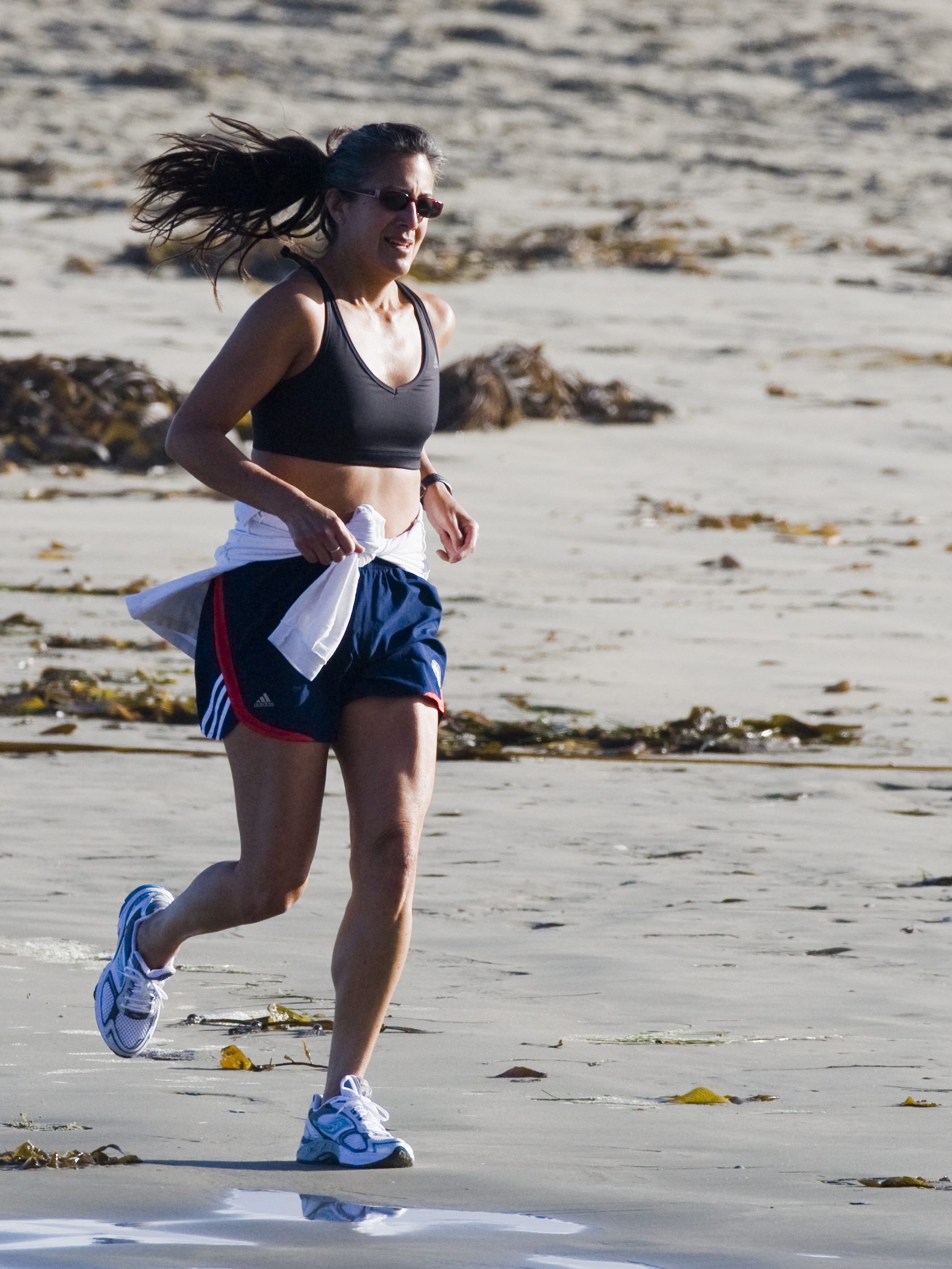
Photo: Michael “Mike” L. Baird, via Wikimedia Commons, CC BY 2.0. creativecommons.org/licenses/by/2.0.
What Makes Miami Run Clubs the City’s Most Efficient Networking Venue?
A conventional reception compresses thirty introductions into a single polished hour and produces almost no durable relationships. A weekly run inverts the arithmetic. It produces one or two introductions per session, but it repeats, and repetition is what converts recognition into trust.
The format also removes the two features that make traditional networking unproductive. There is no seating chart, so hierarchy dissolves. And there is no performance, because heat, humidity and a ten kilometre route do not accommodate a rehearsed persona.
Miami run clubs publish their schedules openly, which is precisely what makes them valuable to newcomers. Miami Run Club runs rotating routes across Brickell, Wynwood and Coconut Grove, including a Wednesday morning session at 6:00 a.m. from the Flamingo Track and a Tuesday evening three mile run departing from Julia and Henry’s downtown. Coconut Grove Run Club, founded in 2022, meets Wednesdays at 6:30 p.m. at Peacock Park. Founders Running Club operates as a global community with weekly runs across the United States, Europe and Asia, and its membership skews, as the name suggests, toward people who have started companies.
What makes the format genuinely unusual is the currency. Padel requires capital. A run club requires lungs. The barrier to entry is physiological rather than financial, which makes these groups the most ruthlessly meritocratic rooms in the city.
The consequence is worth sitting with. An analyst who holds a six minute mile alongside a fund principal for the length of the Rickenbacker climb has earned, in ninety minutes, a form of standing that the same analyst would spend three years failing to acquire through the corporate hierarchy. Nobody granted it. It cannot be revoked by a reorganisation. And it was not available for purchase, which is exactly what makes it legible to people who can purchase almost everything else.
Gear operates as the counter-signal. Arriving to a serious collective in unworn kit announces the visitor as a visitor, in the way an unmarked ski does on a difficult run. The regulars read it instantly, and they read it as a proxy for how the person is likely to behave in a longer commitment.
The etiquette follows from all of this and is enforced without ever being stated. Arrive to run rather than to pitch. Return often enough to become familiar. Allow the introduction to follow the relationship rather than precede it. Consistency is the credential.
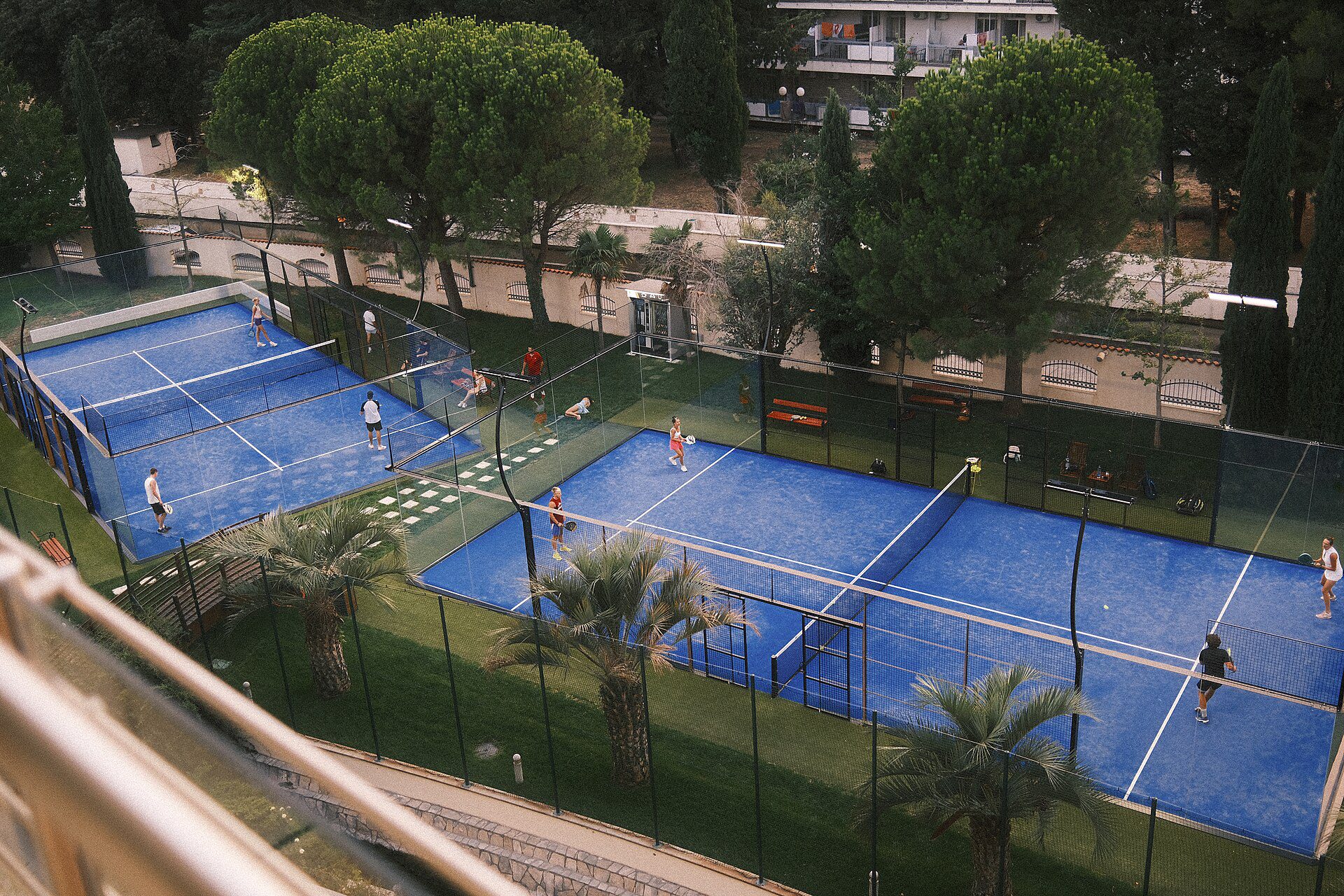
How Did Padel Compress the Golf Course?
Golf’s monopoly on business courtship rested on duration. Four hours with three other people produced a kind of intimacy that a lunch could not. Padel achieves a version of the same result in ninety minutes, which is why it has spread through Miami’s professional class faster than any racket sport in modern American history.
The growth figures are unusually well documented. The United States held 688 courts across 180 locations in 31 states during the second quarter of 2025, according to Misitrano Consulting. By early April 2026 the country passed 1,000 courts, an increase of roughly 45 percent in under a year, and the thousandth court was recorded in Miami at Privé Padel inside the THesis Hotel in Coral Gables. AFP reporting places Florida at approximately 40 percent of the national total, with the country’s roughly 770 courts at the time of its March 2026 survey still far behind Argentina’s 7,000 and Mexico’s 2,500.
Miami’s venues have stratified accordingly. Ultra Padel Club, in Midtown and the Design District, has built the largest active community in the country and carries more Google reviews than any other American padel club, alongside a pool and wellness facility that extends the session well past the match. Padel X Miami, co-founded by padel figure Nalle Grinda in downtown Miami, operates ten panoramic courts and remains the only club in the United States with a Lacoste collaboration. Reserve Padel anchors its Miami operation at the Miami Seaplane Base, where the Reserve Cup Series returned in January 2026 with the largest prize pool in professional padel history and a field including Arturo Coello, Agustín Tapia and Alejandro Galán. Real Padel Club remains the oldest venue in the city.
The networking advantage is structural rather than social. Doubles play forces cooperation with a partner and continuous observation of an opponent. Rallies are short, eye contact is constant, and the rotation between points creates natural conversational space. There is nowhere to retreat behind a presentation.
Editorial placeholderRecovery room photograph pendingMiami wellness venues, sauna and cold-plunge programming to be licensed for editorial use
Why Does the Real Conversation Happen After the Match?
The match is the introduction. The half hour afterward is the meeting.
Miami’s wellness venues have understood this and priced accordingly. The Standard Spa, Miami Beach remains the established reference point for the category, offering the one commodity the city’s social circuit rarely provides, which is unhurried time without the choreography of a formal meal. Sauna and cold plunge programming has become standard at the upper tier of racket and training clubs rather than a separate destination.
Mandale makes no physiological claim here, and readers should be sceptical of publications that do. The advantage of the recovery room is environmental, not clinical. Formality drops because the setting has no head of the table, conversation lengthens because there is no next appointment scheduled into the room, and privacy holds because the venue is member controlled.
That is the contemporary definition of luxury in a city with more capital than discretion: privacy, time and controlled access.
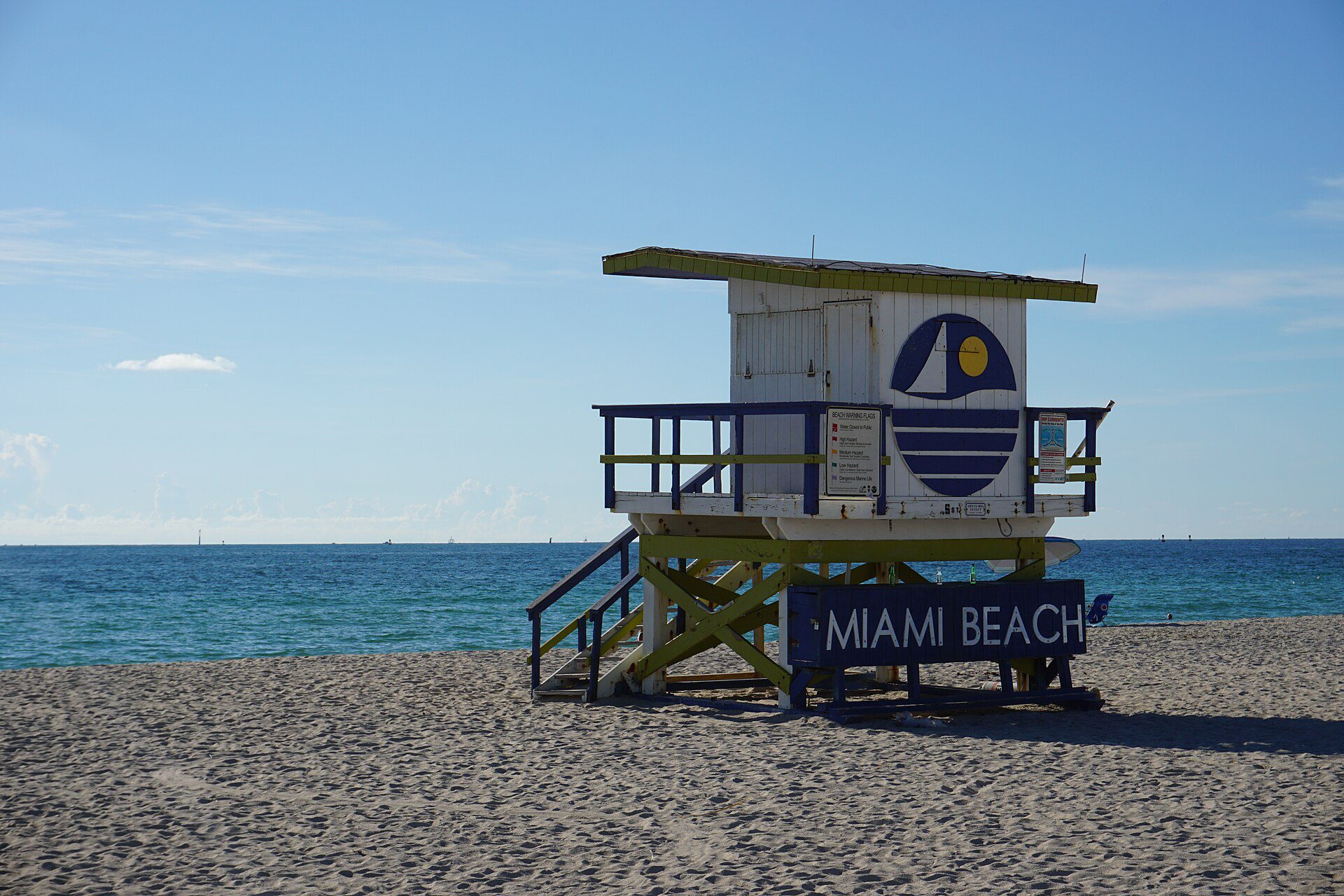
Why Miami Run Clubs and Padel Courts Work Here and Nowhere Else
Three structural conditions make Miami the capital of this behaviour, and no other American market holds all three.
Climate. The city sustains outdoor programming across most of the calendar, with summer heat and storm season the meaningful exceptions. Chicago and New York run clubs contract in January. Miami’s do not.
Migration. Knight Frank’s 2026 Wealth Report counted 89 people crossing the thirty million dollar threshold every day during 2025, with the United States home to 41 percent of newly created ultra high net worth individuals. A substantial share of that cohort arrives in Miami without a local network and must build one from nothing, which favours recurring, low-commitment entry points over invitation-only institutions.
Density. Wynwood, Brickell, Miami Beach, Coconut Grove and Coral Gables sit inside a twenty minute drive of one another. The same principal can run in Miami Beach at six, play in Midtown at noon and recover in Coral Gables by seven. The friction of reaching other people has effectively collapsed.
There is a fourth condition, harder to quantify. Knight Frank’s Next Generation survey found that nearly half of wealth holders aged 18 to 35 would rather spend a windfall on experience than on goods, and that health and wellness now rank above cars and watches among their stated priorities. Miami built its social infrastructure for that cohort before most cities recognised it existed.
Strategic Metrics and KPI Table
US padel court supply. Benchmark: 688 courts, Q2 2025 (Misitrano Consulting). Luxury standard: 1,000+ courts, April 2026. Mandale insight: Roughly 45 percent growth in under a year. Supply is still behind demand, which is what keeps membership selective.
Florida share of national supply. Benchmark: Even distribution across 31 states. Luxury standard: ~40 percent concentrated in Florida (AFP). Mandale insight: Miami is not a strong market within a national trend. It is the market.
Global footprint. Benchmark: 20,900 clubs and 58,300 courts worldwide (Playtomic, 2026). Luxury standard: ~8,000 courts added globally in 2025 alone. Mandale insight: The United States is classified as an early stage market with the steepest remaining runway.
US participation growth. Benchmark: 112,000 players, Q2 2025. Luxury standard: Growth of roughly 250 percent since 2022. Mandale insight: Player base is compounding faster than court supply, which sustains scarcity at the top venues.
Institutional validation. Benchmark: Recreational sport. Luxury standard: Pro Padel League raised $15 million in March 2026. Mandale insight: Capital has arrived. Brand activation windows will narrow and price will rise accordingly.
Professional calendar. Benchmark: Regional amateur tournaments. Luxury standard: Miami is the only US stop on the Premier Padel world tour. Mandale insight: The tour week is the single highest-value client programming window in the Miami sporting calendar.
UHNWI creation rate. Benchmark: 551,435 globally in 2021 (Knight Frank). Luxury standard: 713,626 globally by 2026, 89 new per day. Mandale insight: Miami absorbs a disproportionate share of arrivals who need a network immediately.
The Exclusive Mandale Recommendation
Most brands entering this space make the same error. They sponsor the run.
Sponsorship buys visibility at the moment participants are least receptive, which is during the activity itself, when attention is on pace, breath and route. The value in sweat networking sits in the thirty to forty minute window afterward, when adrenaline has dropped, the group has not yet dispersed, and nobody is performing. That window is almost never sold, because most operators have not recognised it as inventory.
Mandale’s position for luxury clients entering Miami is therefore inverted. Do not buy the activation. Own the recovery. Underwrite the coffee, the shaded seating, the cold towels, the space where the conversation actually happens, and do it without branding the moment heavily. A maison that provides the setting for a hundred consecutive Tuesday mornings becomes part of the ritual. A maison that puts a banner at the start line becomes an interruption to it.
The second recommendation is timing. Enter during the Premier Padel Miami window, when the city’s attention is already on the sport, but program the private client experience for the weeks on either side, when courts are available and the professional circus has moved on.
Visiting now
Technical FAQ
Which Miami run clubs are best for business networking?
Miami Run Club, Coconut Grove Run Club and Founders Running Club are the three with the most consistent professional attendance. Founders Running Club skews explicitly toward company builders and operates weekly across three continents. Coconut Grove Run Club has met at Peacock Park since 2022. Verify current schedules directly.
Is padel replacing golf as Miami’s business sport?
Not replacing, compressing. Golf retains its institutional weight, but padel delivers a comparable relationship outcome in ninety minutes instead of four hours. With Florida holding roughly 40 percent of American courts, Miami has the supply to support the substitution in a way no other US market does.
How many padel courts are there in the United States?
The country passed 1,000 courts in early April 2026. That figure was 688 courts across 180 locations in 31 states in the second quarter of 2025, per Misitrano Consulting, representing growth of roughly 45 percent in under a year. The milestone court opened in Coral Gables.
Which are the most established padel clubs in Miami?
Ultra Padel Club in Midtown and the Design District holds the largest active community in the country. Padel X Miami operates ten panoramic courts downtown. Reserve Padel anchors the Miami Seaplane Base and hosts the Reserve Cup. Real Padel Club is the city’s oldest venue.
What does sweat networking actually mean?
Sweat networking is the formation of business relationships inside recurring fitness and recovery rituals rather than at formal events. Its defining mechanic is repetition. A single reception produces recognition, whereas twelve consecutive Tuesday runs produce trust, which is the asset that transacts.
Does Miami host professional padel events?
Yes. Miami is the only United States stop on the Premier Padel world tour, with roughly 5,000 spectators attending the closing stages of the 2026 edition. The Reserve Cup Series also returned to the Miami Seaplane Base in January 2026 with the largest prize pool in professional padel history.
What does it cost to participate?
Community runs are typically free or carry a nominal event fee, while private padel and recovery memberships range widely by operator and access tier. Playtomic’s Global Padel Report tracks average court booking prices by market. Confirm current rates and guest policies directly with each venue.
What is the correct etiquette in these communities?
Join for the activity, attend consistently before requesting introductions, and keep first conversations short and personal. Do not photograph other participants without permission or treat the group as a prospect list. Knight Frank research indicates wellness now outranks cars and watches among wealth holders under 35, which means these rooms are protected accordingly.
Are these communities open to women?
Yes, and participation varies meaningfully by club rather than by category. Several of Miami’s largest run and racket communities have women in founding and leadership positions. Prospective participants should assess each organisation’s culture independently rather than assuming the scene is uniform.
About the Author.
Lila Tugender is Co-Founder and Editor-in-Chief of Mandale Luxury Magazine, covering the intersection of luxury, travel and access from Miami.
Sources and References.
Misitrano Consulting court census, cited by the specialist padel press, April 2026
AFP, reporting on padel’s Miami expansion, March and April 2026
Playtomic Global Padel Report 2026
Knight Frank, The Wealth Report 2026, wealth sizing model
Knight Frank, The Wealth Report 2025, Next Generation survey
United States Padel Association, court and participation projections
Premier Padel and Reserve Padel official event information
Book a Strategic Consultation
The Boardroom Has Been Demoted
The boardroom has not disappeared. It has been demoted to the place where agreements are signed rather than the place where they are formed. That shift is legible in the numbers. A country that held 688 padel courts in mid 2025 and more than 1,000 by April 2026 is not experiencing a fashion. It is building infrastructure, and it is building most of it in Florida. The principals who understand this are not adding a fitness routine to their calendar. They are relocating their pipeline to the only venue in Miami where access is earned in installments and cannot be purchased at the door. For luxury brands, the window is narrowing. Capital has already entered the category, courts are opening faster than communities can absorb them, and the operators who have not yet recognised the recovery room as sellable inventory will recognise it shortly.
The Mandale Newsletter
Be the first to receive our dining features, society calendar and private previews from the world of Mandale Luxury Magazine.
RelatedFrom the Magazine
(function(){
var root = document.querySelector(‘#lns-scope’) || document;
var rvEls = root.querySelectorAll(‘.rv’);
if (!rvEls.length) return;
rvEls.forEach(function(el){ el.classList.add(‘in’); });
if (!(‘IntersectionObserver’ in window)) return;
var io = new IntersectionObserver(function(es){
es.forEach(function(e){
if (e.isIntersecting) { e.target.classList.add(‘in’); io.unobserve(e.target); }
});
}, { rootMargin: ‘0px 0px -10% 0px’, threshold: 0.01 });
rvEls.forEach(function(el){ io.observe(el); });
})();
Sweat Networking: Why Miami Run Clubs and Padel Courts Became the New Boardrooms
Miami run clubs and padel courts have become the city’s most productive venue for high-value introductions, displacing the golf course and the gala circuit as the default setting for relationship building.
Miami run clubs have quietly become the most efficient business network in the city, and the padel courts that surround them have absorbed the function the golf course held for two generations. Miami, a market that added international capital faster than it added institutions to absorb it, needed a mechanism for strangers to build trust quickly. It found one in recurring physical ritual.
The traditional venues still hold their authority. The Brickell tower, the Design District showroom and the private dining room continue to close business. What has changed is where the relationship begins. Increasingly it begins at 6:00 a.m. on the Flamingo Track, on a glass-walled court in Midtown, or in the unhurried half hour after a session when nobody has anywhere else to be.
This is not a wellness trend and Mandale does not treat it as one. It is a Luxury Wellness Strategy with measurable infrastructure behind it, and the infrastructure has grown fast enough to be counted.
Key Takeaways.
- Padel supply in the United States grew about 45 percent in under a year, from 688 courts in the second quarter of 2025 to more than 1,000 by April 2026, according to counts compiled by Misitrano Consulting and reported by the specialist padel press.
- Florida accounts for roughly 40 percent of American courts, per AFP reporting, which concentrates the country’s padel economy inside a 30 minute radius of downtown Miami.
- Miami is the only United States stop on the Premier Padel world tour, giving the city a professional calendar that private clubs use to program invitation-only client days.
- Knight Frank’s Next Generation research found that health and wellness now outrank cars and watches as spending priorities among wealth holders aged 18 to 35, which reframes club membership as an access asset rather than a fitness expense.
- Miami run clubs operate on published, recurring schedules, which makes them the lowest-friction entry point into the city’s relationship economy for newly arrived principals.
- The barrier to entry at a run club is physiological rather than financial, which makes these the most meritocratic rooms in Miami and the only ones where standing cannot be bought at the door.
Photo: Michael “Mike” L. Baird, via Wikimedia Commons, CC BY 2.0. creativecommons.org/licenses/by/2.0.
What Makes Miami Run Clubs the City’s Most Efficient Networking Venue?
A conventional reception compresses thirty introductions into a single polished hour and produces almost no durable relationships. A weekly run inverts the arithmetic. It produces one or two introductions per session, but it repeats, and repetition is what converts recognition into trust.
The format also removes the two features that make traditional networking unproductive. There is no seating chart, so hierarchy dissolves. And there is no performance, because heat, humidity and a ten kilometre route do not accommodate a rehearsed persona.
Miami run clubs publish their schedules openly, which is precisely what makes them valuable to newcomers. Miami Run Club runs rotating routes across Brickell, Wynwood and Coconut Grove, including a Wednesday morning session at 6:00 a.m. from the Flamingo Track and a Tuesday evening three mile run departing from Julia and Henry’s downtown. Coconut Grove Run Club, founded in 2022, meets Wednesdays at 6:30 p.m. at Peacock Park. Founders Running Club operates as a global community with weekly runs across the United States, Europe and Asia, and its membership skews, as the name suggests, toward people who have started companies.
What makes the format genuinely unusual is the currency. Padel requires capital. A run club requires lungs. The barrier to entry is physiological rather than financial, which makes these groups the most ruthlessly meritocratic rooms in the city.
The consequence is worth sitting with. An analyst who holds a six minute mile alongside a fund principal for the length of the Rickenbacker climb has earned, in ninety minutes, a form of standing that the same analyst would spend three years failing to acquire through the corporate hierarchy. Nobody granted it. It cannot be revoked by a reorganisation. And it was not available for purchase, which is exactly what makes it legible to people who can purchase almost everything else.
Gear operates as the counter-signal. Arriving to a serious collective in unworn kit announces the visitor as a visitor, in the way an unmarked ski does on a difficult run. The regulars read it instantly, and they read it as a proxy for how the person is likely to behave in a longer commitment.
The etiquette follows from all of this and is enforced without ever being stated. Arrive to run rather than to pitch. Return often enough to become familiar. Allow the introduction to follow the relationship rather than precede it. Consistency is the credential.
How Did Padel Compress the Golf Course?
Golf’s monopoly on business courtship rested on duration. Four hours with three other people produced a kind of intimacy that a lunch could not. Padel achieves a version of the same result in ninety minutes, which is why it has spread through Miami’s professional class faster than any racket sport in modern American history.
The growth figures are unusually well documented. The United States held 688 courts across 180 locations in 31 states during the second quarter of 2025, according to Misitrano Consulting. By early April 2026 the country passed 1,000 courts, an increase of roughly 45 percent in under a year, and the thousandth court was recorded in Miami at Privé Padel inside the THesis Hotel in Coral Gables. AFP reporting places Florida at approximately 40 percent of the national total, with the country’s roughly 770 courts at the time of its March 2026 survey still far behind Argentina’s 7,000 and Mexico’s 2,500.
Miami’s venues have stratified accordingly. Ultra Padel Club, in Midtown and the Design District, has built the largest active community in the country and carries more Google reviews than any other American padel club, alongside a pool and wellness facility that extends the session well past the match. Padel X Miami, co-founded by padel figure Nalle Grinda in downtown Miami, operates ten panoramic courts and remains the only club in the United States with a Lacoste collaboration. Reserve Padel anchors its Miami operation at the Miami Seaplane Base, where the Reserve Cup Series returned in January 2026 with the largest prize pool in professional padel history and a field including Arturo Coello, Agustín Tapia and Alejandro Galán. Real Padel Club remains the oldest venue in the city.
The networking advantage is structural rather than social. Doubles play forces cooperation with a partner and continuous observation of an opponent. Rallies are short, eye contact is constant, and the rotation between points creates natural conversational space. There is nowhere to retreat behind a presentation.
Why Does the Real Conversation Happen After the Match?
The match is the introduction. The half hour afterward is the meeting.
Miami’s wellness venues have understood this and priced accordingly. The Standard Spa, Miami Beach remains the established reference point for the category, offering the one commodity the city’s social circuit rarely provides, which is unhurried time without the choreography of a formal meal. Sauna and cold plunge programming has become standard at the upper tier of racket and training clubs rather than a separate destination.
Mandale makes no physiological claim here, and readers should be sceptical of publications that do. The advantage of the recovery room is environmental, not clinical. Formality drops because the setting has no head of the table, conversation lengthens because there is no next appointment scheduled into the room, and privacy holds because the venue is member controlled.
That is the contemporary definition of luxury in a city with more capital than discretion: privacy, time and controlled access.
Why Miami Run Clubs and Padel Courts Work Here and Nowhere Else
Three structural conditions make Miami the capital of this behaviour, and no other American market holds all three.
Climate. The city sustains outdoor programming across most of the calendar, with summer heat and storm season the meaningful exceptions. Chicago and New York run clubs contract in January. Miami’s do not.
Migration. Knight Frank’s 2026 Wealth Report counted 89 people crossing the thirty million dollar threshold every day during 2025, with the United States home to 41 percent of newly created ultra high net worth individuals. A substantial share of that cohort arrives in Miami without a local network and must build one from nothing, which favours recurring, low-commitment entry points over invitation-only institutions.
Density. Wynwood, Brickell, Miami Beach, Coconut Grove and Coral Gables sit inside a twenty minute drive of one another. The same principal can run in Miami Beach at six, play in Midtown at noon and recover in Coral Gables by seven. The friction of reaching other people has effectively collapsed.
There is a fourth condition, harder to quantify. Knight Frank’s Next Generation survey found that nearly half of wealth holders aged 18 to 35 would rather spend a windfall on experience than on goods, and that health and wellness now rank above cars and watches among their stated priorities. Miami built its social infrastructure for that cohort before most cities recognised it existed.
Strategic Metrics and KPI Table
US padel court supply. Benchmark: 688 courts, Q2 2025 (Misitrano Consulting). Luxury standard: 1,000+ courts, April 2026. Mandale insight: Roughly 45 percent growth in under a year. Supply is still behind demand, which is what keeps membership selective.
Florida share of national supply. Benchmark: Even distribution across 31 states. Luxury standard: ~40 percent concentrated in Florida (AFP). Mandale insight: Miami is not a strong market within a national trend. It is the market.
Global footprint. Benchmark: 20,900 clubs and 58,300 courts worldwide (Playtomic, 2026). Luxury standard: ~8,000 courts added globally in 2025 alone. Mandale insight: The United States is classified as an early stage market with the steepest remaining runway.
US participation growth. Benchmark: 112,000 players, Q2 2025. Luxury standard: Growth of roughly 250 percent since 2022. Mandale insight: Player base is compounding faster than court supply, which sustains scarcity at the top venues.
Institutional validation. Benchmark: Recreational sport. Luxury standard: Pro Padel League raised $15 million in March 2026. Mandale insight: Capital has arrived. Brand activation windows will narrow and price will rise accordingly.
Professional calendar. Benchmark: Regional amateur tournaments. Luxury standard: Miami is the only US stop on the Premier Padel world tour. Mandale insight: The tour week is the single highest-value client programming window in the Miami sporting calendar.
UHNWI creation rate. Benchmark: 551,435 globally in 2021 (Knight Frank). Luxury standard: 713,626 globally by 2026, 89 new per day. Mandale insight: Miami absorbs a disproportionate share of arrivals who need a network immediately.
The Exclusive Mandale Recommendation
Most brands entering this space make the same error. They sponsor the run.
Sponsorship buys visibility at the moment participants are least receptive, which is during the activity itself, when attention is on pace, breath and route. The value in sweat networking sits in the thirty to forty minute window afterward, when adrenaline has dropped, the group has not yet dispersed, and nobody is performing. That window is almost never sold, because most operators have not recognised it as inventory.
Mandale’s position for luxury clients entering Miami is therefore inverted. Do not buy the activation. Own the recovery. Underwrite the coffee, the shaded seating, the cold towels, the space where the conversation actually happens, and do it without branding the moment heavily. A maison that provides the setting for a hundred consecutive Tuesday mornings becomes part of the ritual. A maison that puts a banner at the start line becomes an interruption to it.
The second recommendation is timing. Enter during the Premier Padel Miami window, when the city’s attention is already on the sport, but program the private client experience for the weeks on either side, when courts are available and the professional circus has moved on.
Visiting now
Technical FAQ
Which Miami run clubs are best for business networking?
Miami Run Club, Coconut Grove Run Club and Founders Running Club are the three with the most consistent professional attendance. Founders Running Club skews explicitly toward company builders and operates weekly across three continents. Coconut Grove Run Club has met at Peacock Park since 2022. Verify current schedules directly.
Is padel replacing golf as Miami’s business sport?
Not replacing, compressing. Golf retains its institutional weight, but padel delivers a comparable relationship outcome in ninety minutes instead of four hours. With Florida holding roughly 40 percent of American courts, Miami has the supply to support the substitution in a way no other US market does.
How many padel courts are there in the United States?
The country passed 1,000 courts in early April 2026. That figure was 688 courts across 180 locations in 31 states in the second quarter of 2025, per Misitrano Consulting, representing growth of roughly 45 percent in under a year. The milestone court opened in Coral Gables.
Which are the most established padel clubs in Miami?
Ultra Padel Club in Midtown and the Design District holds the largest active community in the country. Padel X Miami operates ten panoramic courts downtown. Reserve Padel anchors the Miami Seaplane Base and hosts the Reserve Cup. Real Padel Club is the city’s oldest venue.
What does sweat networking actually mean?
Sweat networking is the formation of business relationships inside recurring fitness and recovery rituals rather than at formal events. Its defining mechanic is repetition. A single reception produces recognition, whereas twelve consecutive Tuesday runs produce trust, which is the asset that transacts.
Does Miami host professional padel events?
Yes. Miami is the only United States stop on the Premier Padel world tour, with roughly 5,000 spectators attending the closing stages of the 2026 edition. The Reserve Cup Series also returned to the Miami Seaplane Base in January 2026 with the largest prize pool in professional padel history.
What does it cost to participate?
Community runs are typically free or carry a nominal event fee, while private padel and recovery memberships range widely by operator and access tier. Playtomic’s Global Padel Report tracks average court booking prices by market. Confirm current rates and guest policies directly with each venue.
What is the correct etiquette in these communities?
Join for the activity, attend consistently before requesting introductions, and keep first conversations short and personal. Do not photograph other participants without permission or treat the group as a prospect list. Knight Frank research indicates wellness now outranks cars and watches among wealth holders under 35, which means these rooms are protected accordingly.
Are these communities open to women?
Yes, and participation varies meaningfully by club rather than by category. Several of Miami’s largest run and racket communities have women in founding and leadership positions. Prospective participants should assess each organisation’s culture independently rather than assuming the scene is uniform.
About the Author.
Lila Tugender is Co-Founder and Editor-in-Chief of Mandale Luxury Magazine, covering the intersection of luxury, travel and access from Miami.
Sources and References.
Misitrano Consulting court census, cited by the specialist padel press, April 2026
AFP, reporting on padel’s Miami expansion, March and April 2026
Playtomic Global Padel Report 2026
Knight Frank, The Wealth Report 2026, wealth sizing model
Knight Frank, The Wealth Report 2025, Next Generation survey
United States Padel Association, court and participation projections
Premier Padel and Reserve Padel official event information
The Boardroom Has Been Demoted
The boardroom has not disappeared. It has been demoted to the place where agreements are signed rather than the place where they are formed. That shift is legible in the numbers. A country that held 688 padel courts in mid 2025 and more than 1,000 by April 2026 is not experiencing a fashion. It is building infrastructure, and it is building most of it in Florida. The principals who understand this are not adding a fitness routine to their calendar. They are relocating their pipeline to the only venue in Miami where access is earned in installments and cannot be purchased at the door. For luxury brands, the window is narrowing. Capital has already entered the category, courts are opening faster than communities can absorb them, and the operators who have not yet recognised the recovery room as sellable inventory will recognise it shortly.
The Mandale Newsletter
Be the first to receive our dining features, society calendar and private previews from the world of Mandale Luxury Magazine.