Nobildonne Relais Rome: A Unique Experience in a Timeless Palazzo Where Every Suite Honors a Noblewoman
On a street opened by a Renaissance pope, beside the palace of the Borghese, the noble floor of a nineteenth-century palazzo hides a five-suite residence under four-metre frescoed ceilings, for a maximum of twelve guests at a time.
Each is named for a woman who shaped Rome. Mandale Luxury Magazine checked in this month to find out whether the idea survives the night. It does, from the moment the door opens to the moment the keys go back.
Nobildonne Relais is a five-suite historic residence on the piano nobile of Palazzo Mereghi, at Via della Fontanella di Borghese 35 in Rome’s Campo Marzio, beside Palazzo Borghese and a few minutes on foot from the Spanish Steps. It hosts a maximum of twelve guests, is part of the MICHELIN Guide Hotel Selection 2026, and names each suite after a Roman noblewoman.
Nobildonne Relais is a five-suite residence on the piano nobile of Palazzo Mereghi at Via della Fontanella di Borghese 35, in Rome’s Campo Marzio district, directly beside Palazzo Borghese and a few minutes on foot from the Spanish Steps. The property is part of the MICHELIN Guide Hotel Selection 2026, hosts a maximum of twelve guests at a time across almost 300 square metres, and since December 2025 belongs to the Ferretti Collection of Ferretti Hotels Group, a family of historic residences in Italy’s art cities and resorts on the Adriatic. Each one carries the name of a Roman noblewoman of the sixteenth to nineteenth centuries: Paolina Borghese, Donna Olimpia Pamphilj, Artemisia Gentileschi, Lucrezia Borgia and Beatrice Cenci.
The name means “noblewomen”, and the house takes it seriously. Every suite holds a one-off artwork created for the Relais by the local artists of Studiovagante, who also drew the house’s logo and stationery: each is a graphic reinterpretation of a famous portrait of the woman in question, hanging today in the Galleria Borghese, Palazzo Doria Pamphilj, Palazzo Barberini or the Royal Collection in London. The other paintings in the suites come from the private collection of the architects who designed the opening. The fabrics, colours and furnishings of each room are chosen to echo her character.
This month our editorial team stayed at the Relais, in the Artemisia Gentileschi suite, and was shown through four of its five suites by Alla Kurovska, coordinator of the residence. What follows separates what we lived from what the Relais, the MICHELIN Guide and Rome’s architectural records say about the house.
What Is the Story of the Palazzo Behind Nobildonne Relais?
The street came first. Via della Fontanella di Borghese forms part of the old Via Trinitatis, opened by Pope Paul III in 1544 together with Via del Clementino and Via dei Condotti to lead pilgrims towards Trinità dei Monti, according to the Roman heritage site Roma Segreta. Its name comes from a basin fountain that once stood against the wall of Palazzo Borghese; the fountain that survives today, at the corner of Via del Leoncino, was installed by Pope Paul V Borghese in the seventeenth century and still runs on the ancient Acqua Vergine aqueduct.
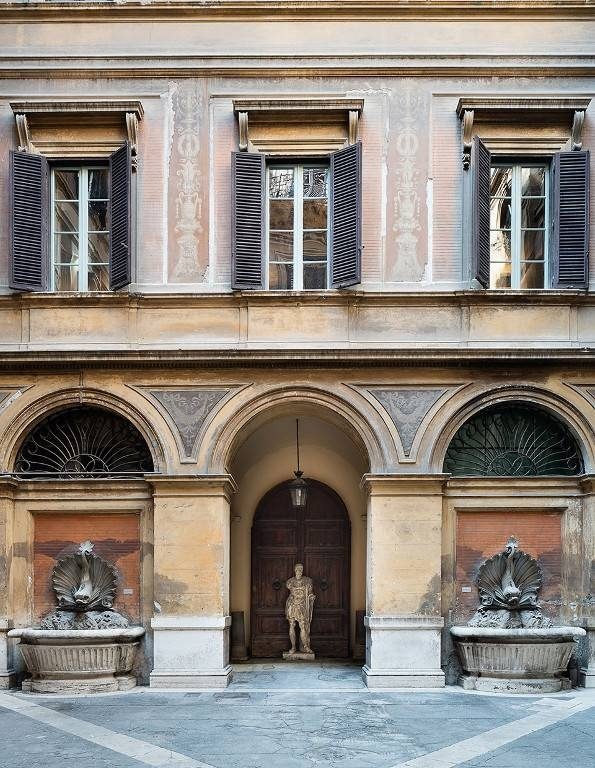
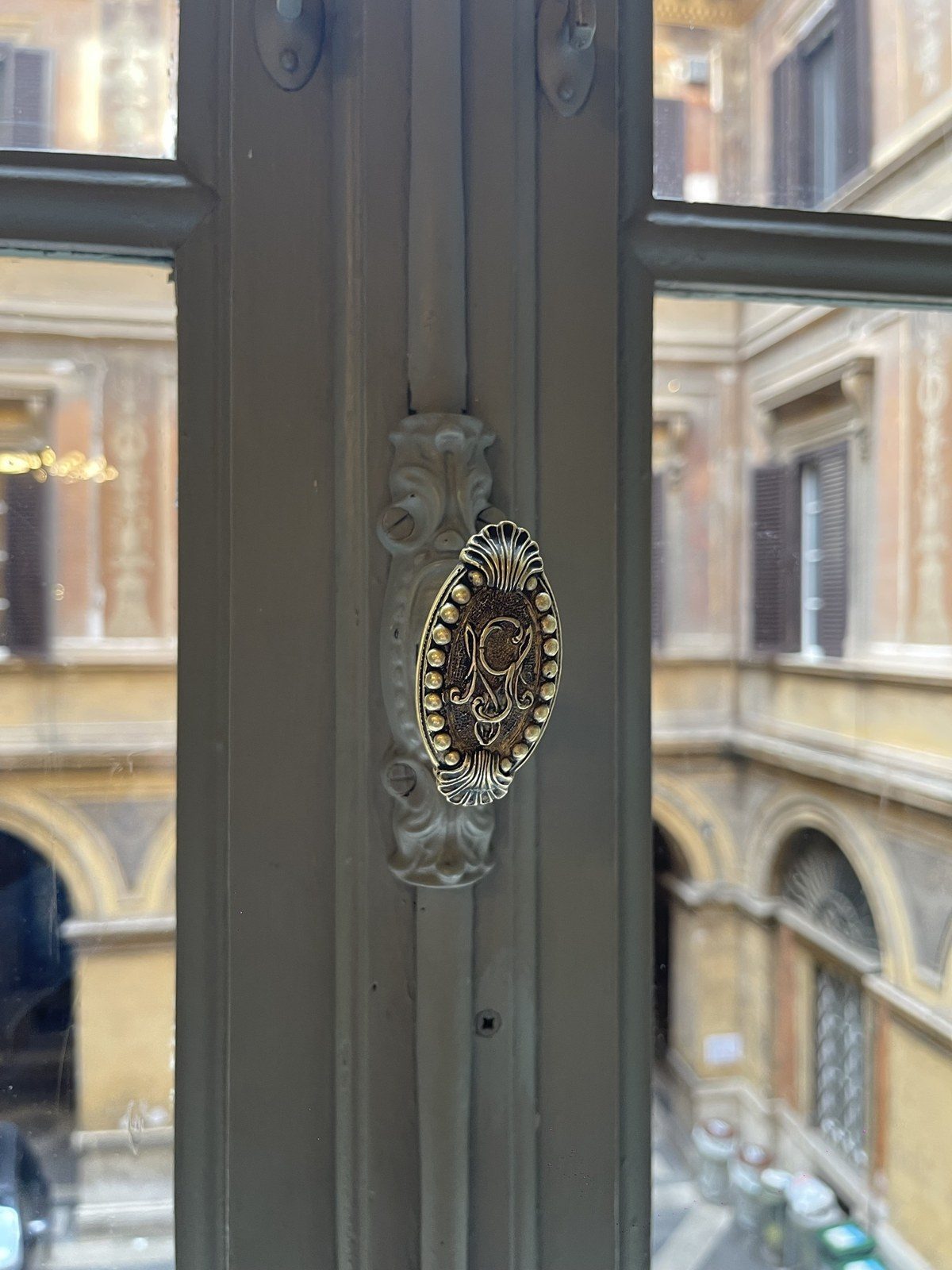
Palazzo Mereghi, also known as Palazzo Quarantotti Mereghi, at number 35, arrived three centuries later. The nineteenth-century palace was designed by Gioacchino Ersoch, the city architect best known for the Testaccio slaughterhouse and the 1886 renovation of Teatro Argentina, and was raised floor by floor, which is why the house itself does not give a single date of construction. The courtyard keeps two twin fountains on either side of an arch, each fed by a large fish set on a shell above carved aquatic plants. The windows of the suites look into that courtyard, and the brass handle on ours still carried the engraved initials G.M.: Marquis Giulio Mereghi, the noble banker who, with Francesco Borghese and other Roman aristocrats, founded the Banco di Roma on 9 March 1880 with a capital of six million lire.
The Relais occupies the first upper floor, the palace’s only piano nobile, reached from the courtyard by an elevator that is itself three centuries old, still in service and very much part of the experience. The residence opened shortly before the pandemic and began operating fully once travel returned. Because every space is original and protected, the house cannot host a restaurant; what it could do was restore the floor room by room around the Renaissance-style frescoes and the hand-laid Venetian mosaic floors, with doors and windows finished in grey and gold and lighting planned to bring out the ceilings. Since December 2025 the residence belongs to the Ferretti Collection of Ferretti Hotels Group, which gathers historic residences in Italy’s art cities and family resorts on the Adriatic Sea.
Five rooms, one floor, original frescoes, and a theme carried all the way from the name on the door to the portrait on the wall.
Five Suites, Five Women Who Shaped Rome
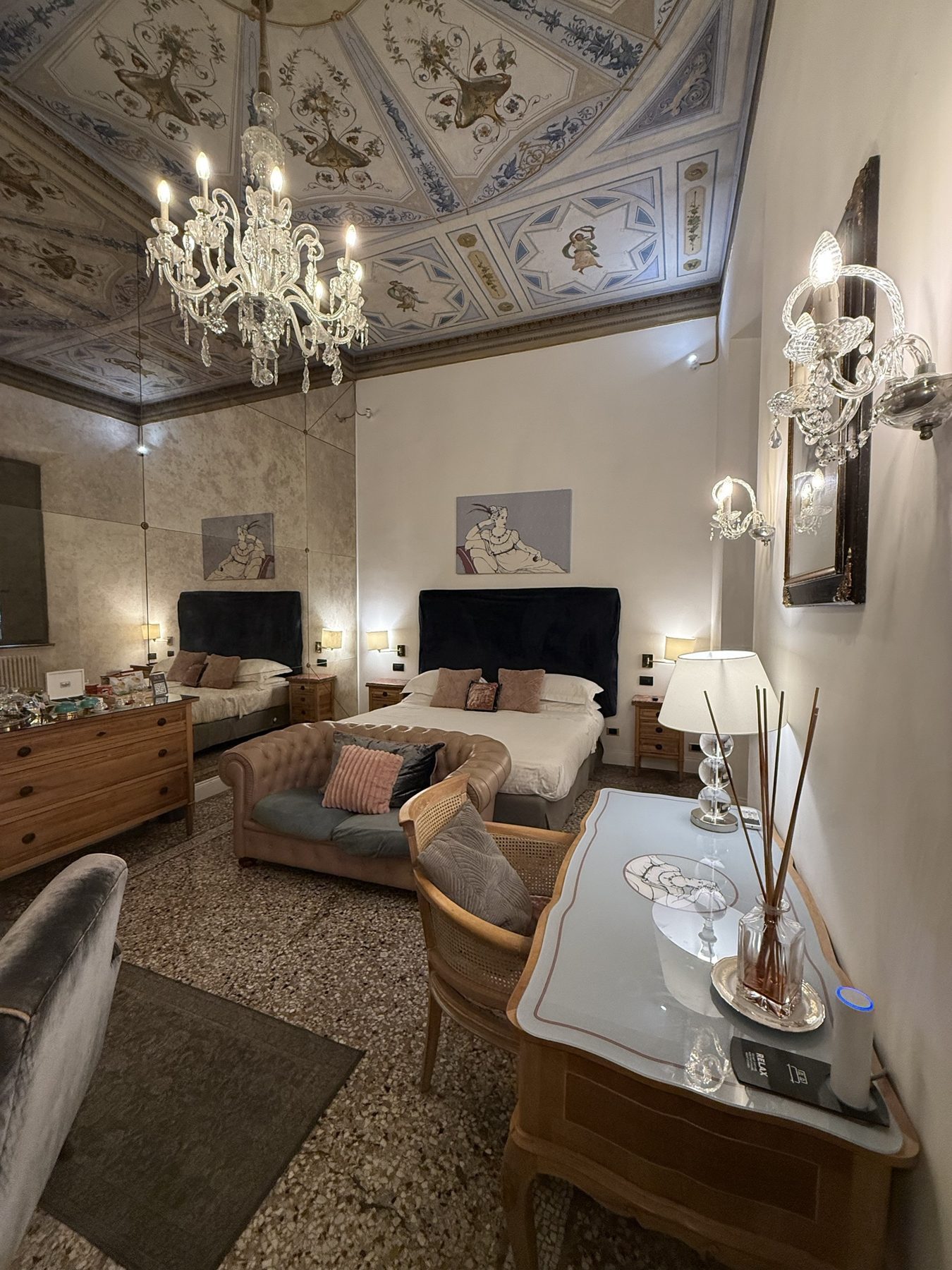
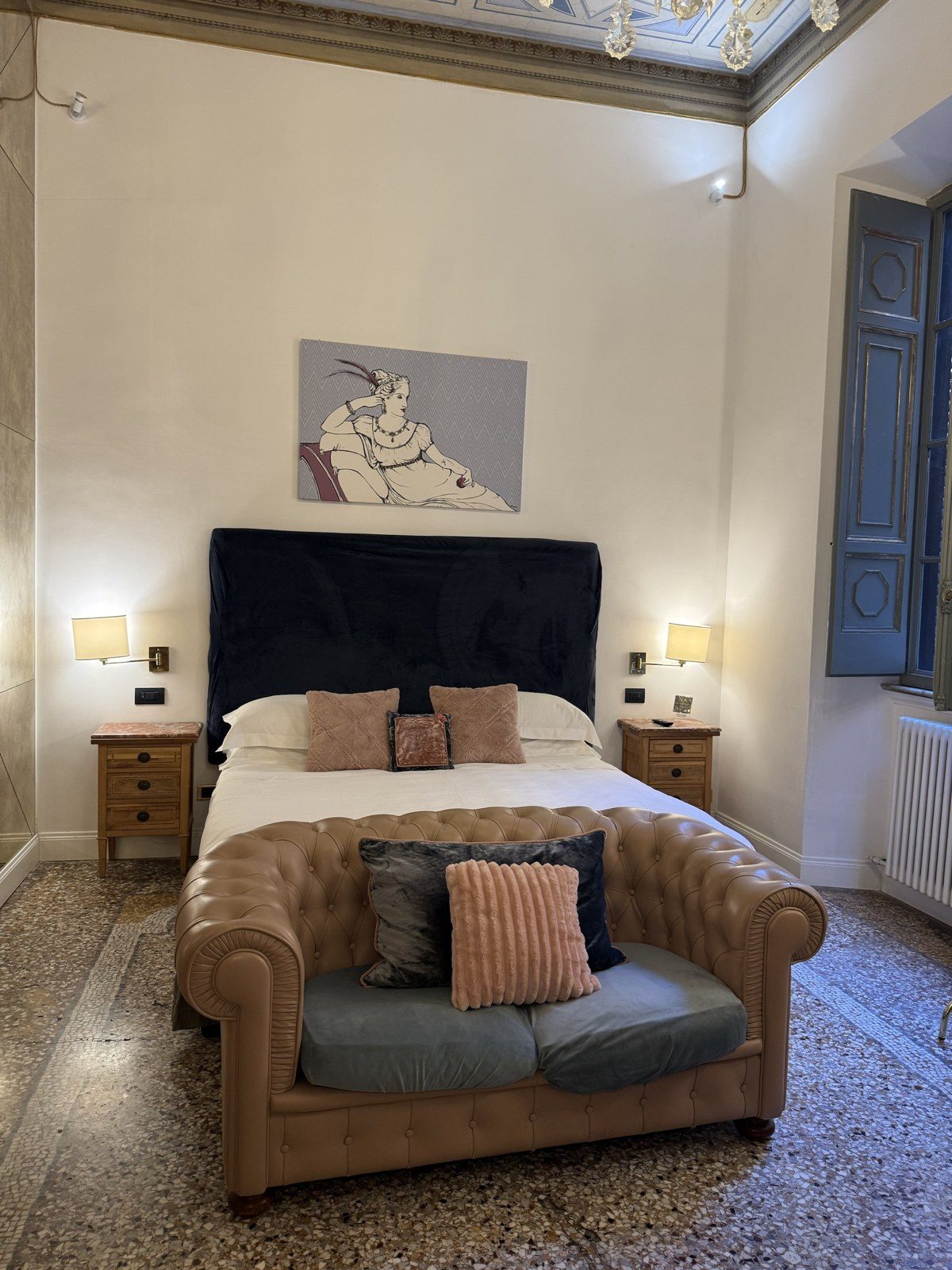
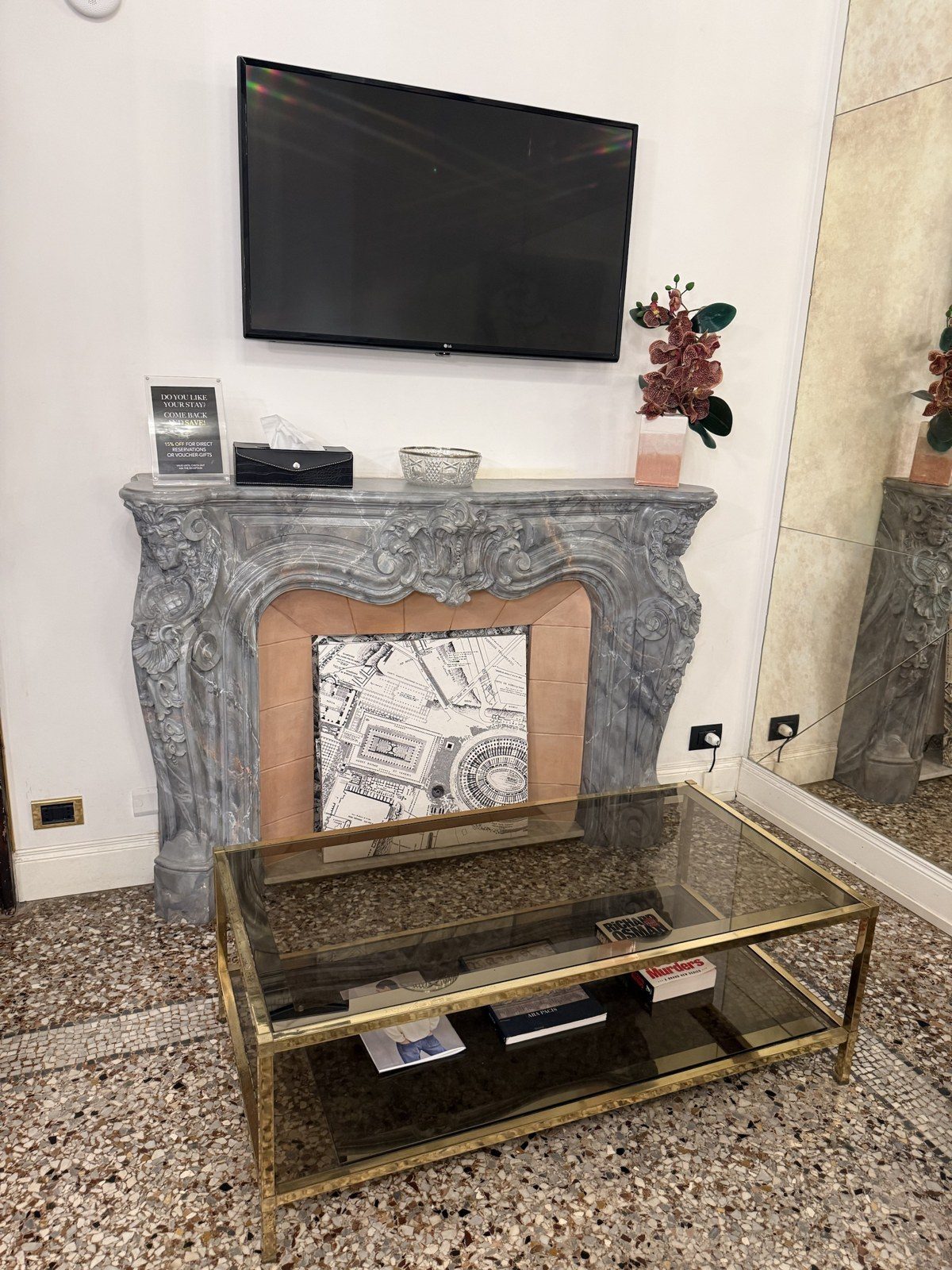
Paolina Borghese is the most theatrical and romantic of the five: a radial fresco of arabesques and birds spreading from a central medallion, a wall of antiqued mirror that doubles the chandelier, a navy velvet headboard, a tan leather Chesterfield at the foot of the bed and a grey marble fireplace carved with scrolls, its hearth lined with an old plan of the Colosseum. The bathroom is Portuguese pink marble. The artwork reworks Canova’s Pauline Bonaparte as Venus Victrix, the 1805 to 1808 marble that still scandalises visitors to the Galleria Borghese.
Donna Olimpia Pamphilj has mirror-framed walls, a fireplace, a 4.30-metre coffered fresco in grey-blue and ochre and a bathroom in yellow travertine entered through a quarter-arch. Its artwork reworks Alessandro Algardi’s High Baroque bust of Olimpia Maidalchini Pamphilj, the sister-in-law who ran Pope Innocent X’s household and much of his papacy, now in Palazzo Doria Pamphilj.
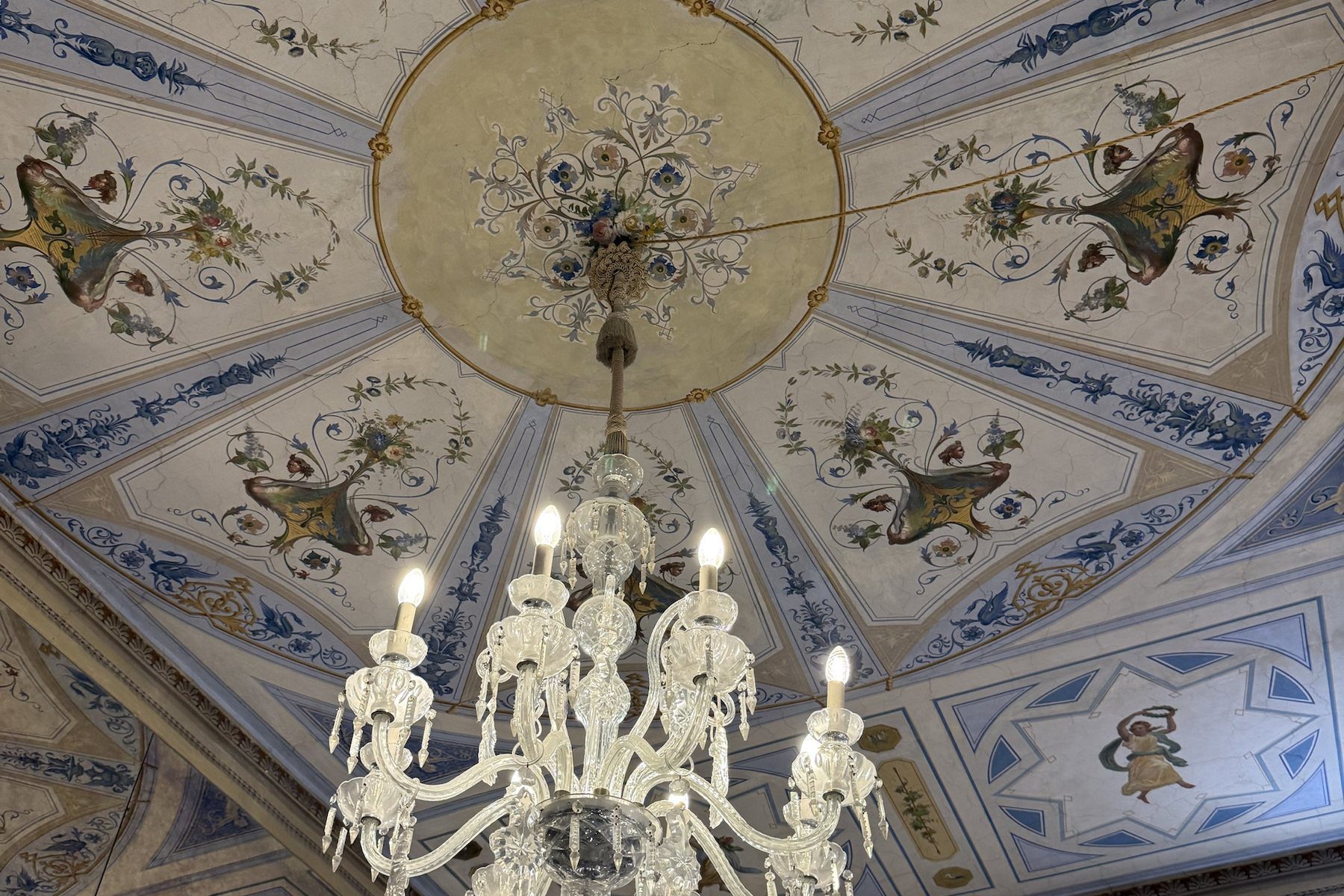
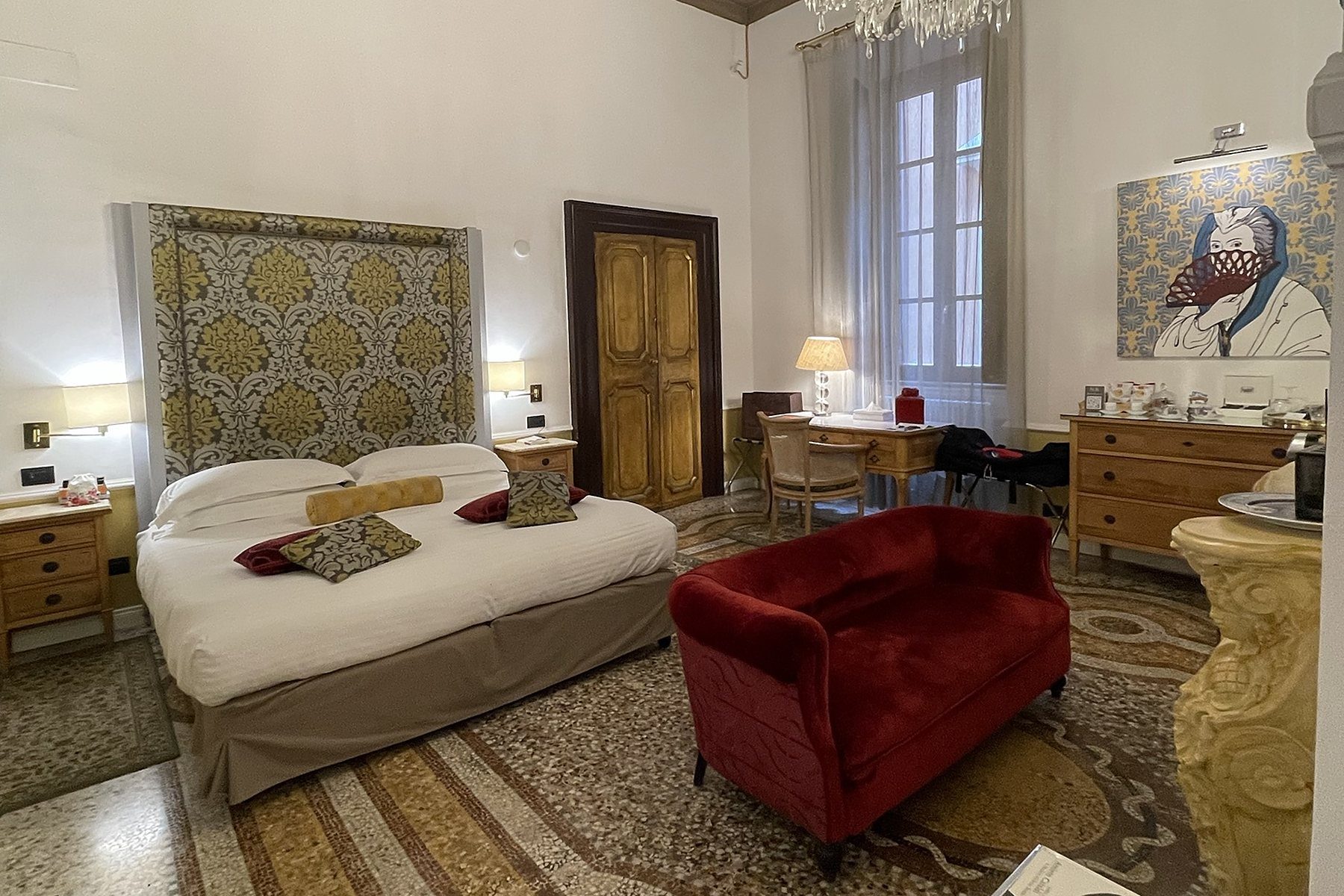
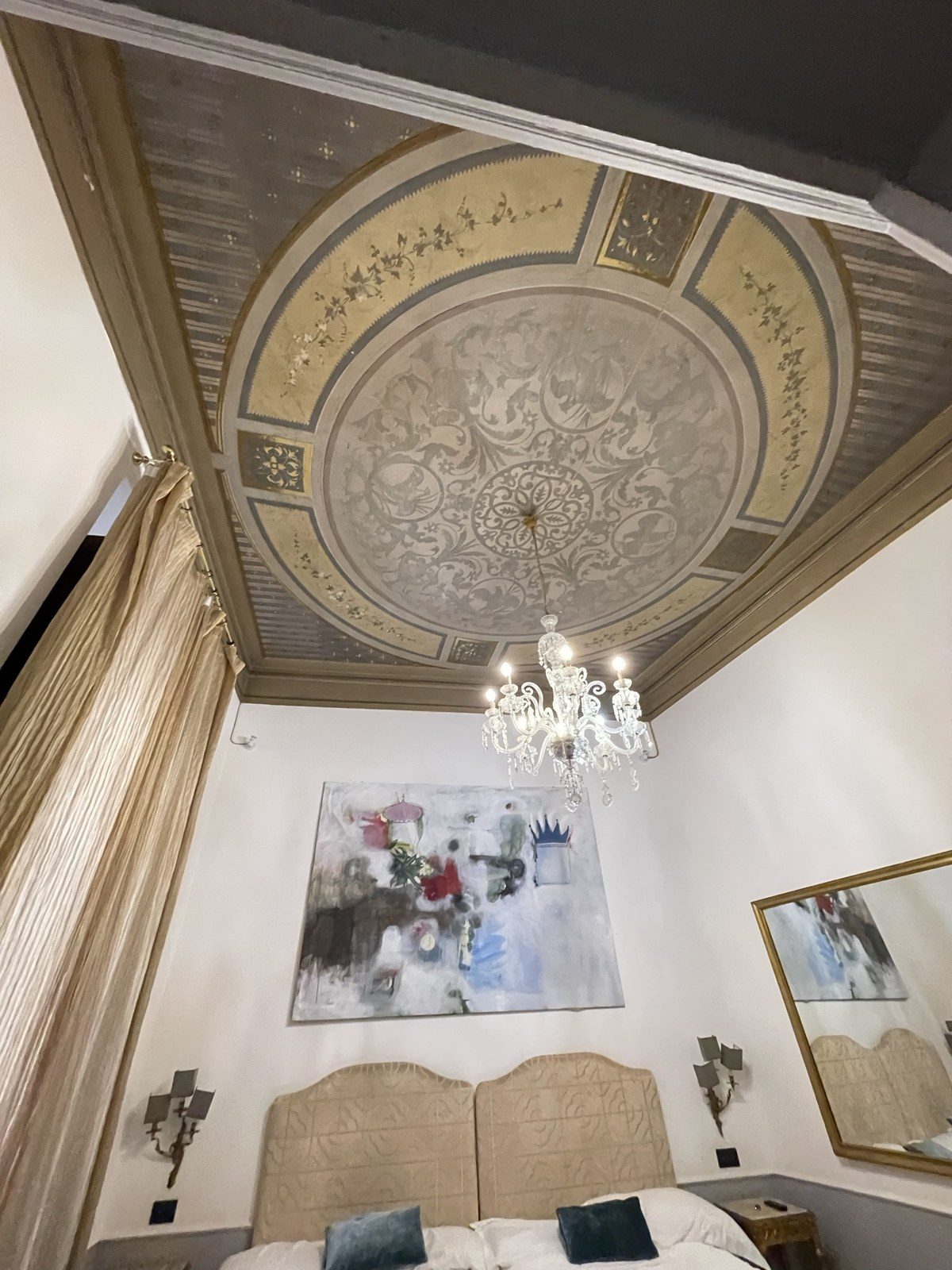
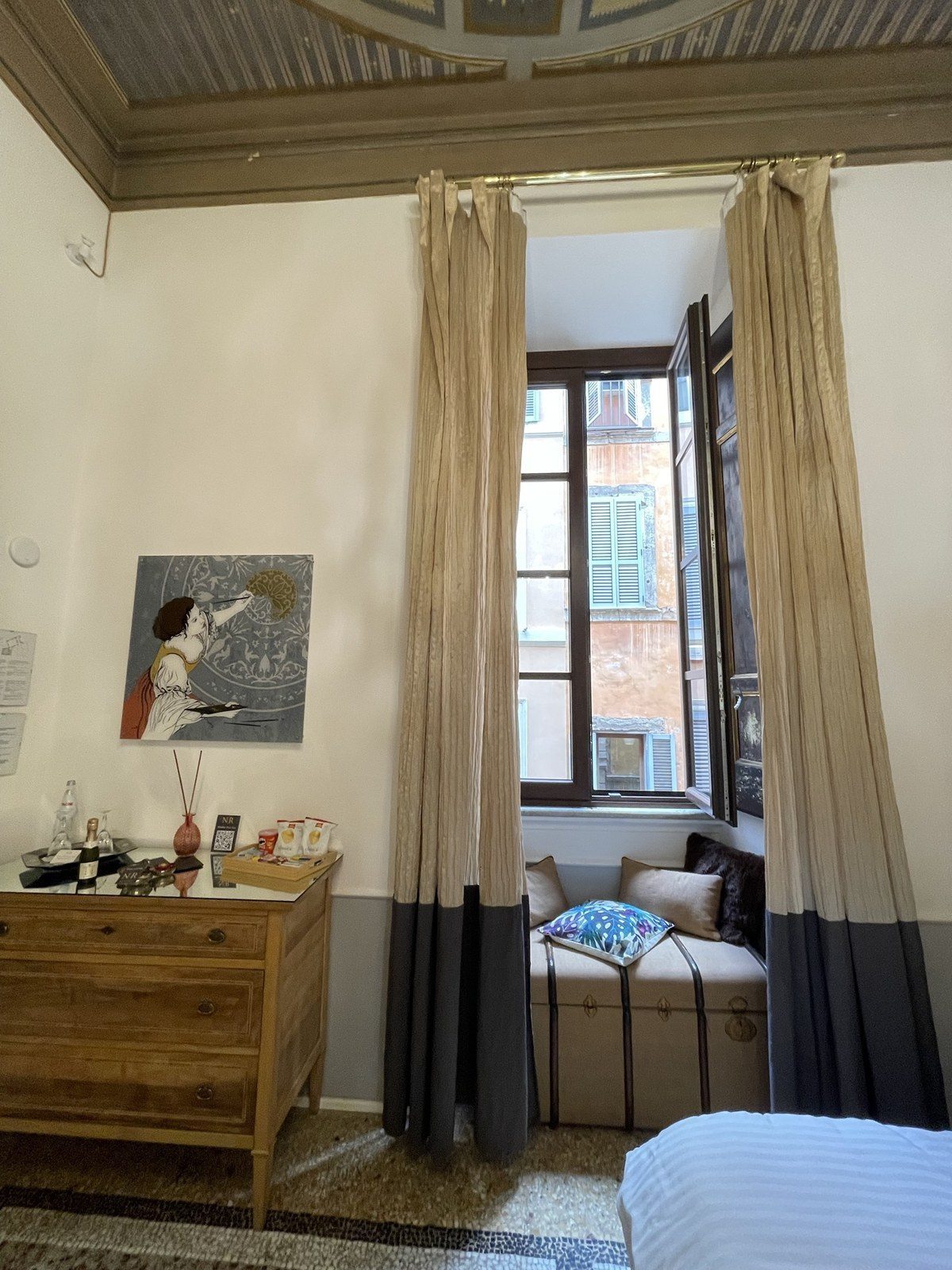
Artemisia Gentileschi takes its cue from the most celebrated female painter of the Roman Baroque. A circular fresco of arabesques crowns the ceiling and is answered by a mosaic rosette on the floor; a large contemporary canvas titled King and Queen hangs over the two beds, which join on request into a 240-centimetre king, and a graphic reproduction of her 1638 Self-Portrait as the Allegory of Painting, whose original belongs to the Royal Collection, hangs beside the window.
Lucrezia Borgia is the largest at 50 square metres, with a frescoed master bedroom, a fireplace, a vaulted lounge with an arched window, a kitchen and dining area, and a Carrara marble bathroom; it accommodates up to three guests; its portrait reinterprets Bartolomeo Veneto’s 1501 Flora, which critics have long read as her true likeness.
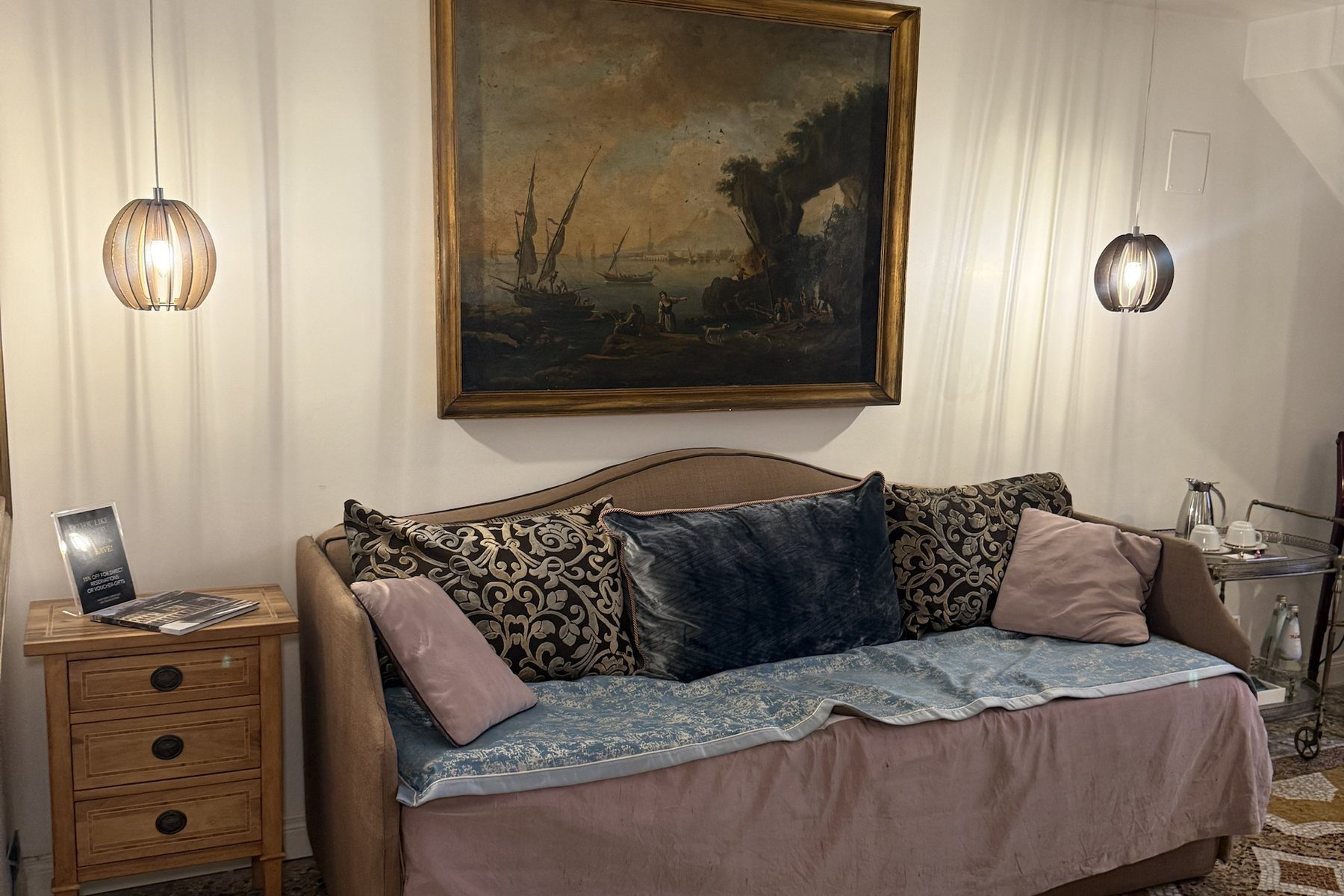
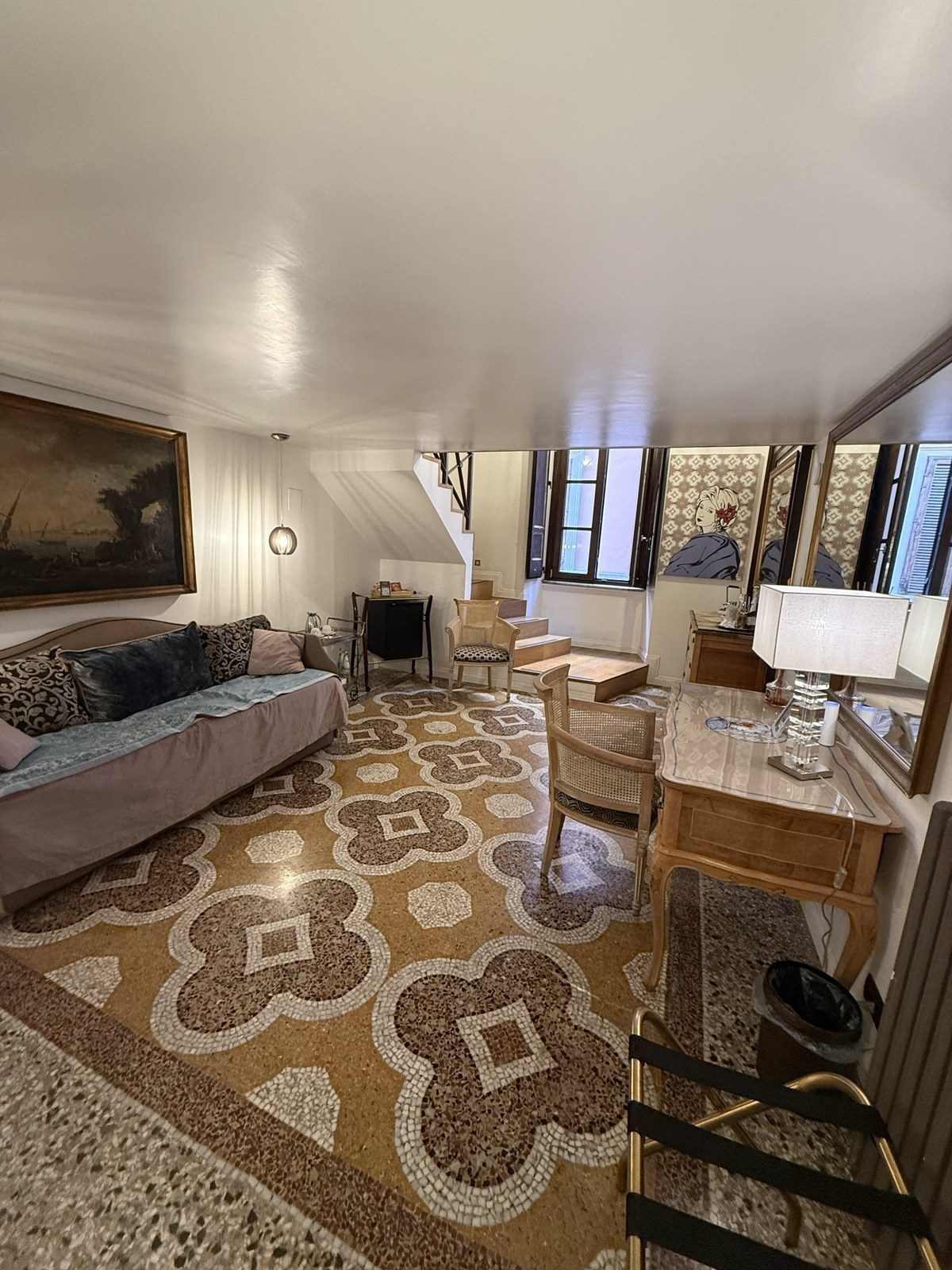
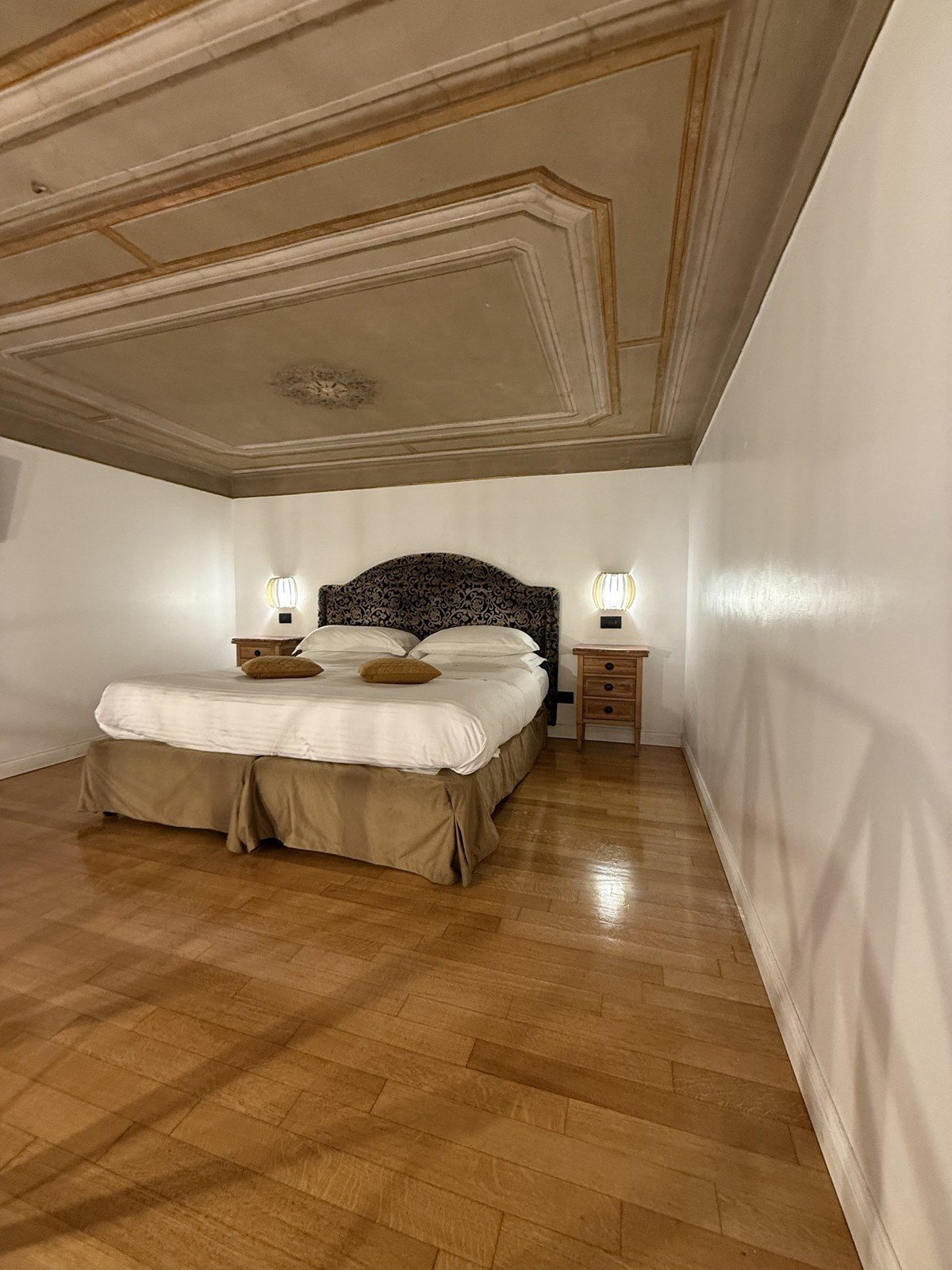
Beatrice Cenci, for up to three guests, is built on two levels: a lounge with a daybed under an eighteenth-century-style seascape, a writing desk beneath a gilt mirror and a Nespresso corner, then a short staircase up to a mezzanine bedroom with a coffered ceiling and a parquet floor. The bathroom is dark arabesque marble with a crystal pendant. Above the dresser hangs Studiovagante’s take on the portrait attributed to Guido Reni, around 1600, held at Palazzo Barberini.
Inside the Artemisia Gentileschi Suite
The suite is laid out as a small apartment. A private entrance with a mosaic floor holds the coffee station; a built-in wardrobe keeps a safe, an iron and a luggage rack; a writing desk with a lacquered grey top sits between two cane armchairs under a 50-inch screen. Two comfortable beds, dressed in white under quilted headboards and a pair of teal velvet cushions, sit beneath that circular fresco and a crystal chandelier; the other four suites have 190 by 190 centimetre king beds. The bathroom is lit by a large window that reflects off glass tiles.
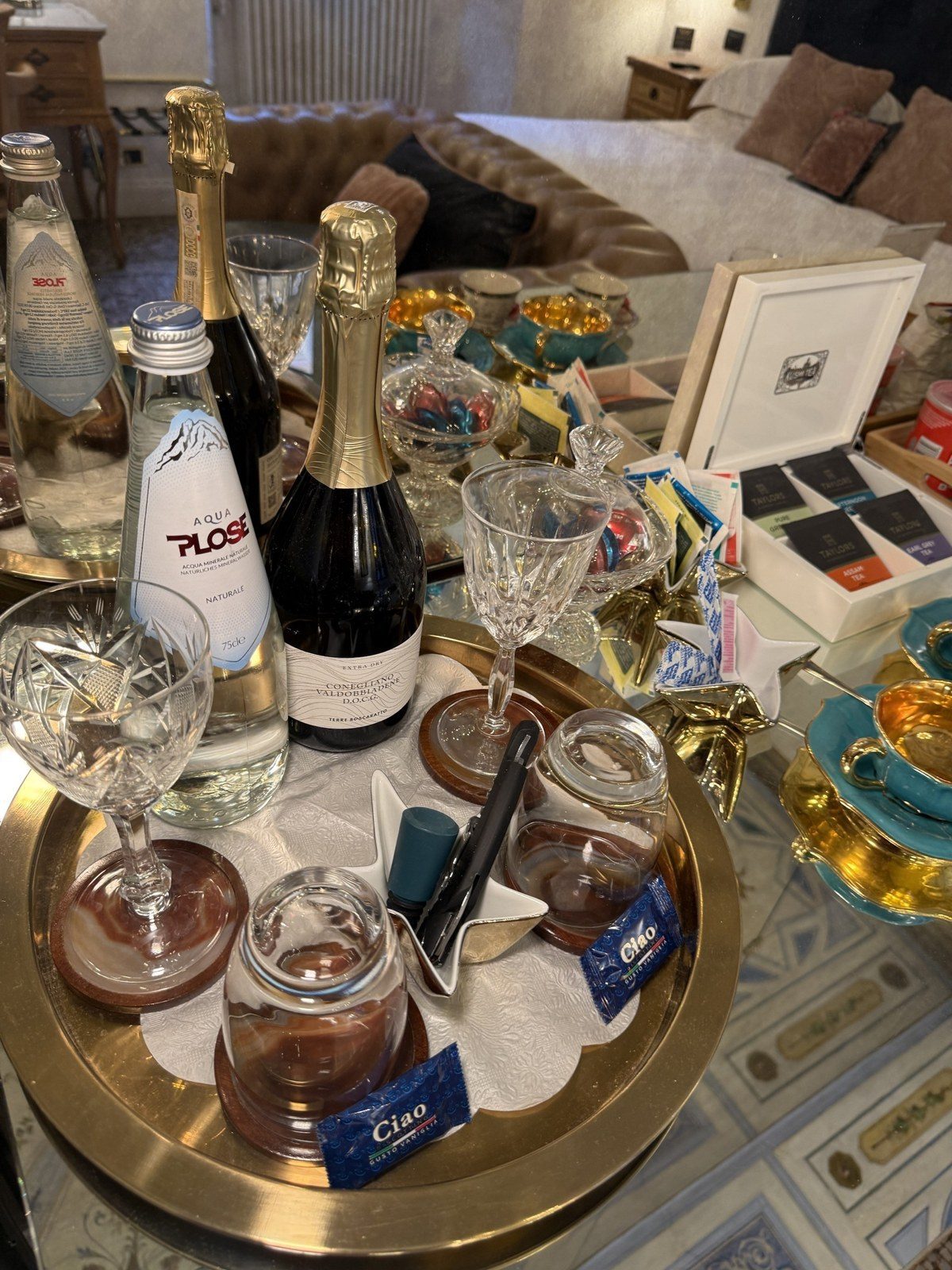
The tall window opens onto the courtyard, framed by ochre façades and grey shutters, with a cushioned trunk bench tucked into the embrasure for reading. On the mirrored chest beneath the Artemisia portrait we found a bottle of Conegliano Valdobbiadene Prosecco DOCG with two crystal flutes, Plose mineral water, a tray of snacks and a Guerlain amenity pouch. In the bathroom, shower gel, conditioning shampoo, body cream and hand soap by Parfums M. Micallef, the niche perfume house from Grasse; the residence stocks only Micallef for body and soul, down to the shoe shine. Every suite has its own complimentary coffee station, with Nespresso, teas, herbal infusions and biscuits, served in fine porcelain, a ritual the house takes seriously. A handwritten card from the staff waited beside the glasses. The nightstand held a printed map titled “Around Nobildonne Relais”, listing 29 restaurants and cafés in walking distance, the current issue of The New York Times Magazine and a DK guide to Rome.
What Is It Like to Stay There?
First, a sense of quiet. Then, an air of intimacy. Nobildonne is not properly a traditional hotel but a noble residence once owned by the Marquis Mereghi. This means every space is original and protected, and there is no dine-in service; however, the multilingual concierge team assists guests until the evening with restaurant recommendations, transfers, tours and concerts, and by WhatsApp during the night. This maison’s strength is people who know it: we were welcomed at the door by one of the concierges, who handled check-in and luggage, and later by Alla Kurovska, who coordinates the residence, walked us through the salon and each suite’s story, and handed over the keys. Hospitality here is personal rather than procedural.
That is also what makes the house work for a certain kind of traveller. With only five suites on a single floor and a street door that opens to no one else, the historic residence can be taken in its entirety, with exclusive use of the salon and the fully equipped kitchen included. A family, a couple travelling with staff, or a guest who moves with a driver and security can hold the whole piano nobile and still be three minutes from Via dei Condotti. Privacy here is not a service; it is the architecture.
“Here we concentrate on a maximum of twelve guests at a time. True luxury is about privacy, where you can switch off, relax and go incognito, simply enjoying the moment without the necessity of everything being photographed or shared.”
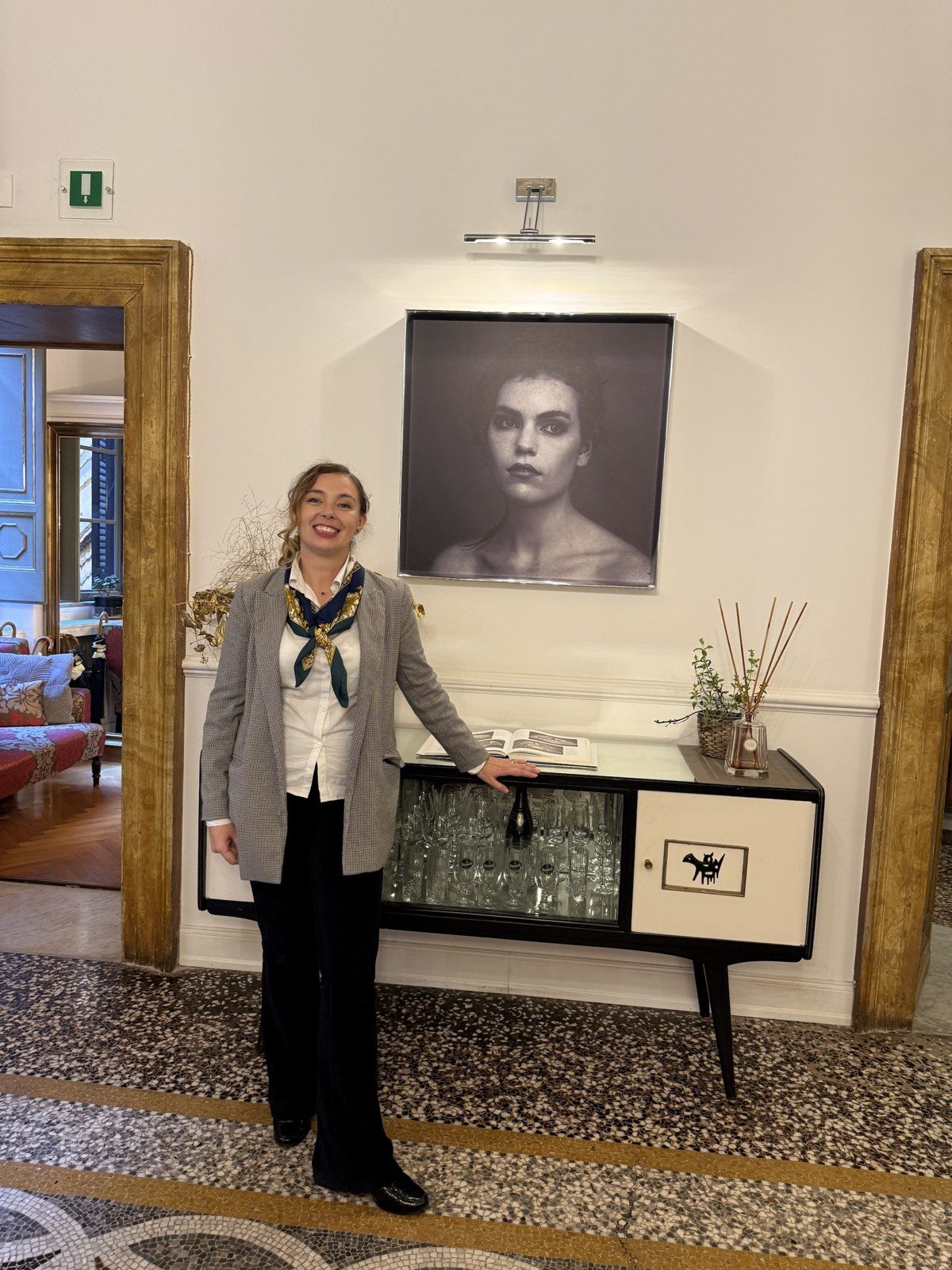
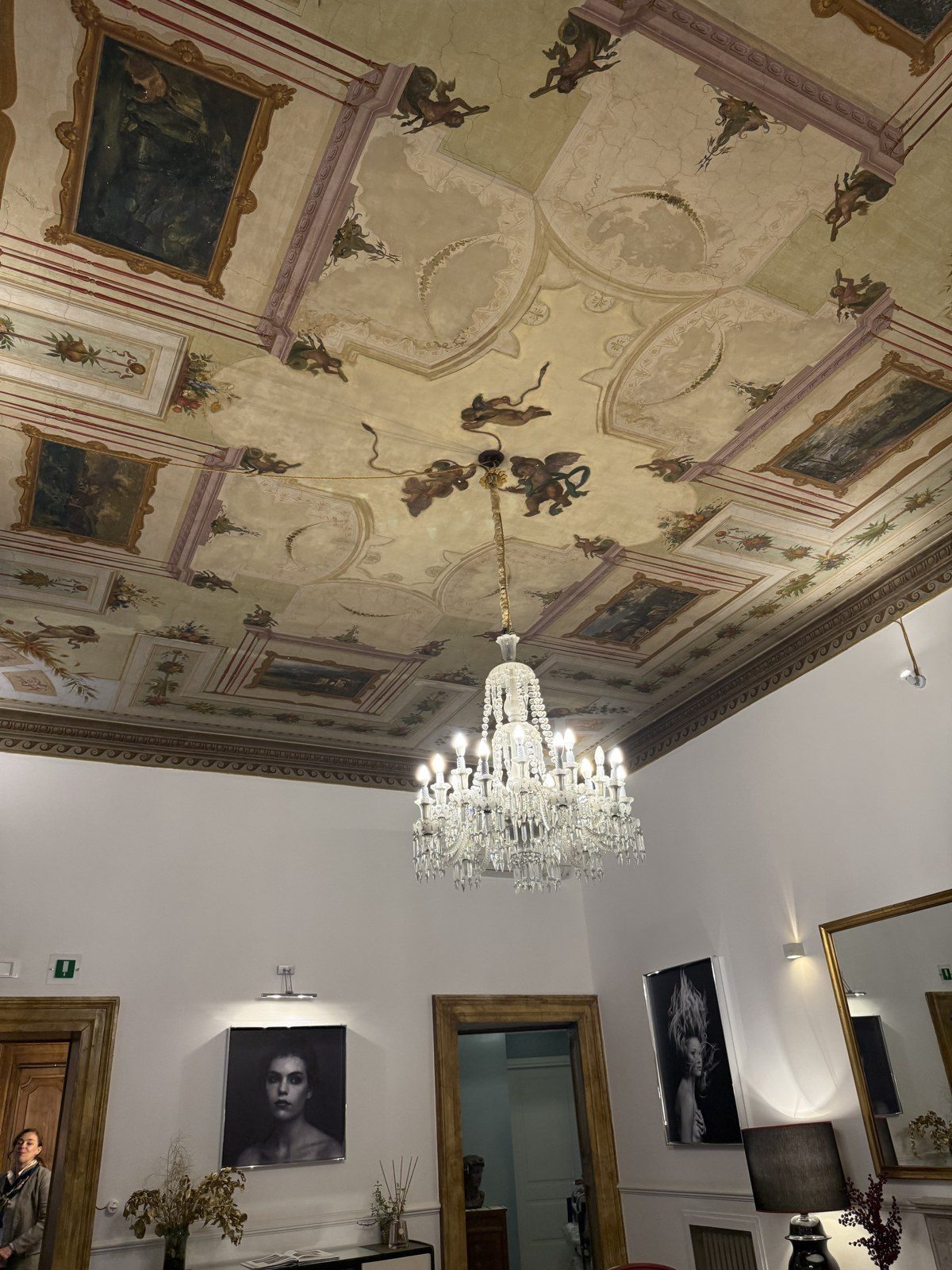
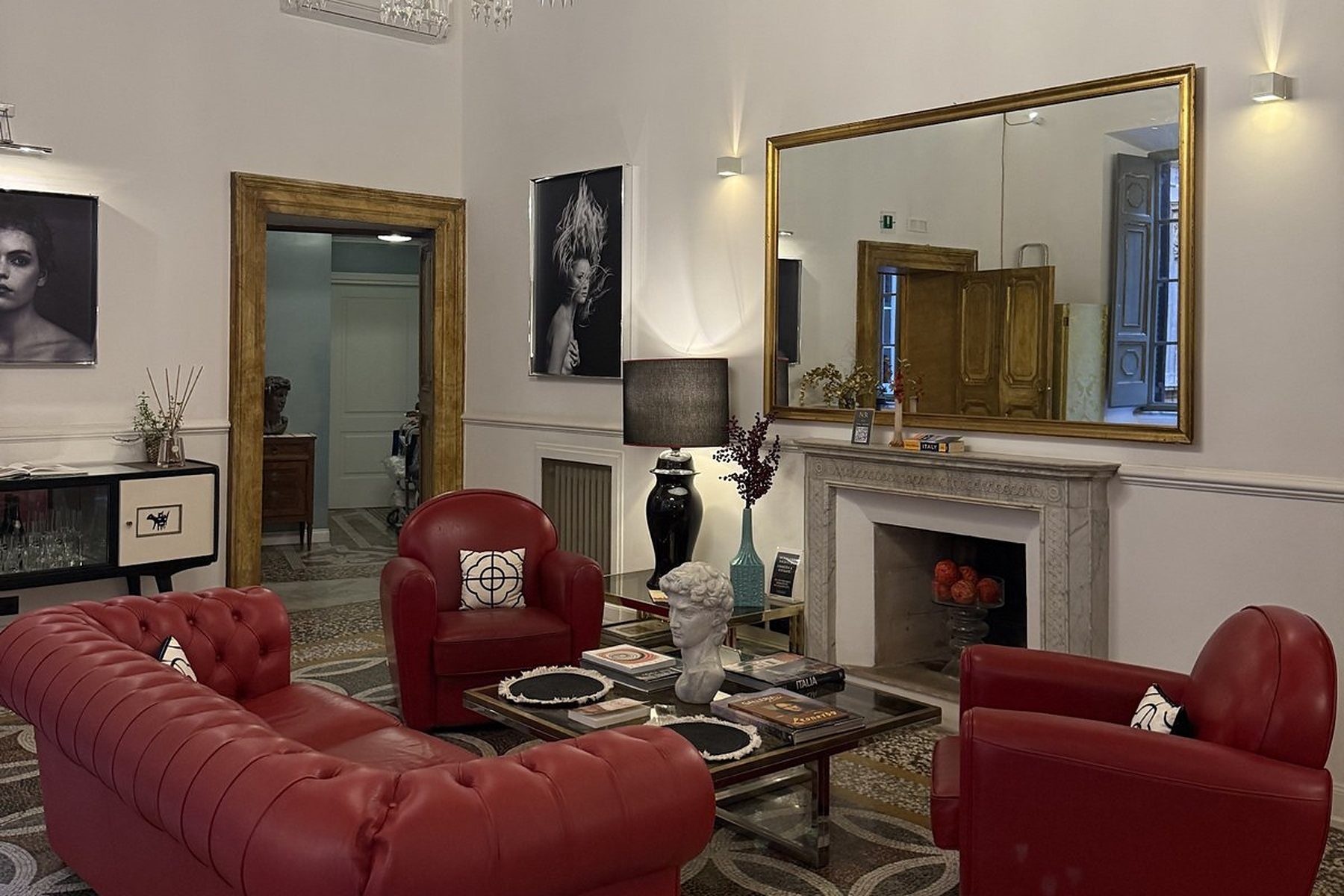
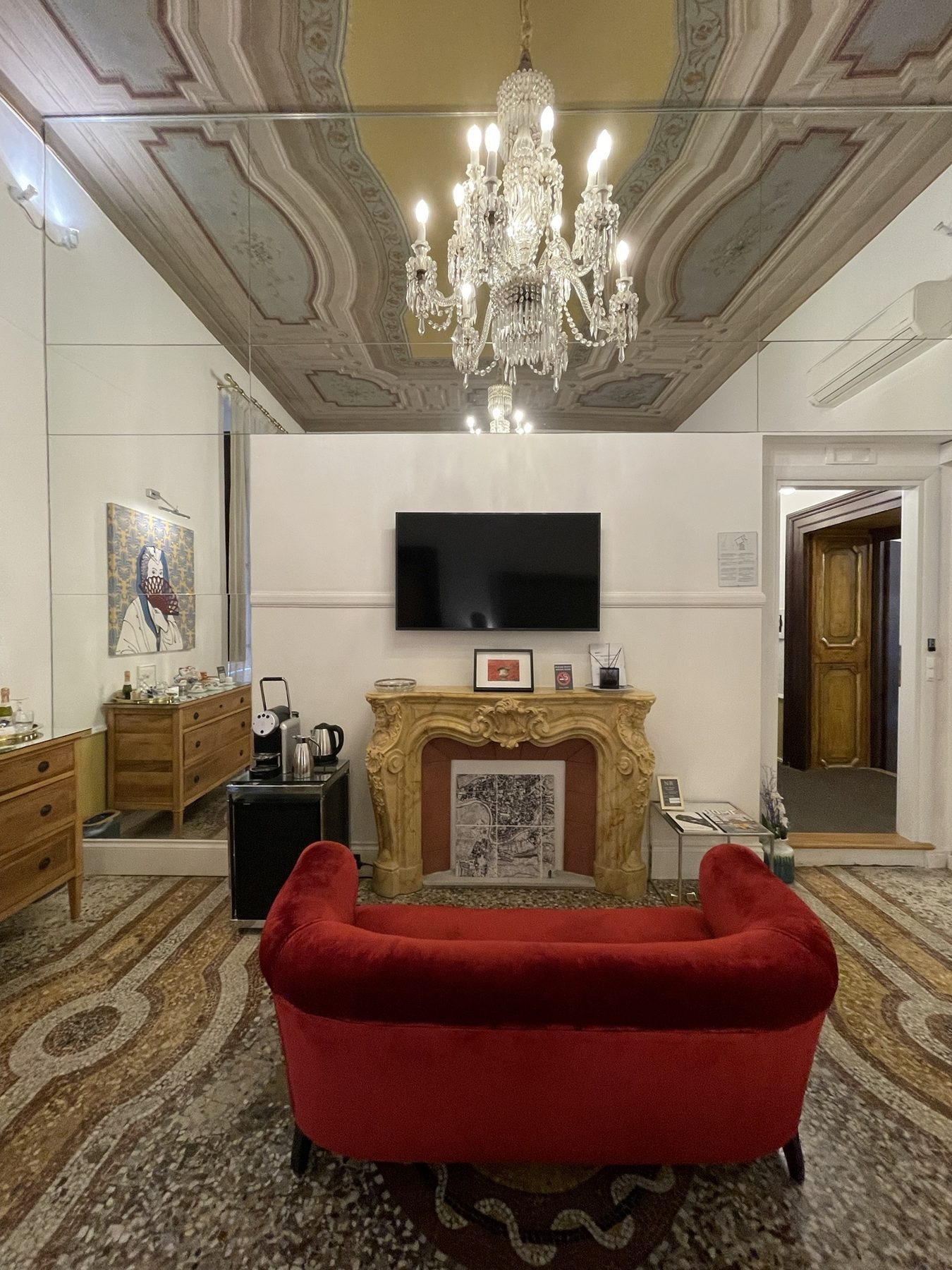
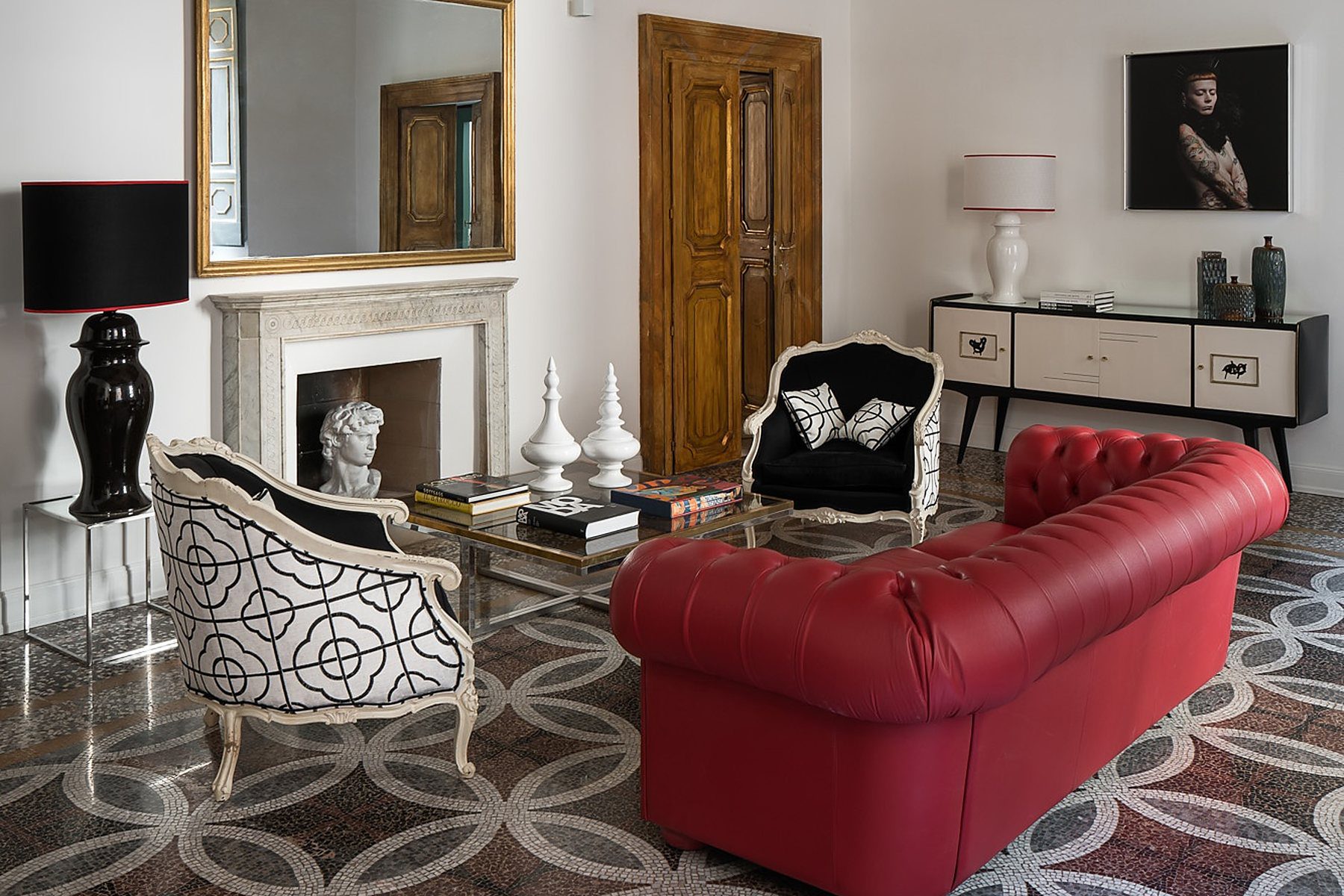
The shared salon is the social centre: a crimson leather Chesterfield and two club armchairs around a brass and glass table, a white marble fireplace under a tall gilt mirror, a mid-century sideboard stocked with crystal, a ceiling frescoed with the Four Seasons, putti and painted landscapes, and large black-and-white portraits that watch over the room. The complimentary Nobildonne Honesty Bar, included in the rate, is served there from Monday to Saturday between 5 and 7 p.m.: a changing selection of soft drinks, local liqueurs and spirits, set out by the fireplace for guests to mix their own drink or prepare a classic Italian aperitivo. Emcy, who welcomed us at the door, mixes cocktails herself, and a book of Italian cocktail recipes sits on the bar for guests who want to invent their own signature drink. The house calls it the Roman art of gathering. It is how we ended most days before walking out to dinner.
Breakfast is served on the Relais’s behalf, à la carte and at special prices for its guests, by Antico Caffè Vitti on Piazza San Lorenzo in Lucina, a Roman institution since 1898 two minutes’ walk away, with a wide menu of Mediterranean and American breakfasts. We went every morning, cappuccino and pastries under the awning while the square woke up, and it was one of the better breakfasts of the trip.
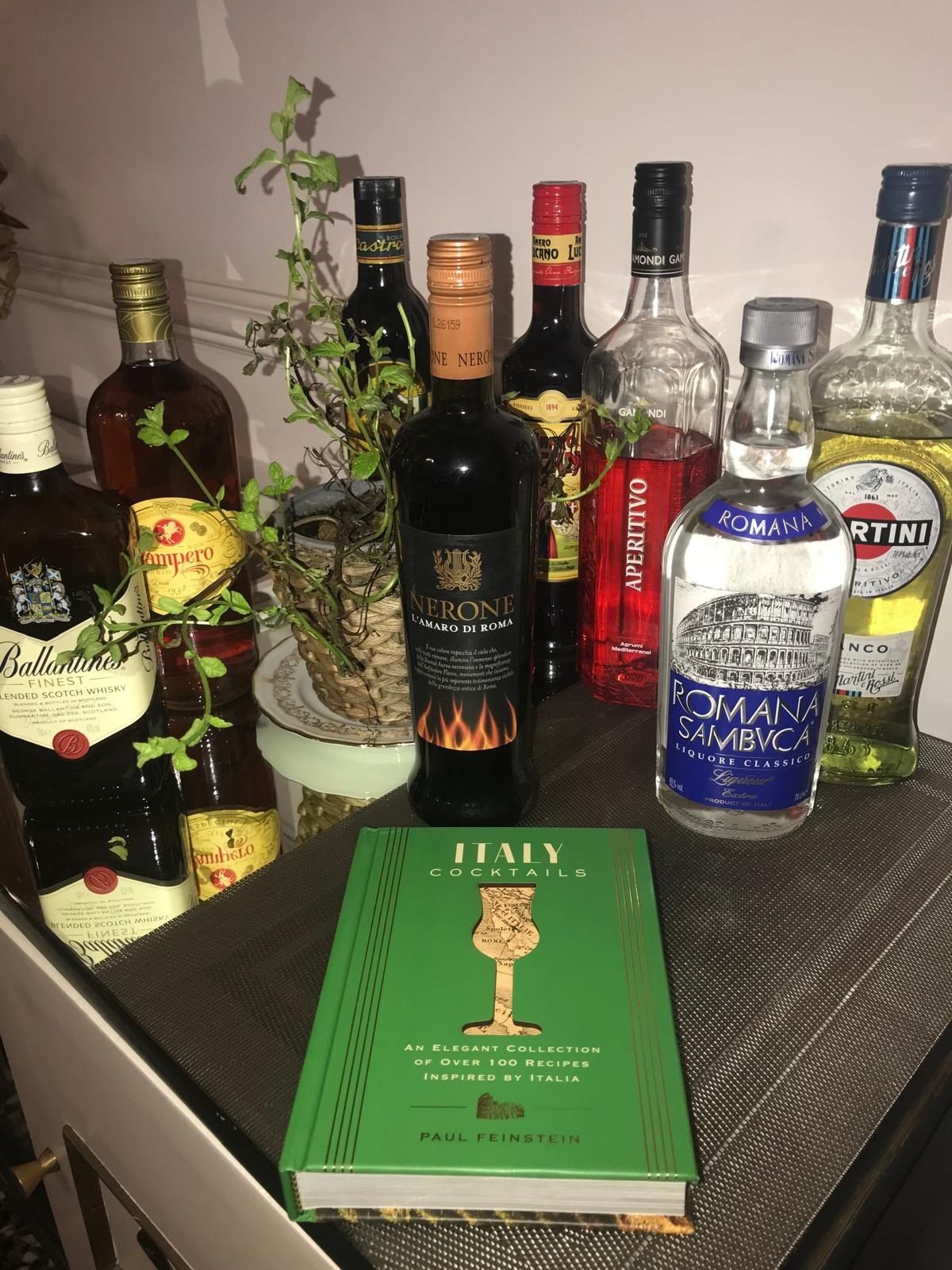
Photo courtesy of Nobildonne Relais
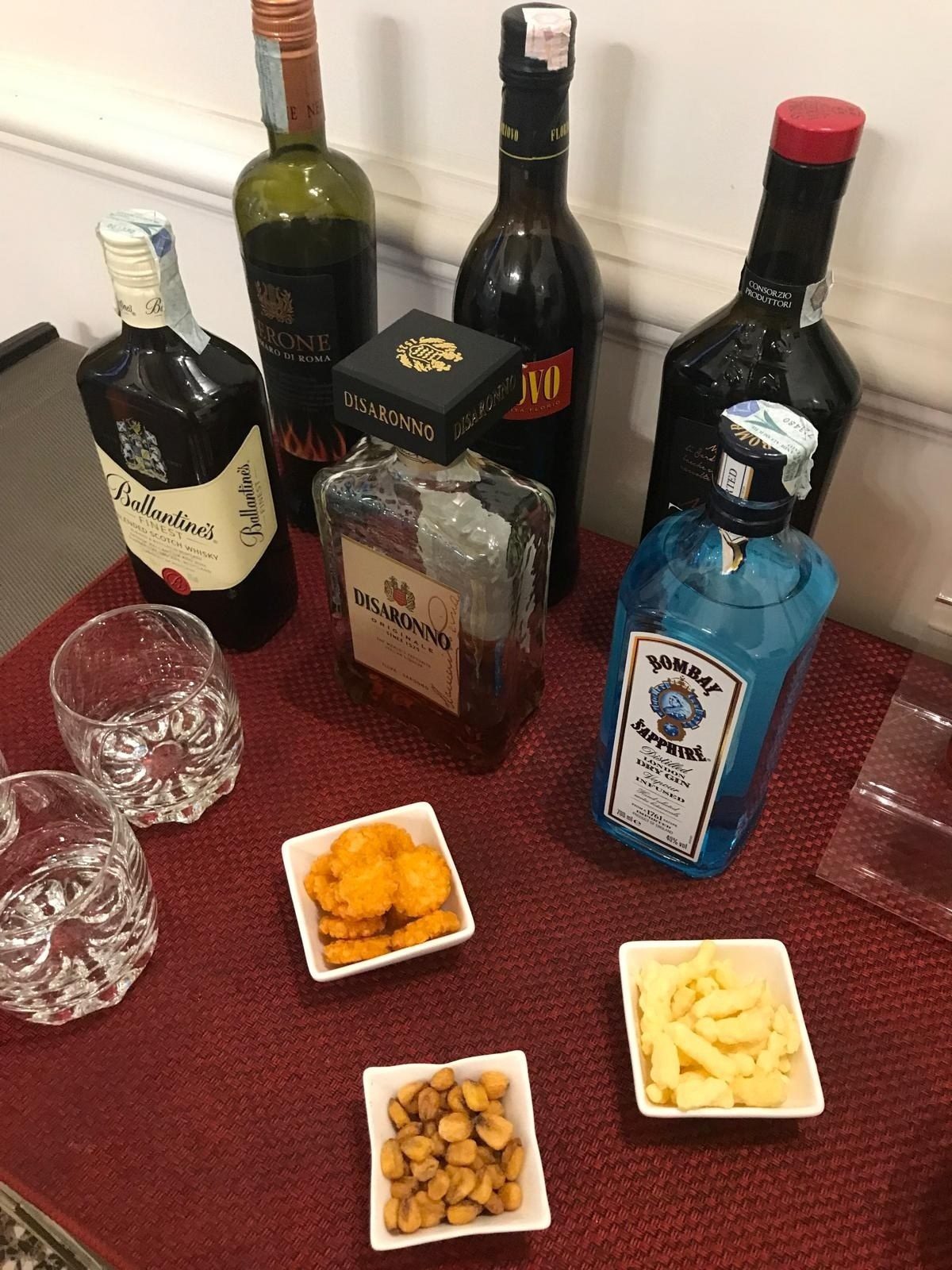
Photo courtesy of Nobildonne Relais
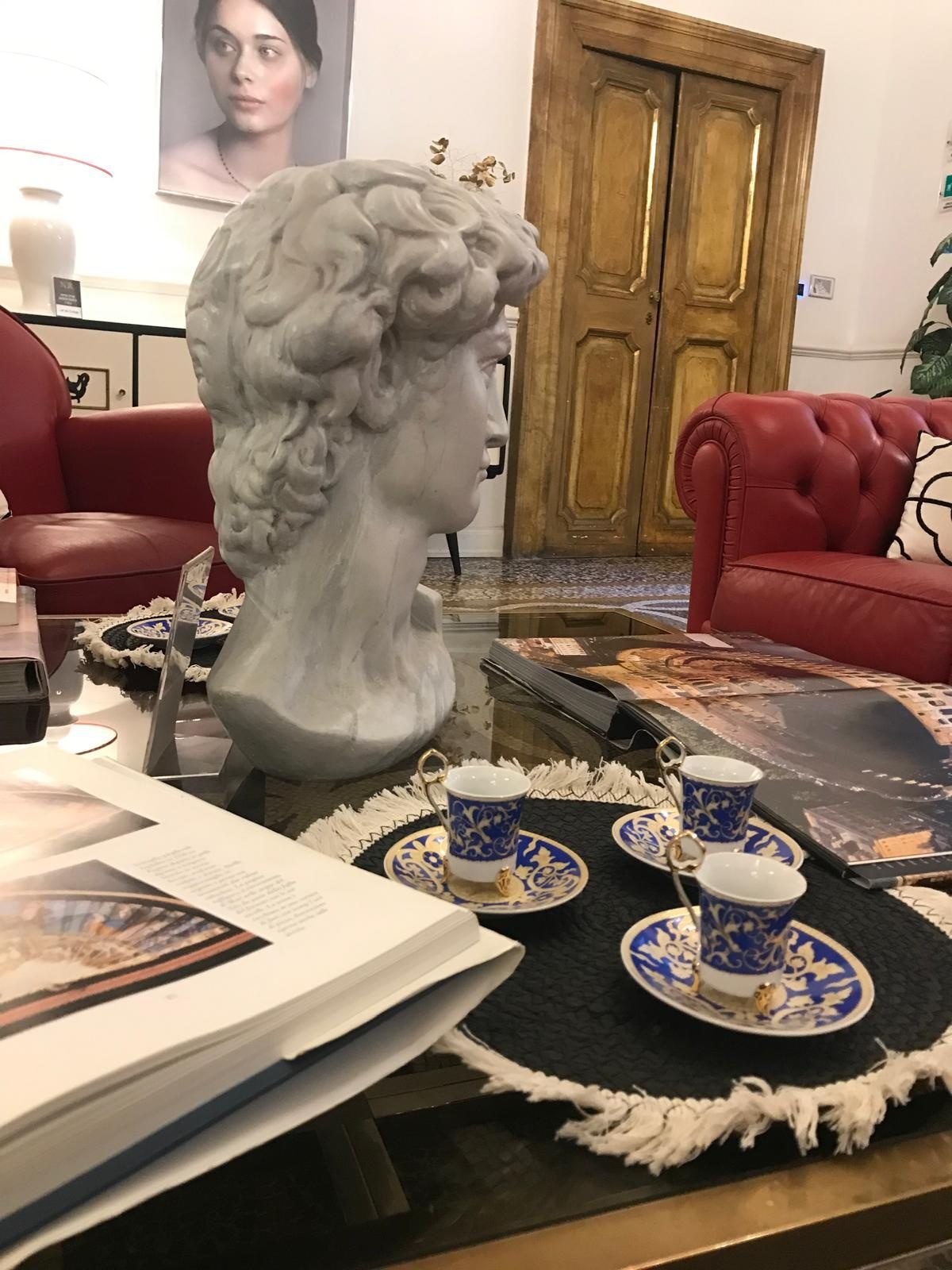
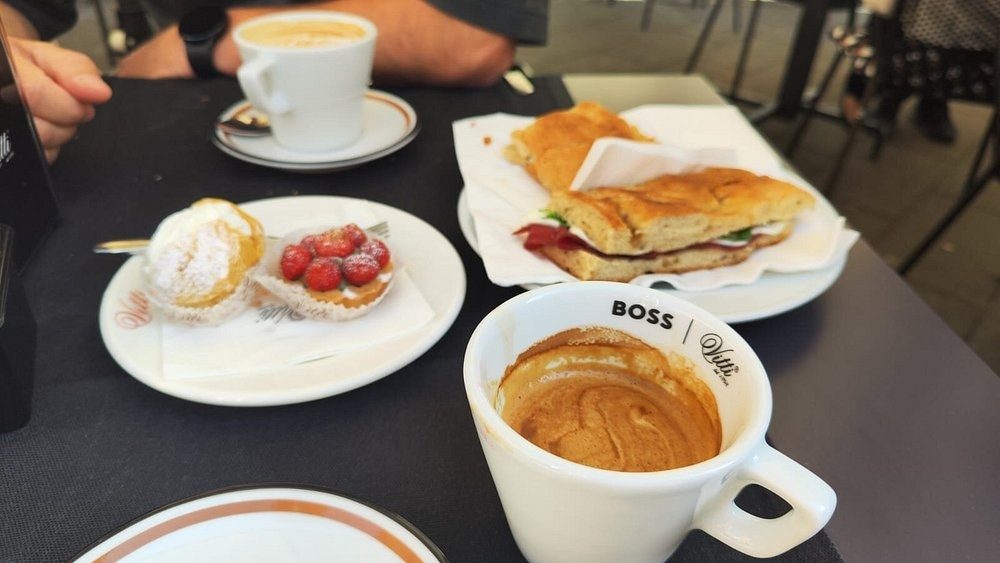
Photo courtesy of Nobildonne Relais
Where Exactly Is Nobildonne Relais, and What Is Around It?
Hundreds of people pass the façade each day to admire it; inside, the house holds twelve. The Relais sits in the “ansa barocca”, the bend of the Tiber where Rome’s sixteenth- to eighteenth-century landmarks cluster. Palazzo Borghese is next door. The Spanish Steps, Via dei Condotti, Via Frattina and Via del Corso are a few minutes on foot; the Ara Pacis and Richard Meier’s museum, Piazza del Popolo, the Pantheon and Piazza Navona are all within easy walking distance. Historic cafés such as Antico Caffè Vitti, where the Relais sends its guests for breakfast, Giolitti and Ciampini are nearby. Spagna metro station connects to the wider city and the airports; the taxi rank is at Piazza Augusto Imperatore.
In Her Words: Alla Kurovska on the House
“The truly magical part of our stay experience is built around the passion for history, art and beauty that our residence and the Eternal City offer,” Alla told us. “Whether you booked one room or the whole residence for exclusive use, you have the opportunity to live a Roman noble life: reading your favourite book in total privacy, exploring Ancient Rome, or simply admiring the frescoes and the original Carrara marble floor mosaics.”
The rituals matter as much as the rooms. “Our guests cannot go away without drinking a cup of tea in fine porcelain in their suite, or trying the aperitif from our evening honesty bar. Sometimes the greatest luxury is a quiet, understated and discreet environment, less visible online, where our guests can pause, connect and return.”
There is news, too. The group behind the Relais opens its next address in February 2027: Suite Hotel Al Duomo, at Via Mazzini 18 in Milan, a neo-Renaissance palace steps from the Duomo, La Scala and the Galleria, where every suite will have its own kitchen.
Who Should Book It?
Nobildonne Relais suits travellers who would rather have a palazzo floor than a hotel lobby: couples, design-minded solo travellers, and small groups who can reserve the entire Relais. The Paolina Borghese suite stands as the house’s premier sanctuary for honeymoons and milestone anniversaries, and is requested up to a year in advance. Olimpia and Artemisia are designed as intimate double-occupancy retreats and can be interconnected into a Family Executive Suite for up to four guests. Beatrice Cenci and Lucrezia Borgia, configured for up to three guests each, combine spacious comfort with historic charm. The concierge team is at your disposal for booking a spa, a guide or a private driver, and for restaurant and sightseeing suggestions. Truly designed for independent travellers, the house works on the understanding that Rome itself is the amenity.
Nobildonne Relais, Via della Fontanella di Borghese 35
Rome is adding large luxury hotels at a pace the city has not seen in a generation, and most of them compete on rooftops and restaurants. Nobildonne Relais competes on the opposite terms: five suites, twelve guests, one floor, original frescoes, and a theme carried all the way from the name on the door to the portrait on the wall. For the traveller who already knows the city, that restraint is the luxury. Discover the suites and current availability at nobildonnerelais.com.
Nobildonne Relais, Answered
Where is Nobildonne Relais in Rome?
Nobildonne Relais is at Via della Fontanella di Borghese 35, in the Campo Marzio district, directly beside Palazzo Borghese. The Spanish Steps and Via dei Condotti are a few minutes on foot, and Spagna metro station is the nearest stop.
How many rooms does Nobildonne Relais have?
Five independent suites for a maximum of twelve guests, across almost 300 square metres, each named after a Roman noblewoman: Paolina Borghese, Donna Olimpia Pamphilj, Artemisia Gentileschi, Lucrezia Borgia and Beatrice Cenci. The whole Relais can also be reserved privately, with its dining table and kitchen.
Who are the noblewomen the suites are named after?
Paolina Borghese, Napoleon’s sister and the subject of Canova’s Venus Victrix; Olimpia Maidalchini Pamphilj, the power behind Pope Innocent X; Artemisia Gentileschi, the great painter of the Roman Baroque; Lucrezia Borgia, daughter of Pope Alexander VI; and Beatrice Cenci, the Roman noblewoman executed in 1599 whose portrait is attributed to Guido Reni. Each suite holds a Studiovagante reinterpretation of her most famous portrait.
Is breakfast included at Nobildonne Relais?
Breakfast is served à la carte on the Relais’s behalf by Antico Caffè Vitti on Piazza San Lorenzo in Lucina, two minutes from the house, at special prices for guests. Every suite also has a complimentary coffee station with Nespresso, teas, infusions and biscuits.
Is Nobildonne Relais in the MICHELIN Guide?
Yes. The property appears in the MICHELIN Guide Hotel Selection 2026, which describes it as a guest house with four-metre frescoed ceilings and Venetian mosaic floors in a late nineteenth-century neo-Renaissance palazzo.
What are the check-in and check-out times?
Check-in is from 2 p.m. and check-out is at 11 a.m. Late arrivals are accommodated whenever possible; ask the house in advance.
Does Nobildonne Relais serve an aperitivo?
Yes. The complimentary Nobildonne Honesty Bar is included in the rate and served in the salon from Monday to Saturday, 5 to 7 p.m., with a changing selection of soft drinks, local liqueurs and spirits. The concierge team, available until the evening and then by WhatsApp, can book restaurants, museums and transfers to and from the airport.
The Mandale Newsletter
Hosted stays, private addresses and the people behind them, every week.