Updated September 3, 2026
Quick Answer
Florida’s most exclusive retreats share three defining characteristics: restricted physical access (by ferry, seaplane, or private membership), a limited number of keys, and service intensity closer to a private estate than a conventional hotel. The ten properties in this survey span from Fisher Island off Miami Beach to Little Palm Island in the Lower Keys, with concentrations in Miami Beach, Palm Beach and the Gulf Coast.
Key Takeaways
- Fisher Island, long ranked among the wealthiest zip codes in the United States, is reachable only by ferry or private yacht, and its club lists just 15 all-suite guest accommodations on its official site
- The Breakers in Palm Beach has operated on the same site since 1896 and its 1926 building, designed by Schultze & Weaver, is listed on the National Register of Historic Places
- Little Palm Island in the Lower Keys is an adults-only private island with 30 thatched-roof bungalows, no televisions, and arrival by seaplane or boat
- Four Seasons Hotel at The Surf Club preserves the 1930 social pedigree of Surfside, with architecture by Richard Meier and Thomas Keller’s restaurant as its dining anchor
- The Colony Hotel in Palm Beach, open since 1947, retains its iconic pink facade and one of the most active social calendars in Florida, with roughly 35 galas each winter season
Scarcity by Design
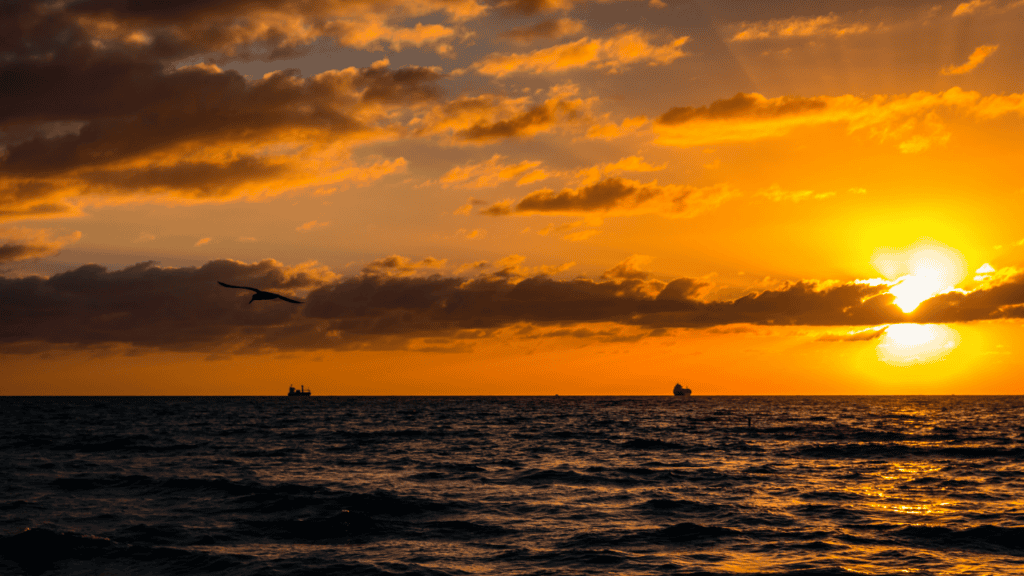
Sunrise over Miami Beach, the gateway to Florida’s most exclusive retreats.
The geography of American luxury hospitality has shifted dramatically in the past two decades. Where New York and Los Angeles once dominated the conversation around ultra-luxe retreats, the state of Florida has quietly assembled the most concentrated collection of exclusive resorts in the country. This is not coincidence. Florida offers something neither California nor the Hamptons can match: year-round warm weather, no state income tax, a regulatory environment favorable to development, and more than 1,300 miles of coastline that span temperate Atlantic waters to the warm Gulf of Mexico.
But climate and tax policy alone do not explain the proliferation of ultra-exclusive retreats. The defining characteristic of these properties is what the industry has come to call “scarcity architecture”: a deliberate engineering of limited access that transforms a hotel stay into a privilege rather than a transaction. Some achieve this through geography (a private island), others through history (a 130-year-old social institution), and still others through service ratios that no public-facing hotel chain could sustain.
This article examines ten Florida properties that have successfully constructed scarcity at scale. Each has done so through different mechanisms, but they share a common outcome: a reservation that requires planning weeks or months in advance, a guest list that skews toward ultra-high-net-worth individuals, and a price point that places them beyond the reach of even conventional luxury travelers. What follows is not a ranked list. It is a regional survey, beginning in Miami and moving north to Palm Beach, then west to the Gulf Coast, and finally south toward the Keys.
Miami and Miami Beach: The Atlantic Tier
Fisher Island Club & Resort
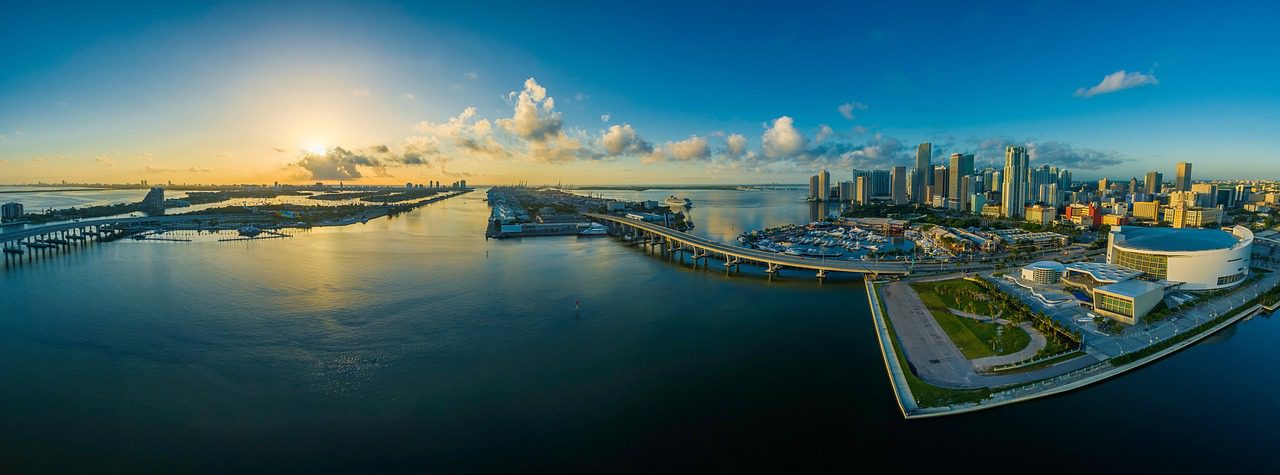
No discussion of Florida exclusivity can begin anywhere other than Fisher Island. A 216-acre barrier island located just off the southern tip of Miami Beach, Fisher Island is accessible only by ferry or private yacht. The ferry runs around the clock from a terminal adjacent to Miami Beach, but the ferry is only the beginning of the access ritual: arriving guests must be on a pre-approved list submitted by a resident, a member or the property itself.
The island’s history is itself a marker of exclusivity. Dana A. Dorsey, Florida’s first African-American millionaire, owned the island early in the twentieth century before selling it, and it eventually passed to Carl Fisher, the developer of Miami Beach, who, in one of the most storied transactions in Florida history, traded the island to William K. Vanderbilt II in exchange for a yacht. The Vanderbilt estate anchored Fisher Island’s reputation as a winter retreat for America’s wealthiest families through the mid-1940s.
Today, Fisher Island operates as a private club with the Fisher Island Club & Resort as its hospitality component, built around the original Vanderbilt estate. The club’s official site lists 15 all-suite guest accommodations, and access requires residence ownership or a member referral. The island contains a private country club, a clay tennis center, a deep-water marina, and the island’s own school, the Fisher Island Day School.
The dining scene preserves the island’s layered past: the Vanderbilt-era architecture still frames the club’s most formal rooms, where mahogany paneling and original fixtures are treated as historical elements rather than decor.
Faena Hotel Miami Beach
If Fisher Island represents exclusivity through geography, the Faena represents exclusivity through theatrical ambition. Alan Faena, the Argentine developer behind the Faena brand, took over the historic Saxony Hotel on Collins Avenue, a 1948 landmark designed by Roy F. France, and transformed the oceanfront property into what he describes as a “cultural campus,” reopening it as Faena Hotel Miami Beach in late 2015.
The centerpiece of the transformation is Damien Hirst’s “Gone but Not Forgotten,” a gilded woolly mammoth skeleton displayed in a monumental gold-framed vitrine on the hotel’s oceanfront: one of the most photographed artworks in Miami Beach and among the largest gilded sculptures in private hands anywhere in the world. The piece was acquired specifically for the Faena and anchors the property’s identity as a hotel built around museum-grade art.
Rates begin in the high four figures during peak winter season. The Tierra Santa Healing House spa occupies the hotel’s lower levels and has developed a reputation for its South American-inspired treatment menu. The Faena Forum, a 50,000-square-foot cultural venue designed by Rem Koolhaas and OMA, opened across the street in 2016 and hosts a rotating program of art and performance that keeps the district in the cultural conversation year-round.
The Setai Miami Beach
The Setai occupies a position that is the inverse of the Faena’s: where the Faena is theatrical maximalism, the Setai is austere minimalism. Located in the heart of South Beach at 2001 Collins Avenue, the Setai was designed by Jean-Michel Gathy and completed in 2005, combining a residential tower, an Art Deco restoration and an Asian-inspired courtyard hotel.
The aesthetic is Japanese-Balinese fusion executed at the highest finish level. The lobby features a reclaimed Burmese teak reception desk; the interior courtyard contains a swimming pool lined in black volcanic stone and surrounded by frangipani trees. Service intensity is the property’s quiet signature, with a staff-to-guest ratio among the highest of any hotel in the city.
A daily tea ritual operates in the lobby, offering a curated selection of single-origin teas sourced from estates in Darjeeling, Uji and Anxi; it is open to non-guests and has become a fixture of the Miami Beach social calendar. The hotel’s restaurant, Jaya, draws on Asian traditions and has developed a particular reputation for its weekend service, while the wine program leans heavily toward Burgundy and Champagne.
Four Seasons Hotel at The Surf Club, Surfside
The Four Seasons Hotel at The Surf Club represents the most ambitious historic restoration in Miami’s luxury hospitality landscape. The Surf Club, founded in 1930, was the social epicenter of Miami Beach’s northern corridor through the 1960s. Winston Churchill famously painted in one of its cabanas, and the original cabana system became the template for the modern beach club.
The Four Seasons assumed operation of the restored property in 2017 after a nine-year redevelopment reported at some 400 million dollars, led by the Related Group and designed by Richard Meier. The architecture preserves the original 1930 oceanfront facade and the iconic Surf Club arch, while the interior was rebuilt to contemporary standards, with a 77-room main building joined by a residential tower and oceanfront villas.
The anchor restaurant is operated by chef Thomas Keller (The French Laundry, Per Se), whose involvement was announced in 2017; the kitchen executes a seafood-forward interpretation of his refined American style appropriate to the oceanfront setting. The property’s position north of the main South Beach corridor provides a buffer from the neighborhood’s nightlife density, a feature that has made it particularly popular with repeat guests seeking quiet.
Palm Beach: The Old-Guard Tier
The Breakers Palm Beach
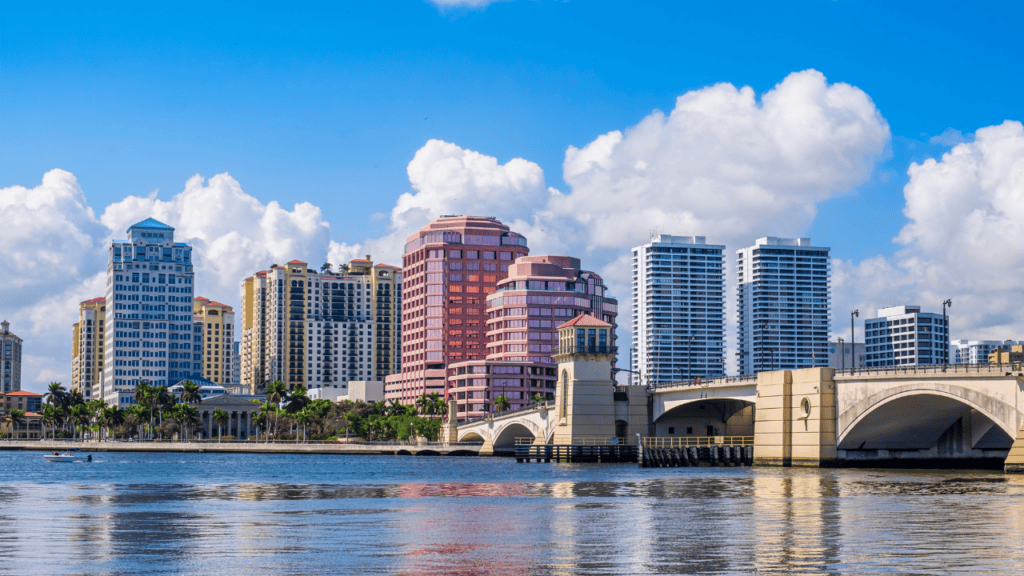
The Breakers is the oldest continuously operating luxury resort in Florida and one of the oldest in the United States. The story begins with the Palm Beach Inn of 1896 on the same oceanfront site; after fires, the hotel was rebuilt in 1903 and again in 1926, the latter reconstruction producing the Italian Renaissance-style main building designed by Schultze & Weaver, the firm behind New York’s Waldorf-Astoria.
The 1926 building is listed on the National Register of Historic Places, and its loggia, oceanfront terrace and central courtyard remain largely unchanged. The resort has been controlled by the Flagler family’s interests since Henry Flagler’s original development of the Florida East Coast Railway in the 1890s.
The property contains 534 rooms and suites and employs a workforce of more than 2,000, a service ratio that places it among the most heavily staffed resorts in the country. Golf facilities include two 18-hole courses, among them the Breakers Rees Jones Course of 2018, and the tennis complex operates a full calendar in season. The dining program spans HMF, the Flagler Steakhouse and the Italian restaurant Osteria Mozza, a partnership with Nancy Silverton’s Mozza Restaurant Group opened in 2022, while the legendary Sunday brunch remains one of the great set pieces of American resort dining. Membership at the Beach Club and Golf Club is invitation-only.
The Colony Hotel Palm Beach
The Colony represents the other Palm Beach archetype: the social institution that has remained continuous through multiple ownership eras. The property opened in 1947 and retains its original pink exterior, a color so associated with Palm Beach’s visual identity that it has become the hotel’s signature.
The hotel contains 89 rooms and 16 suites, with rates that begin in the low four figures during winter season. Its restaurant, Swifty’s, opened in 2019 as a classic American brasserie modeled on the New York original, and the lobby bar is widely regarded as the most reliably populated cocktail lounge in Palm Beach during season.
The Colony’s social calendar is among the most active in Florida, with roughly 35 galas and benefits scheduled between November and April each year, anchored by its signature charity evenings for Palm Beach institutions.
The Gulf Coast and Islands: The Southern Tier
The Ritz-Carlton, Naples
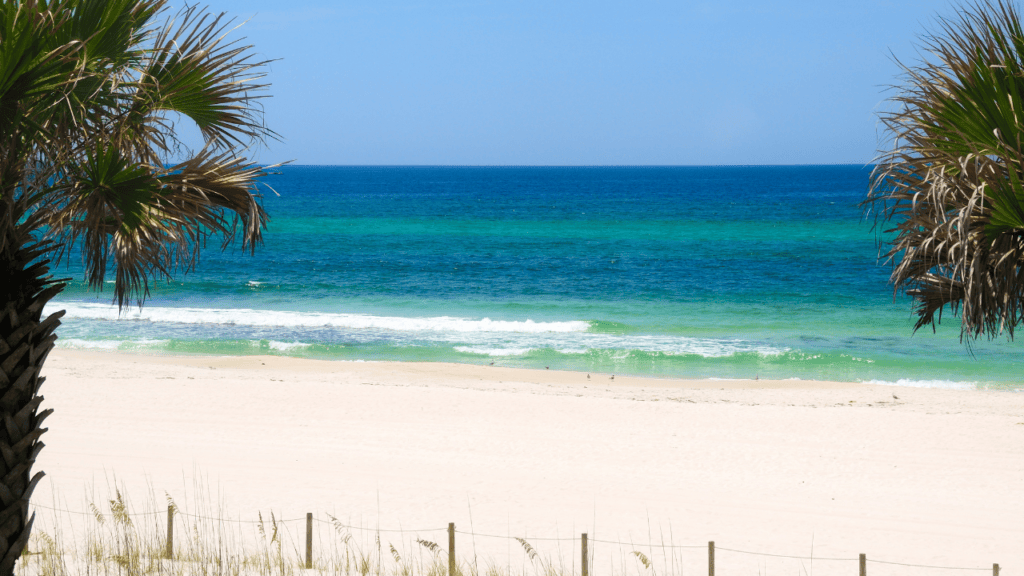
The Ritz-Carlton, Naples completed a renovation reported at roughly one billion dollars in 2023, among the largest in the brand’s history, adding a new guest tower, an expanded spa and a new collection of dining venues anchored by Sofra, a Mediterranean restaurant that opened with the reopening.
The property’s Vanderbilt Beach location provides a positioning that differs from the Atlantic properties surveyed above. The Gulf waters in this region are calmer and warmer than the Atlantic, and the beach itself is a finer-grain sand that produces a different visual character. The beach operation includes a fleet of catamarans and sailboats available to guests, and the signature daily champagne sabering at sunset has become one of the most photographed hospitality moments in Florida.
The Gasparilla Inn & Club
The Gasparilla Inn occupies a unique position in the Florida luxury landscape: it operates as both a hotel and a private club, and its discretion is such that many of its most prominent members are publicly unknown. The property has welcomed guests on Gasparilla Island (Boca Grande) since 1913 and has retained much of its original cypress construction; the surrounding Gasparilla Inn Historic District is listed on the National Register of Historic Places.
The inn contains rooms and cottages whose winter-season rates begin in the mid four figures, and access during peak weeks (Christmas, President’s Day, Easter) books out many months in advance, frequently through a small circle of preferred travel advisors. Its conservation programs and old-Florida rhythms are precisely the point: this is the retreat for people who consider being unreachable the ultimate amenity.
South Seas Island Resort, Captiva Island
South Seas occupies the northern end of Captiva Island, a barrier island north of Sanibel, across approximately 330 acres. The property opened as South Seas Plantation, a fishing resort founded by Clarence Chadwick in 1946, and its position on Captiva, connected to the mainland only by the Sanibel Causeway, provides a natural access restriction.
The resort has rebuilt through the two defining storms of its modern era, Hurricane Charley in 2004 and Hurricane Ian in 2022, and today operates a private marina, golf, tennis and a dining program whose waterfront rooms retain the barrier-island character that has drawn families back for generations.
Key Biscayne and the Florida Keys: The Outermost Tier
The Ritz-Carlton Key Biscayne, Miami
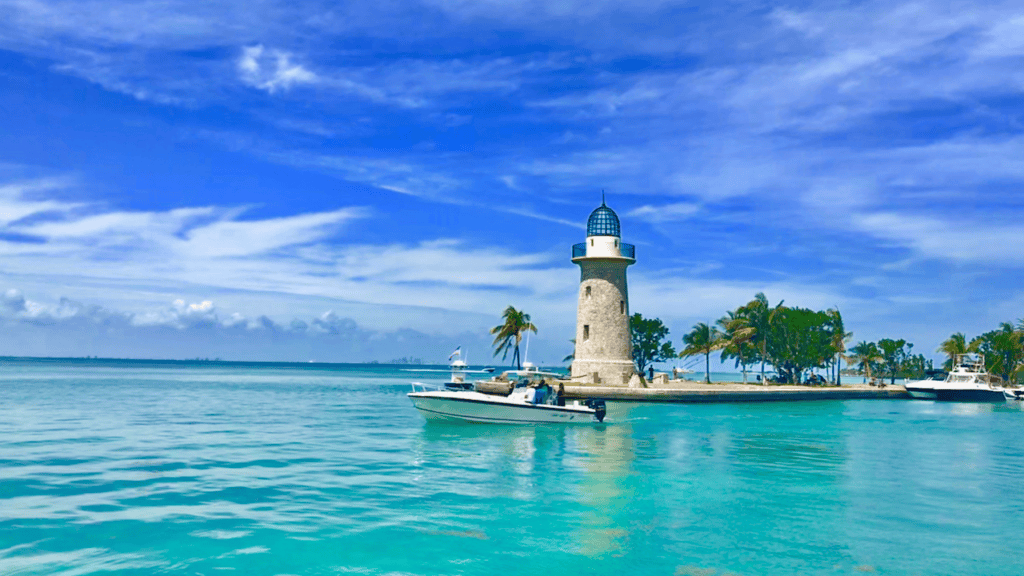
The Ritz-Carlton Key Biscayne occupies an oceanfront site on Key Biscayne, a barrier island facing the Atlantic just south of Miami, a gateway toward the Keys rather than part of them. It is the island’s only luxury resort, and its position provides a base for reaching both Miami in minutes and the upper Keys within the hour and a half, a logistical flexibility that has made it popular with travelers combining business in the city with recreational time down the chain.
Little Palm Island Resort & Spa
Little Palm Island is the most exclusive property in the Florida Keys and one of the most exclusive in the United States. The resort is a private island located offshore from Little Torch Key, accessible exclusively by seaplane or boat. The island contains 30 thatched-roof bungalows, no televisions, no telephones in the rooms, and an adults-only policy.
The property has operated as a hotel destination for decades and is today affiliated with Relais & Châteaux and operated by Noble House Hotels & Resorts. The bungalows are built in the island’s traditional Caribbean style with hardwood floors, four-poster beds and outdoor showers, and the restaurant sources seafood daily from local Keys fishermen for a changing menu, backed by one of the deepest cellars in the Keys.
The spa occupies its own corner of the island, its signature treatments built on locally produced rum and coconut oil, in rooms that open to an unobstructed view of the Gulf. Reservations run through the resort and a small number of preferred travel advisors, rates in peak season begin in the mid four figures per night, and the island is frequently sold out many months in advance.
Methodology: Defining “Most Exclusive”
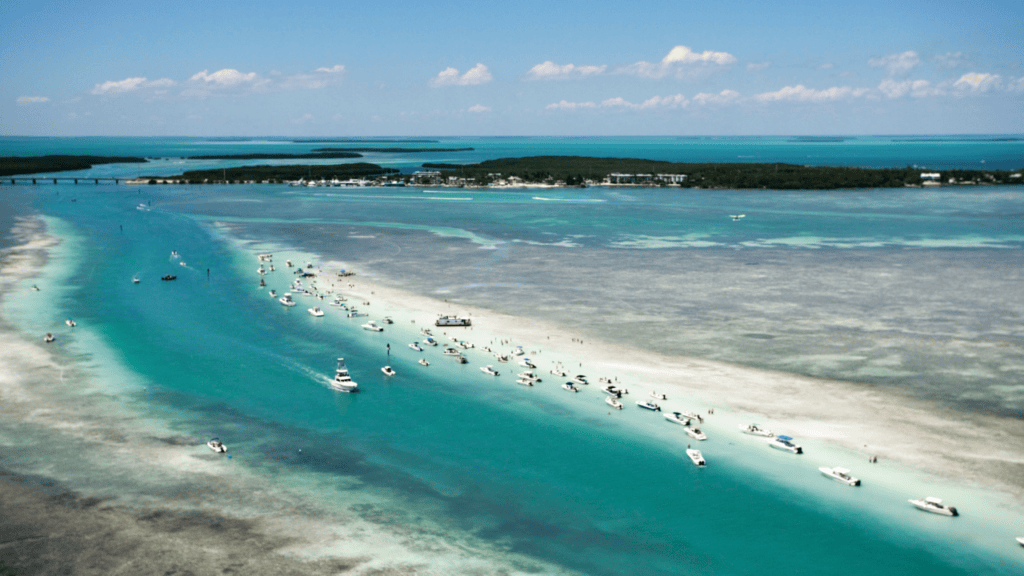
The ten properties surveyed above share a common operational characteristic: each has engineered scarcity through the deliberate restriction of physical access, the limitation of room inventory, or the maintenance of service ratios that exceed what would be commercially viable at standard occupancy levels.
Physical access restrictions operate at multiple levels: Fisher Island, the Gasparilla Inn and Little Palm Island restrict access by ferry, private membership and seaplane respectively. Service intensity forms the second dimension, with staff-to-guest ratios at the island properties running far beyond anything a conventional resort could sustain. Historical pedigree forms the third: The Breakers has operated on its site since 1896, The Surf Club since 1930, The Colony since 1947, and that social cachet cannot be replicated regardless of design or service budget.
Frequently Asked Questions
What makes a Florida resort “exclusive” versus merely luxurious?
The distinction is access. A luxurious resort accepts any guest who can pay the rate. An exclusive resort restricts access through physical geography (a private island), membership (a private club), or legacy (an institution that requires a referral). The ten properties surveyed each employ one or more of these mechanisms.
Are these properties worth the rates?
For travelers seeking a specific experience (privacy, theatrical architecture, historic pedigree, or service intensity) these properties offer combinations that cannot be replicated elsewhere. For travelers seeking a beach vacation at a high standard of quality, conventional luxury resorts at lower price points may provide better value.
How far in advance should reservations be made?
Peak season at Fisher Island, The Breakers and Little Palm Island requires reservations six to twelve months in advance. The other properties typically have availability two to four months ahead for most periods; current policies should always be confirmed with each property directly.
Which property is best for a first-time Florida luxury traveler?
Four Seasons Hotel at The Surf Club offers the most accessible introduction: the most contemporary service infrastructure of any property surveyed and the broadest amenities portfolio.
Are there alternatives for travelers with smaller budgets?
Florida’s luxury landscape extends well beyond these ten. Properties including the Four Seasons Miami and the Biltmore Coral Gables offer luxury experiences at lower price points. The properties surveyed represent the apex of the landscape, not the entirety.
Which property has the strongest family offering?
The Breakers operates the most substantial family programming in Florida, including a dedicated children’s beach club and a year-round calendar of family events. Four Seasons at The Surf Club offers programming appropriate for younger children.
Which property is most appropriate for a couple?
Little Palm Island, the Setai and the Colony offer programming most oriented to couples: the Setai’s quiet South Beach position, the Colony’s old-Palm Beach social calendar and Little Palm Island’s adults-only orientation each provide a different framework.
Do these properties have dress codes?
Most enforce dress codes in dining venues, from jackets at The Breakers’ formal rooms in peak season to resort-elegant attire at Little Palm Island. Policies change seasonally and should be confirmed when booking.
Ten Properties, Ten Mechanisms of Scarcity
The ten properties surveyed above represent different mechanisms for engineering scarcity. Some have done so through geography (Fisher Island, Little Palm Island), others through history (The Breakers, The Surf Club, the Gasparilla Inn), others through architectural ambition (Faena), others through service intensity (Four Seasons at The Surf Club, Little Palm Island).
What they share is a commitment to a model of hospitality that cannot be replicated at scale. The economics require either extremely high rates, member assessments, or both. The result is a collection of retreats that operate as much as private estates as they do as commercial hotels, in a state that has quietly become the capital of American exclusivity, from Miami to the last bungalow in the Lower Keys.
For travelers with the means and the patience to plan accordingly, these properties represent the apex of the Florida luxury hospitality landscape. Each has earned its position through decades of operation, and each continues to define the standard for what an exclusive retreat can be.
Editorial Disclaimer: This article reflects the independent editorial selections and opinions of Mandale Luxury Magazine. Mandale Luxury Magazine is not affiliated with, endorsed by, or sponsored by the hotels featured unless expressly stated. All hotel names and trademarks belong to their respective owners. Information is subject to change; readers should visit each hotel’s official website for current details.