/Food & Drink · Rome
Aperitivo in Rome: Three Secret Tables With the Sisters Behind Local Aromas
Benedetta and Valeria Bianchini have spent ten years deciding which tables in Rome deserve your evening.
This season they took ours, from the first spritz near Piazza del Popolo to a last Negroni poured on the cobblestones.
By Leslie Sol · Mandale Luxury Magazine
Local Aromas, a Roman food experience company founded by the Bianchini family in 2016, runs an aperitivo tour through the historic centre: about three hours, three tables at addresses the company keeps private, with drinks and small plates at each. Our evening started at Piazza del Popolo at 5:30 PM with a spritz, crostini and fried panini, moved to a board of cured meats and cheese with white wine, and ended near Piazza di Spagna around 8:30 PM with a Negroni and Prosecco. Vegetarian plates are arranged on request; book at localaromas.com.
Rome has a quiet hour that most visitors walk straight through. The museums have closed, dinner is still two hours away, and the city does something it has done for generations: it sits down, orders something bitter and orange, and takes its time. Italians call it aperitivo. The word describes a drink, but what it really names is a pause, a small ceremony between the working day and the table.
We spent that hour, and the two that followed, with Local Aromas, the Roman food experience company founded by the Bianchini family in 2016. Our hosts were the two sisters at its heart, Benedetta and Valeria Bianchini, joined by one of their guides. The format is simple to describe and difficult to imitate: three tables, three rounds of drinks, a procession of small plates, and a running conversation about why Italians eat and drink the way they do.
One note before we begin. The sisters asked us not to name the places they took us to. Those addresses are the result of a decade of tasting, and they are the heart of what a guest receives. We agreed without hesitation. What follows is everything except the names.
What Is Aperitivo, and Why Does Rome Take It So Seriously?
Aperitivo is not happy hour. Nobody is there for the discount. It is a drink chosen to open the appetite, served with something to eat, and shared with people you intend to stay with for a while. In Rome it happens outdoors whenever the weather allows, at small tables that face the street, because watching the city go by is part of the order.
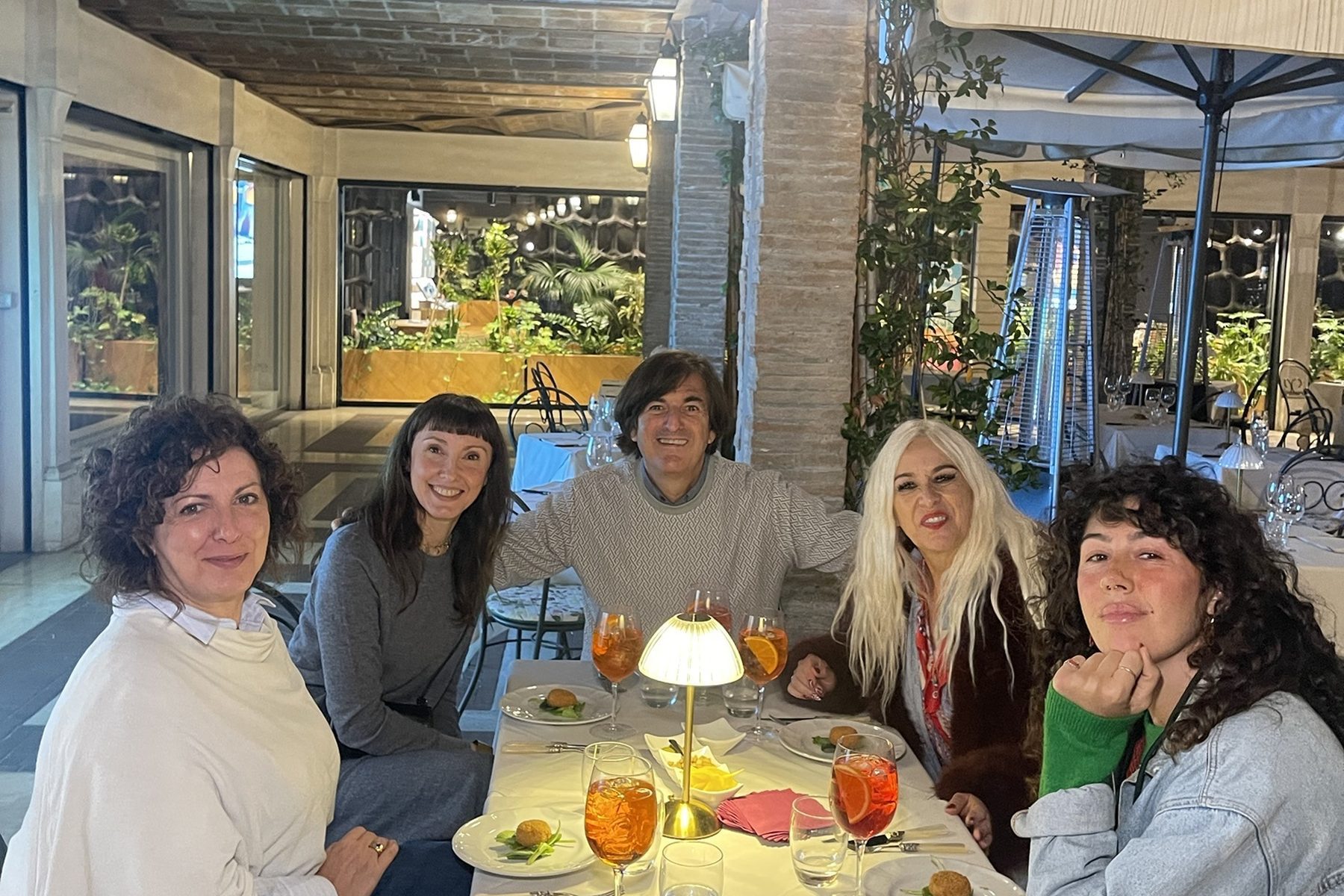
The evening started at Piazza del Popolo at half past five, the hour when the first terraces open. Within minutes we were seated under a brick-vaulted portico, a small brass lamp glowing in the centre of a white tablecloth, and the lesson began before the glasses arrived.
A Spritz, and a Question of Loyalty
The spritz came in tall stemmed glasses, full of ice, with a half-moon of orange. Some of us had chosen Aperol and some Campari, and our guide explained that in Italy this is not a casual choice. You belong to one or the other.
“If you go for Aperol Spritz, you are going to always stick with that. If you like Campari, you will always stick with Campari. It is like Pepsi and Coca-Cola.”
Your friends know which side you are on, she told us. If you are running late, they order for you. Hers always order Campari, and if she ever asked for an Aperol they would look at her and ask what was wrong.
Then came the rules of the toast, delivered with the seriousness they deserve. There are three. You say Salute, which means health, so you are wishing health to everyone you are toasting with. You touch everybody’s glass, not only the nearest one. And you look each person in the eyes as you do it. We were asked whether we remembered all three. Then we raised our glasses and did it properly.
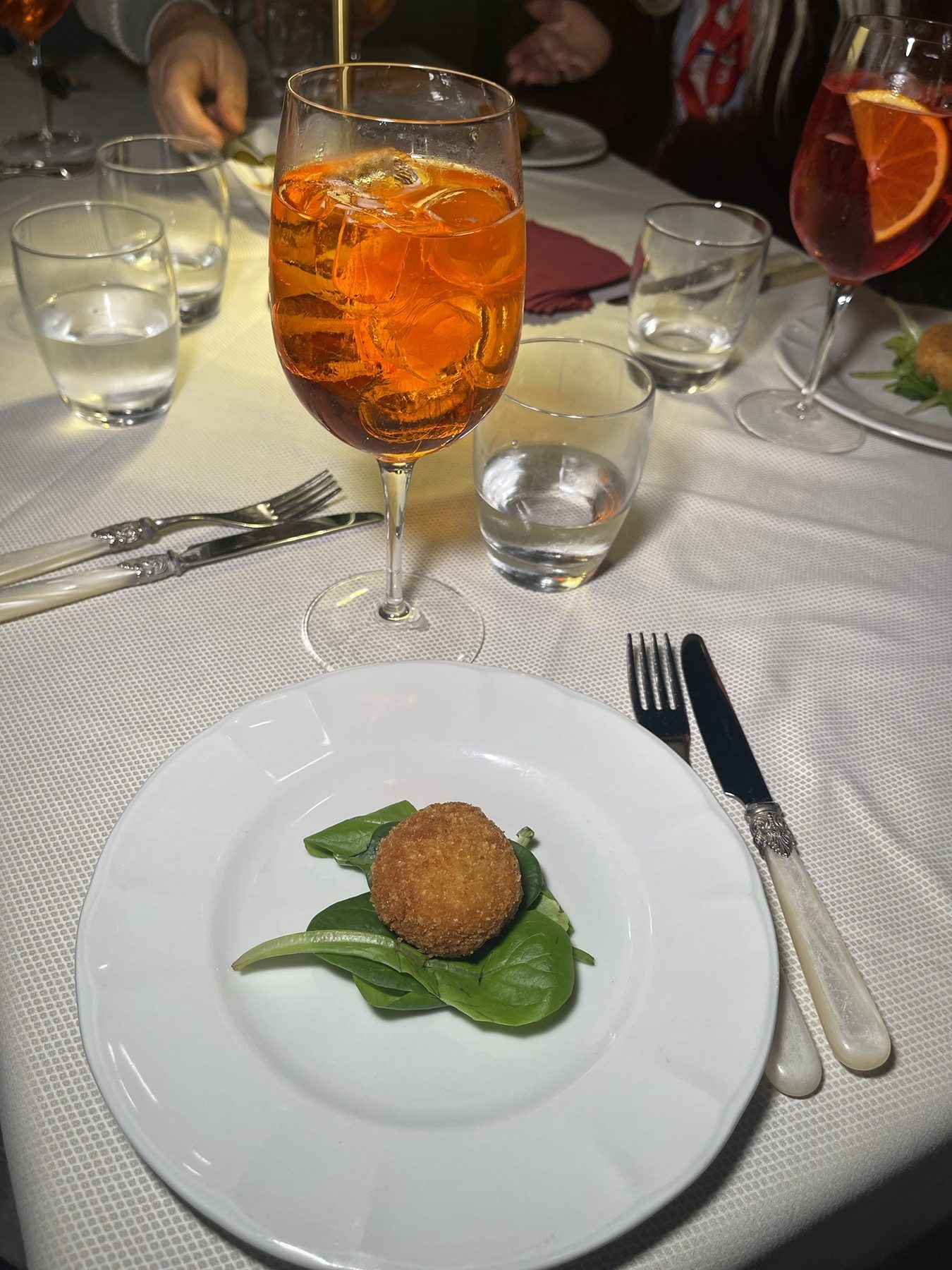
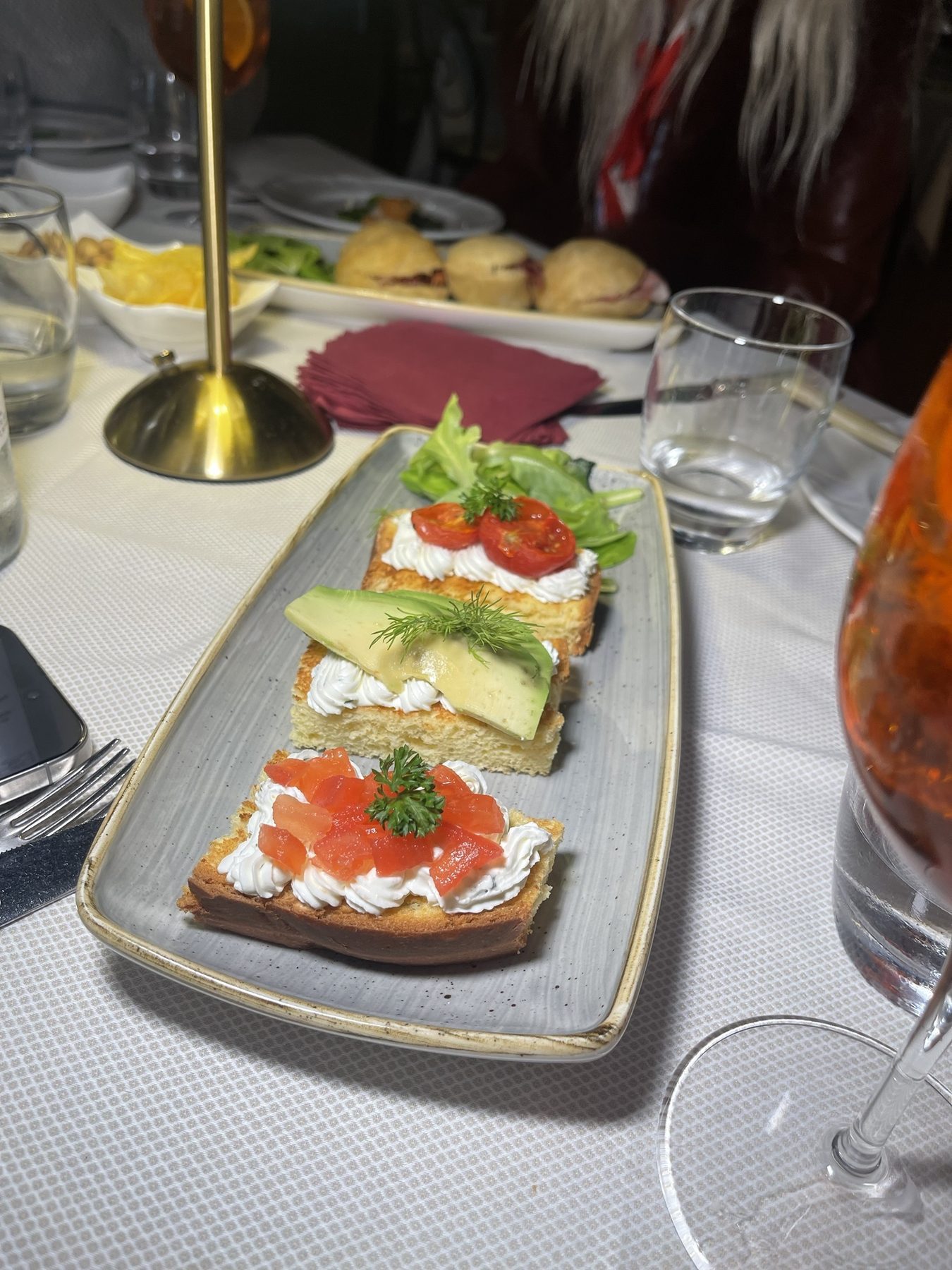
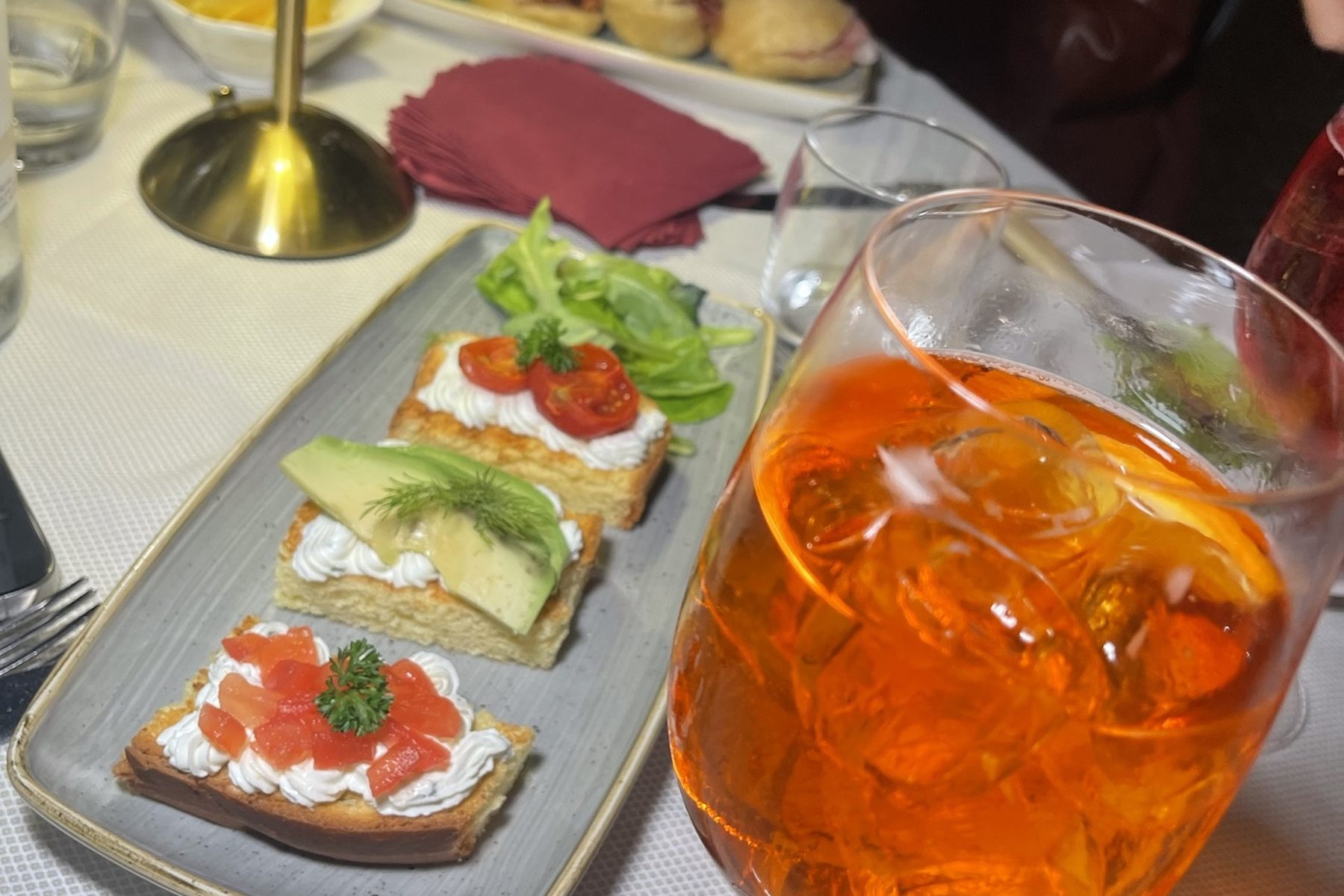
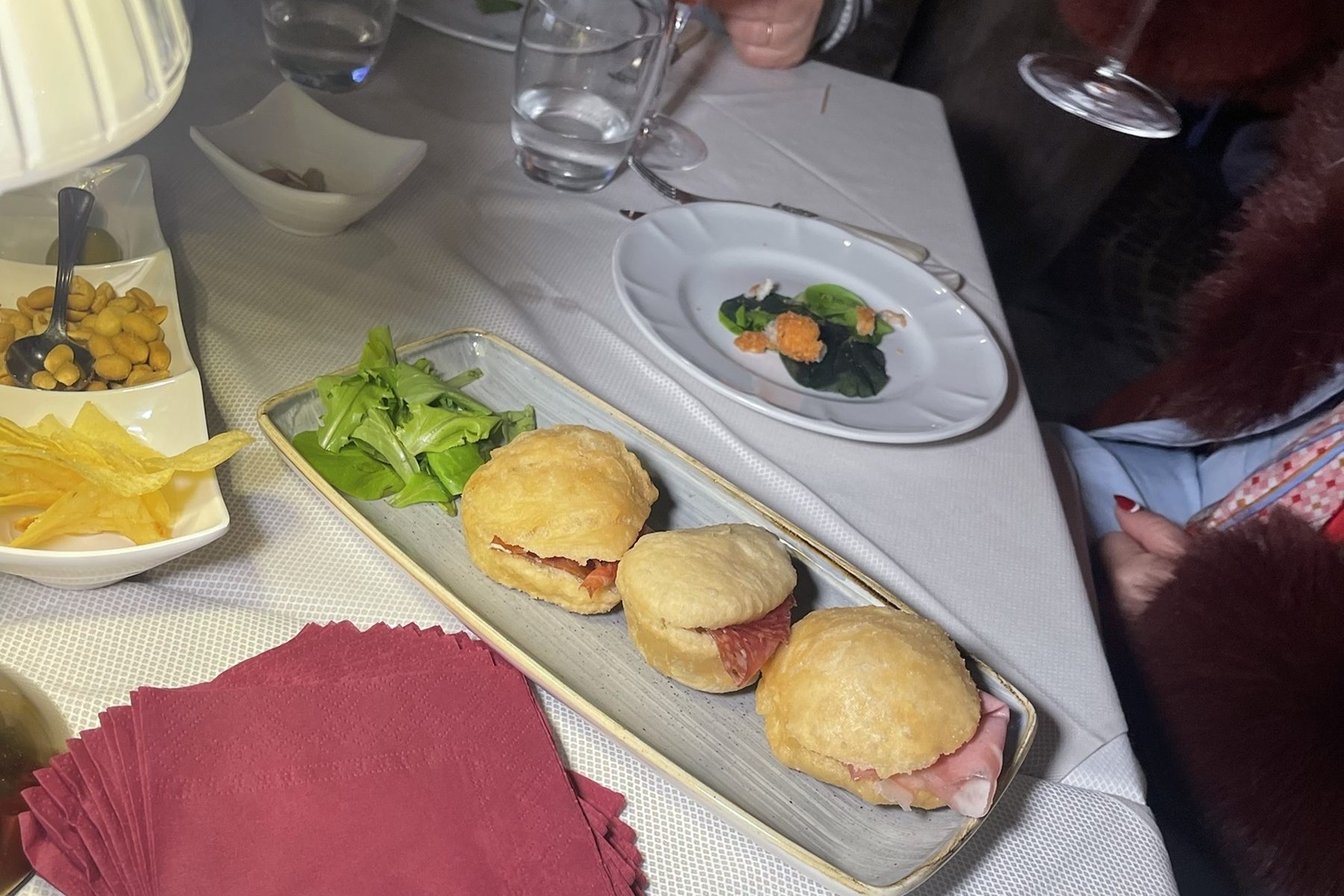
The food arrived in the order a good host would choose. First a single golden croquette on a few leaves of baby spinach, described to us as a small welcome: instead of the classic mozzarella and tomato, a filling of mixed cheeses and truffle. Then a slate-blue plate of three crostini on toasted bread with piped fresh cheese, one with chopped tomato, one with a fan of avocado and dill, one with roasted cherry tomatoes. Then the plate that made the table go quiet: three small fried rolls, each filled with a different cured meat.
“Inside each one of these little panini you have a different kind of cured meat,” our guide said, pointing as she went. “You have the mortadella, you have the finocchiona, and in here you have some prosciutto.” The bread, she added, is the difficult part. It is fried, and it arrives light, warm and dry to the touch, which is not easy to do.
Three of the four of us are vegetarian. We had mentioned it once, by email, days earlier. Nothing more needed to be said. At every stop the plates in front of us had already been thought through.
A Board, a Bottle and the Truth About Artichokes
A few streets away, the mood changed completely. The second address is a bright, informal Roman dining room: marble-topped tables, paper placemats, wine bottles lined up along a shelf, vintage posters on the walls. It is the kind of room where the table is the entertainment.
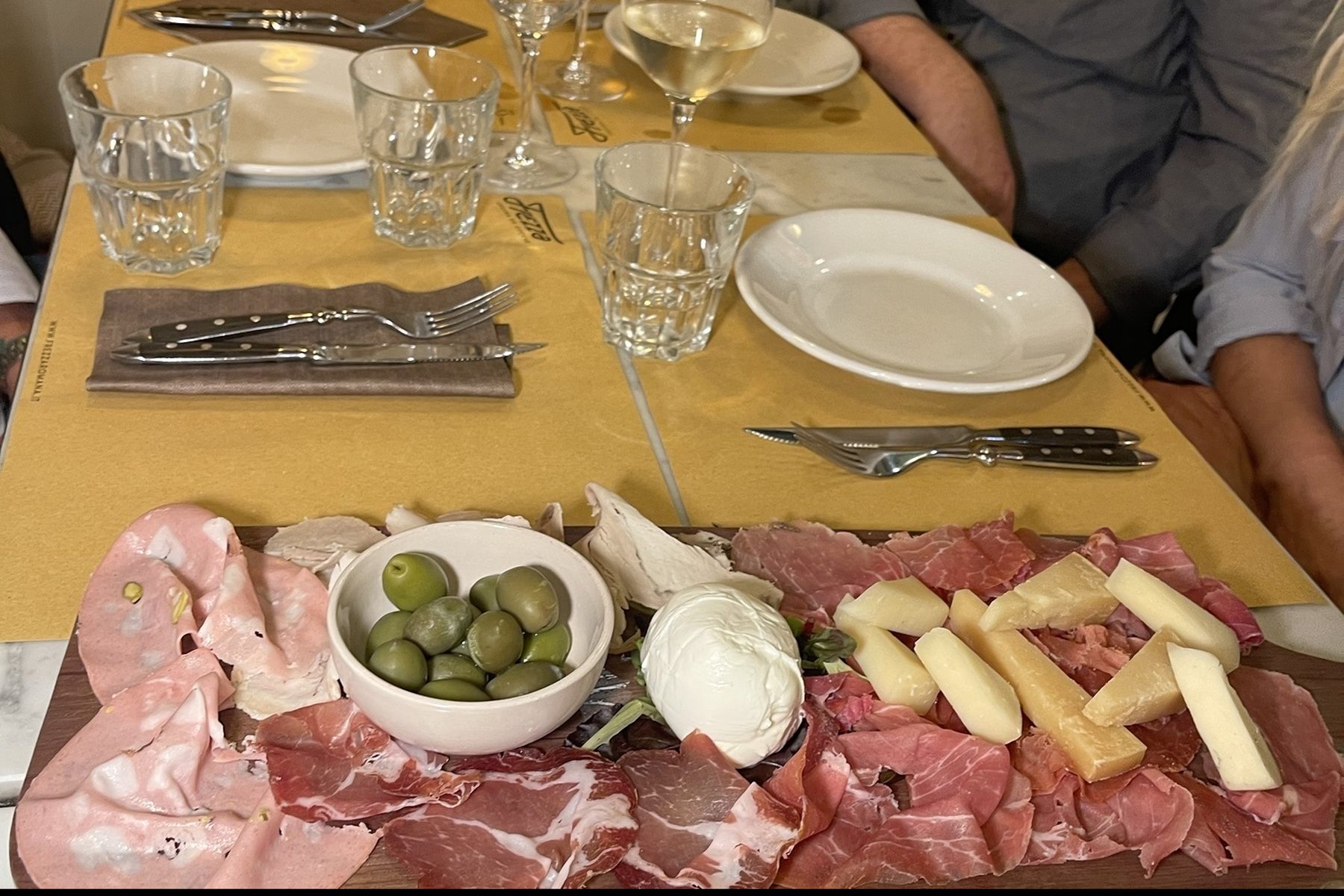
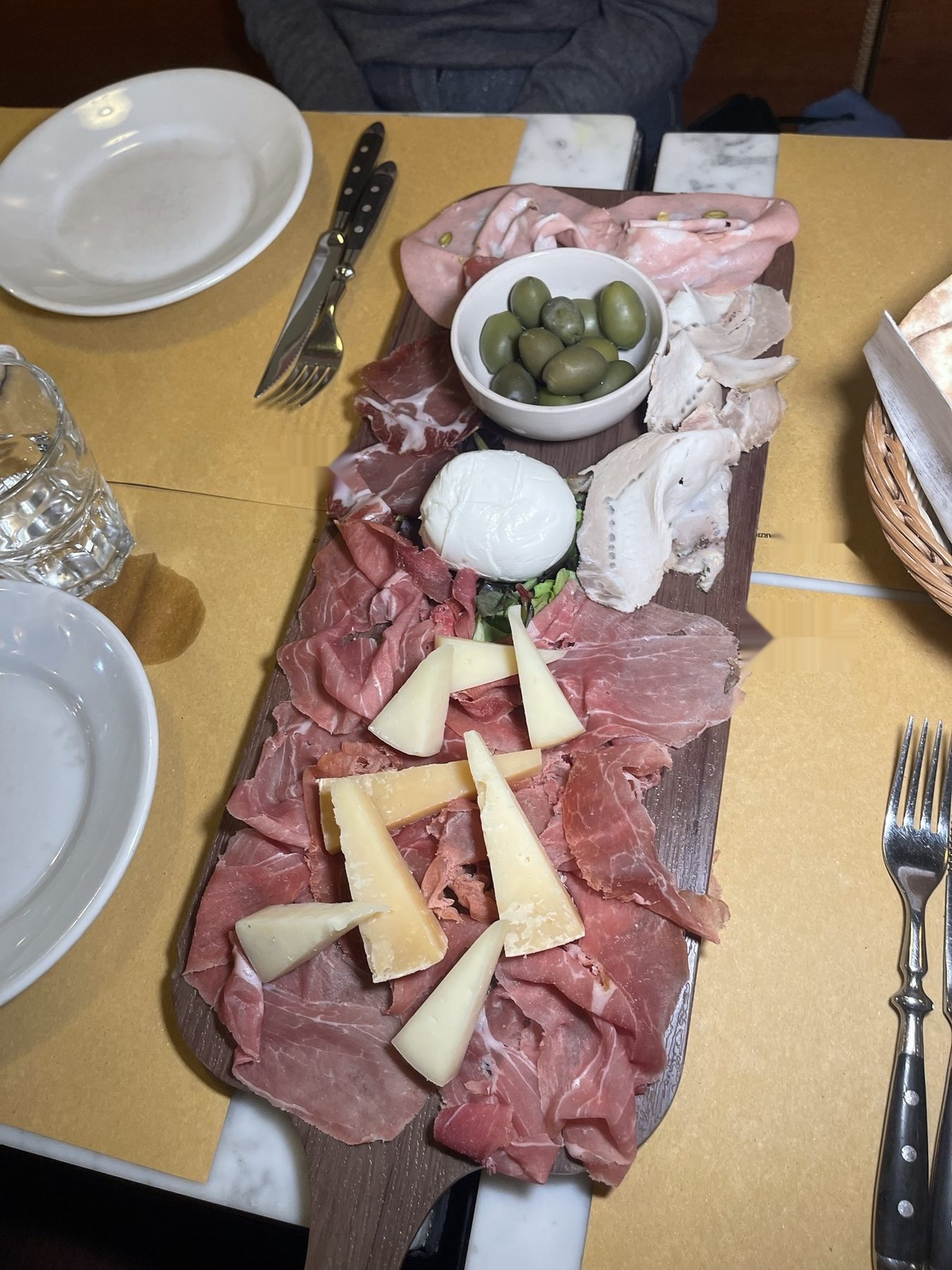
A long wooden board was set down the middle. Mortadella studded with pistachio. Capocollo. Ribbons of prosciutto. Wedges of aged cheese. A bowl of green olives, and at the centre a globe of fresh white cheese. Beside it came a basket of pizza bianca, blistered from the oven and torn by hand. White wine was poured, and we toasted again, this time without needing to be reminded of the rules.
It was here that we asked Benedetta about artichokes, and she answered the way Romans answer anything about food, which is completely.
“Italians are the largest consumers of artichokes in the world. We eat them in so many different ways.”
By her count, Italians eat somewhere between six and eight kilos per person a year. There is the Jewish-style artichoke, deep fried, which you eat whole, “like a flower”. There is the Roman-style artichoke. They go on pasta and into risotto. There is even a liqueur made from artichokes, which in the north of the country is served with the spritz. “So we are big artichoke people,” she concluded, and nobody at the table argued.
What “Valeria Approved” Means
The most revealing part of the evening had nothing to do with what was on the table. It was the explanation of how each table gets chosen in the first place.
Valeria is a trained pastry chef. She told us she studied it simply because she deeply loves pastry and wanted to understand it better. The consequence, for anyone who books a tour with her, is a standard that is applied before a single guest arrives. When the sisters design a new experience, she can tell whether a pastry is worth tasting by looking at it. If a place shows respect for the product, she tries it, and it may be included. “If not,” she said, “ciao.”
Benedetta told the story from the other side. When they were designing their very first tours, ten years ago, one of them was built around pastry and gelato. They would walk into a shop and Valeria would taste something.
“She would put it in her mouth and she would smile and go: we can leave. So we automatically knew that it was not right.”
It goes beyond pastry. According to her sister, Valeria knows whether a gelato is good from the way it looks in the case, and whether she will drink a coffee from watching what the barista does. “So you become sort of aware,” Benedetta said. “Aware is a nice word. Picky is the best word.” And then the line that sums up the company: “That is how we apply it to all our tours. The quality has to be Valeria approved.”
It explains the discretion about addresses, too. A list like theirs is not assembled from reviews. It is assembled by walking out of a great many places.
A Negroni on the Cobblestones
By the time we reached the last stop, the streets around Piazza di Spagna had gone dark and golden. Small tables stood along a narrow lane, each with its own lamp and a jar of fresh flowers. This is the Rome that postcards never quite manage: a cobbled street, shutters, scooters parked in a row, and the sound of ice.
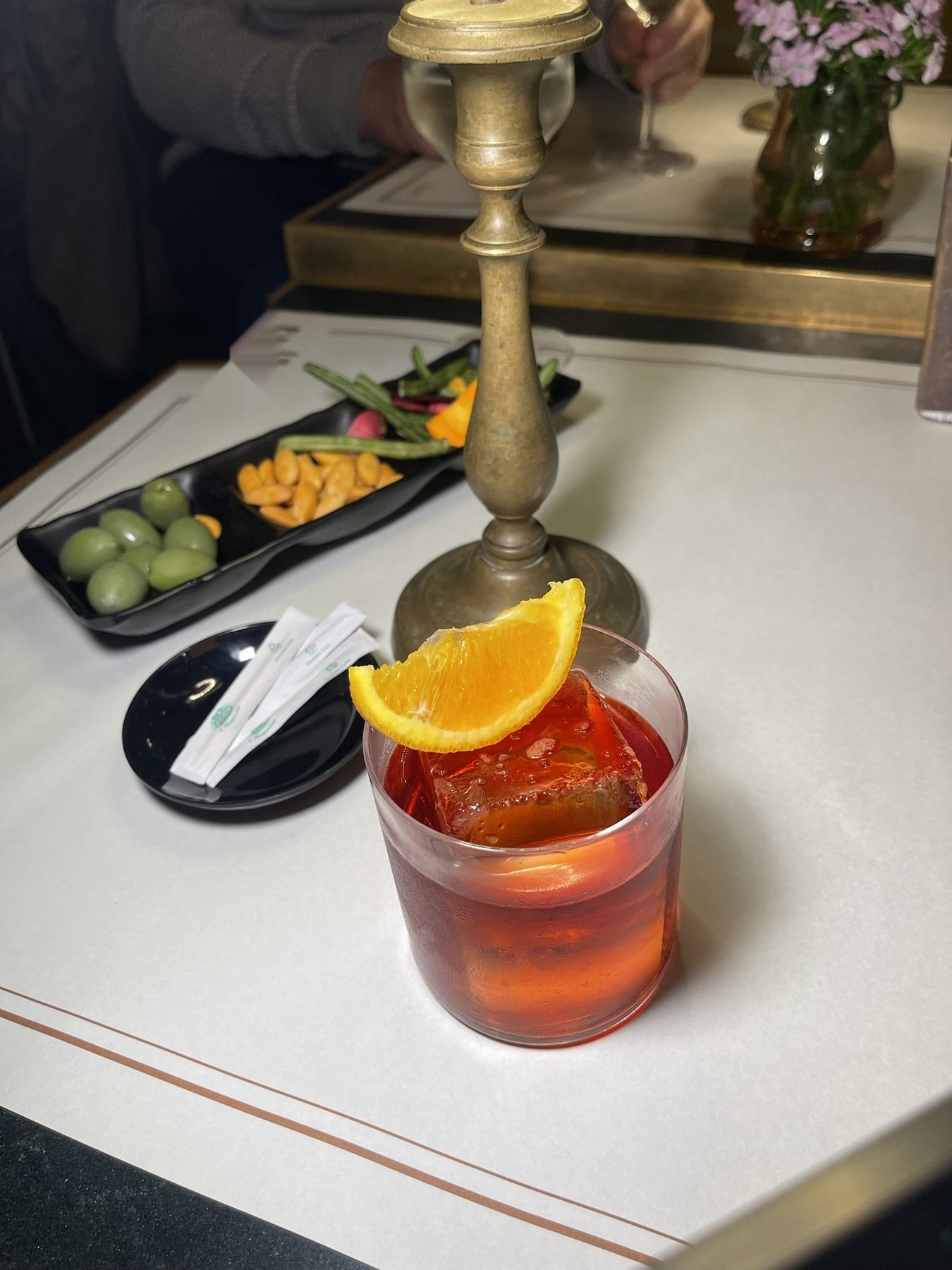
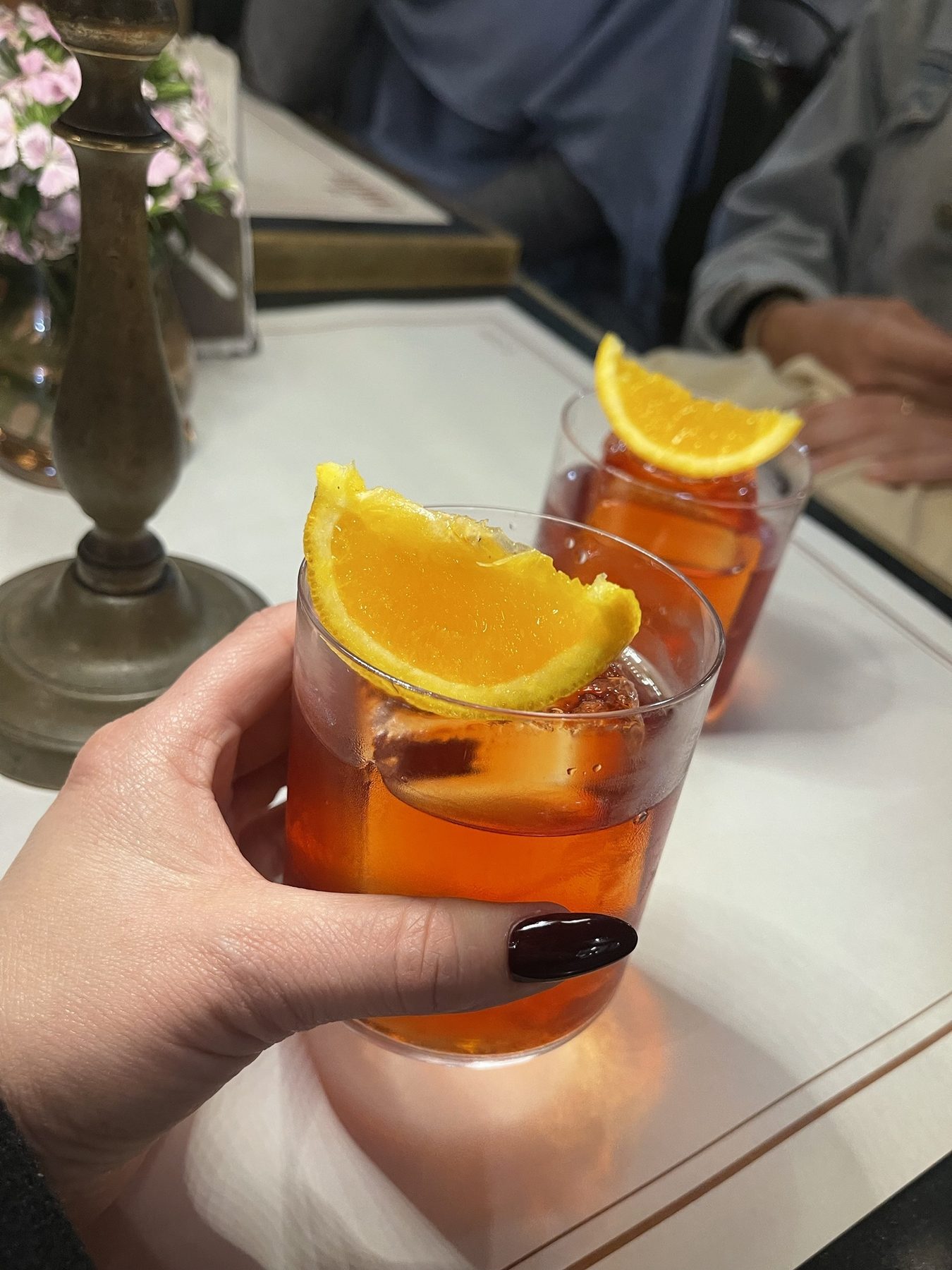
The Negroni was built at the table. Tumblers arrived with a single large cube and a wedge of orange, and the bartender stirred and strained the drink into each glass in front of us, deep red and perfectly clear. With it came a tray of large green olives, toasted almonds and crisp vegetables.
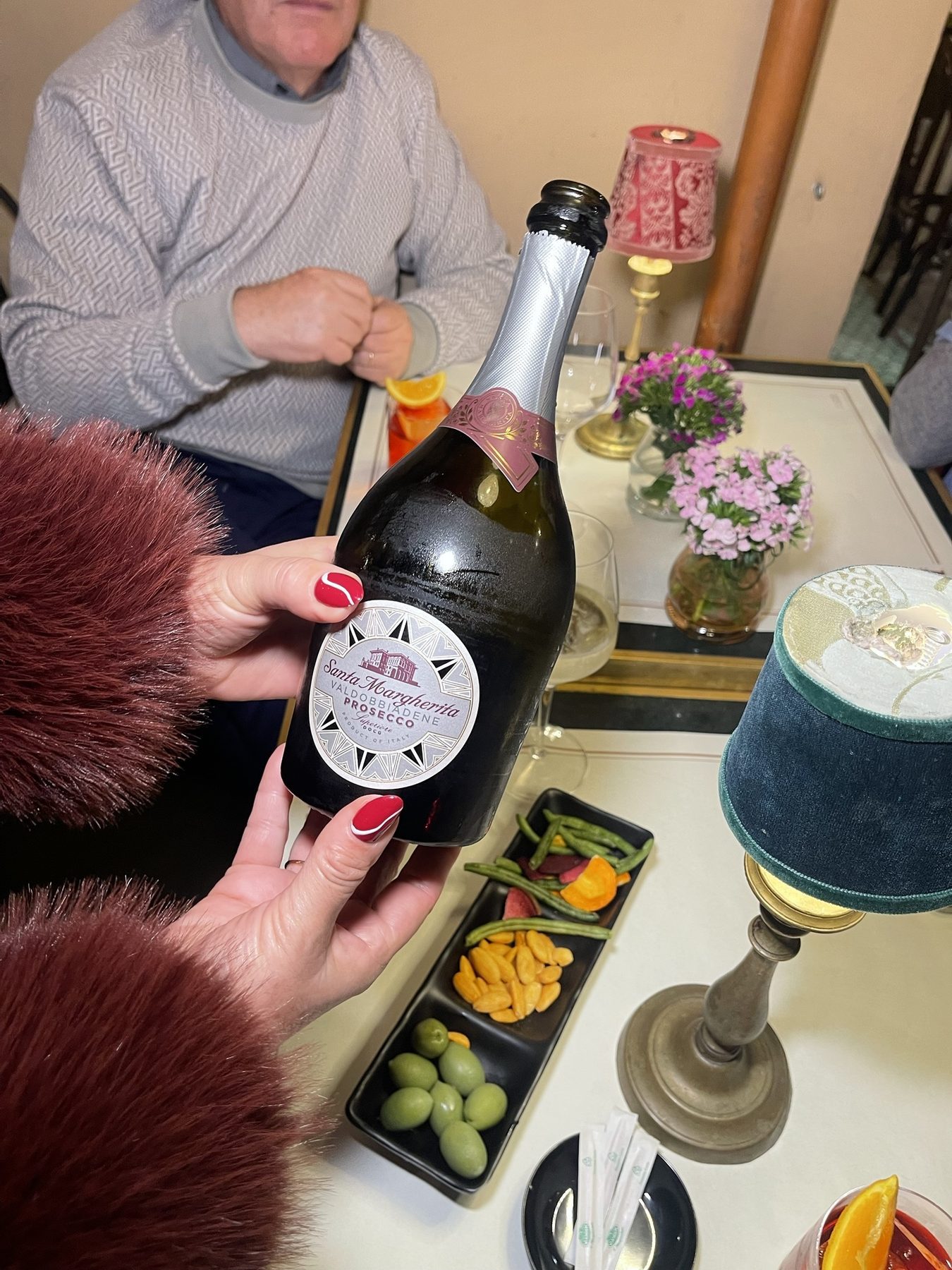
Then a bottle of Valdobbiadene Prosecco Superiore DOCG was opened, because an Italian evening rarely ends on a single note. We toasted one more time, standing in the street with our glasses raised, and it felt less like the end of a tour than the end of an evening with friends who happen to know every door in the neighbourhood.

What Is It Like to Be Hosted by Local Aromas?
The pace is the first thing you notice. Three stops in three hours leaves room to sit, to finish a glass, to ask a second question. Nobody is hurried along with a paddle held in the air. The walks between tables are short and take in some of the most beautiful streets in the historic centre.
The second thing is the quality of the conversation. Everything on the table comes with a reason: why this cheese, why this bread, why a Roman would never order that drink at this hour. You leave knowing how to toast, how to choose a side between Aperol and Campari, and how to recognise a place that respects what it serves.
The third is harder to define. Local Aromas is a family company, and it feels like one. The sisters finish each other’s stories. They tease each other across the table. By the second glass you are part of it.
Who Should Book It?
Travellers who have already seen the monuments and now want to understand the city. Couples and small groups of friends on a first evening in Rome, when a well-chosen aperitivo sets the tone for the whole stay. Anyone curious about Italian drinking culture who would rather learn it at a table than from a menu. And vegetarians, who are often an afterthought on food tours and here were anything but.
It is less suited to those who want a full dinner or a long list of sights. This is an evening about three tables, done well.
Mandale Luxury Magazine experienced this tour as guests of Local Aromas. All opinions are our own.
Local Aromas · Aperitivo Tour, Rome
Luxury in travel is moving away from what can be bought by anyone and toward what has to be known. A table at the right hour, on the right street, ordered by someone who has spent ten years deciding it is the right one, is a rarer thing than a suite. Local Aromas sells access to a private map of the city, and the sisters protect it accordingly. To explore their experiences, visit localaromas.com.
Aperitivo in Rome with Local Aromas: questions answered
What is the Local Aromas aperitivo tour in Rome?
It is a guided evening walk through the historic centre, built around Italy’s pre-dinner ritual. Over roughly three hours, guests sit down at three tables chosen by the company, each with its own drinks and its own plates, while a host explains the customs behind every glass.
Where does the tour start and end?
Our evening began at Piazza del Popolo at 5:30 PM and finished at about 8:30 PM, a short walk from Piazza di Spagna. Local Aromas confirms the exact meeting point when you book.
Which bars and restaurants does the tour visit?
Local Aromas does not publish its addresses, and at the founders’ request neither do we. The three tables are part of what guests are paying for: places the sisters have tasted, tested and approved themselves.
What did we eat and drink?
A spritz with a truffle and cheese croquette, crostini and warm fried panini at the first table; a board of cured meats, cheeses, olives and pizza bianca with white wine at the second; a Negroni built at the table and a Valdobbiadene Prosecco Superiore at the third.
Can the tour be adapted for vegetarians?
Yes. Three of the four guests in our party are vegetarian and said so in advance. The team adjusted the plates at every stop without any fuss.
How do you toast properly in Italy?
Our host gave us three rules. Say “Salute”, which means health. Touch everybody’s glass. Look each person in the eyes as you do it.
The Mandale Newsletter
Hosted stays, private addresses and the people behind them, every week.