Updated September 30, 2026

The UHNW Portfolio 2027: 7 Alternatives Beyond Public Markets
Family office outlook as the 2027 planning year begins
Seven allocation conversations for principals who value resilience, governance and optionality more than a fashionable ticker.
Quick Answer. The seven alternative sleeves worth placing on a family office’s 2027 review agenda are private equity, private credit, infrastructure, resource-linked real assets, hedge funds, venture capital, and art and collectibles. The objective is not to own all seven. It is to define the job of each sleeve, test liquidity and governance against the total portfolio, and stage decisions only when the diligence, structure and entry terms are strong enough.
The 2027 Allocation Standard
- Assign every alternative a portfolio job before evaluating a product.
- Model commitments, distributions, capital calls and operating cash needs together.
- Judge managers on underwriting, alignment, reporting and realized outcomes, not access alone.
- Treat an entry window as a diligence and pacing decision, not a prediction of the market bottom.
Why This Matters Now: September 2026
September is not early for a 2027 portfolio. It is the point at which a family office can still review policy, liquidity, manager capacity, legal structures and commitment pacing before the new calendar year begins. The work is rarely a single investment-committee meeting. Private funds require diligence; direct deals require governance; art and real assets require operational planning; every illiquid sleeve competes for the same future cash.
The 2026 UBS Global Family Office Report makes the timing more than editorial theater. In its survey of 307 family offices across more than 30 markets, 60% said they planned strategic asset-allocation changes over the following 12 months. The same report found that 60% operated with investment committees and more than half used structured budgeting frameworks. Those figures do not establish a universal Q4 calendar, but they do show why a September review can be practical: institutionalized offices need enough runway to convert a thesis into an approved, funded and monitored mandate.
UBS also describes the prevailing posture as measured rather than abrupt, with family offices prioritizing diversification across asset classes, currencies and regions. That is the right frame for this list. “Beyond public markets” should not mean abandoning public markets. It should mean examining what a less liquid or more specialized exposure can do that the existing portfolio cannot, then deciding whether the trade-off is worth the governance burden.
Seven Sleeves, Seven Different Jobs
| Alternative | Possible portfolio job | First metric to test | Primary risk |
|---|---|---|---|
| Private equity | Long-duration ownership and operating value creation | Realized distributions and cash conversion | Illiquidity and valuation dependence |
| Private credit | Contractual income and bespoke seniority | Interest coverage and loan-to-value | Credit loss, leverage and weak documents |
| Infrastructure | Essential-service cash flows and inflation linkage | Contracted revenue and debt-service coverage | Regulatory, construction and merchant exposure |
| Resource-linked real assets | Diversification and sensitivity to real-economy inputs | Real yield after carry and operating costs | Commodity cycles and hidden leverage |
| Hedge funds | Tactical diversification and downside asymmetry | Beta and correlation during stress | Leverage, crowding and liquidity mismatch |
| Venture capital | Exposure to asymmetric innovation | Ownership, runway and reserve discipline | Concentration and extended time to liquidity |
| Art and collectibles | Cultural capital, stewardship and selective value storage | Provenance, condition and total ownership cost | Illiquidity, opacity and authenticity |
These categories are not perfectly sealed. Venture may sit inside a private-equity program; private infrastructure debt may sit inside credit; gold may be treated as a liquid diversifier rather than a private-market asset. The useful question is not the label. It is whether the office can define the exposure consistently enough to measure, govern and fund it.
Private Equity: Control Must Earn the Illiquidity
What it is. Private equity supplies ownership capital to companies outside public exchanges, through buyouts, growth investments, direct positions, co-investments, secondaries and funds. The portfolio case rests on access to businesses and operating interventions that are not available through a public index.
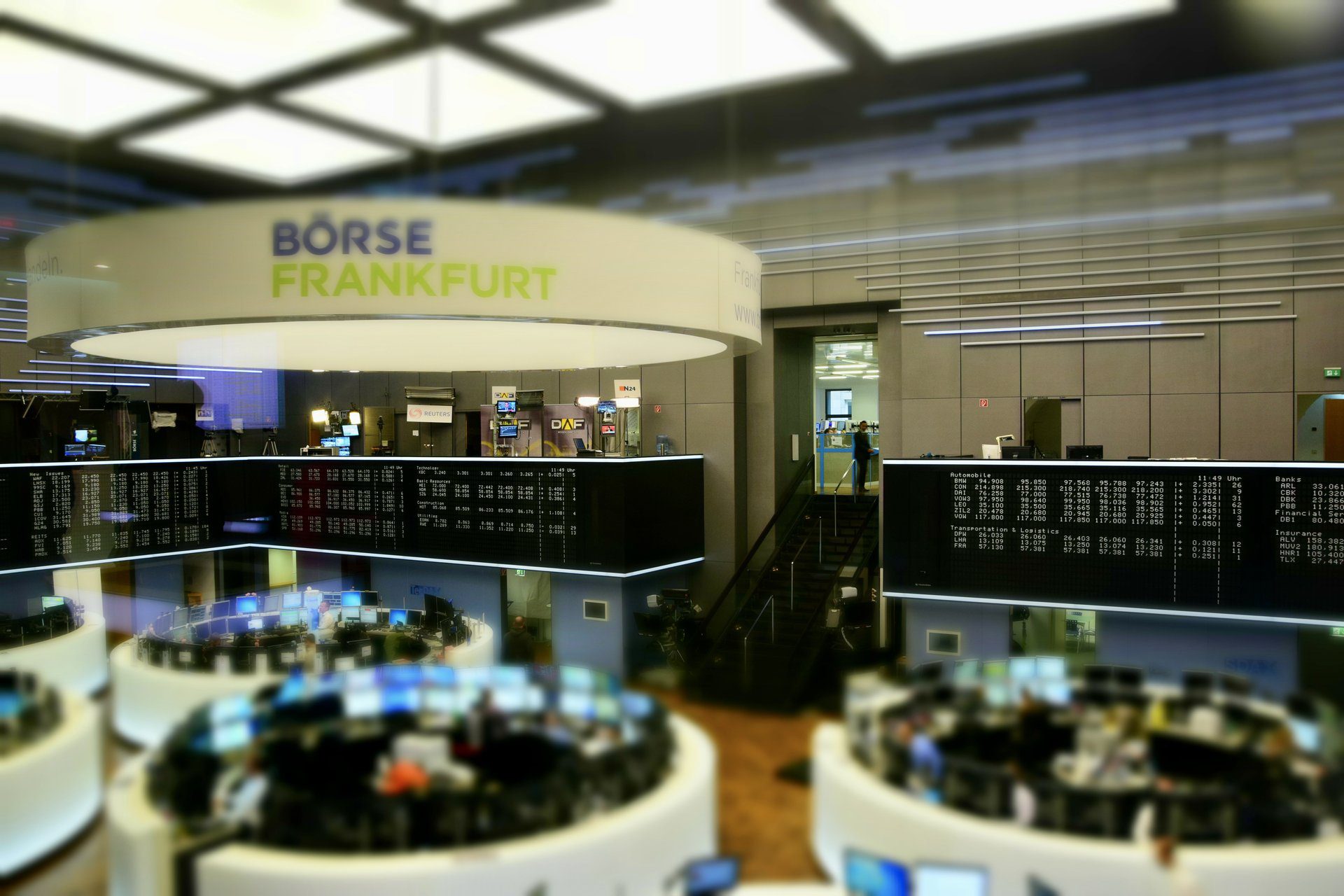
Why it matters for 2027. KKR’s midyear 2026 outlook argues that private-equity success is tilting toward operational improvement rather than financial engineering. That is a manager’s view, not a guaranteed outcome, but it gives investment committees a useful test: does the underwriting depend on revenue quality, pricing, productivity and capital efficiency, or mainly on leverage and a higher exit multiple?
Metrics to monitor. Entry valuation; net debt and interest coverage; EBITDA-to-cash conversion; organic growth; margin bridge; customer concentration; realized distributions; DPI, TVPI and RVPI; public-market equivalent; unfunded commitments; and the portion of value attributed to multiple expansion rather than operations.
Typical risks. Capital may remain locked for years. Marks can lag public markets. Leverage magnifies operating mistakes. Fees and carried interest compound. A family office making direct investments adds governance, concentration and key-person risk to the usual fund risk.
Entry window. Build a multi-vintage commitment plan rather than treating one fundraising close as a market call. Use secondaries or co-investments only when pricing, information rights and concentration fit the existing program. The right window opens when the office can fund future calls under a downside liquidity scenario and the value-creation plan survives without generous exit assumptions.
Private Credit: Income Is Only as Good as the Covenant
What it is. Private credit covers negotiated lending outside broadly traded bond and loan markets, including direct lending, asset-backed finance, specialty finance, real-estate and infrastructure debt, and capital solutions. The category spans very different seniority, collateral and liquidity profiles; “private credit” alone is not a sufficient risk description.
Why it matters for 2027. Apollo’s 2026 wealth outlook describes increasing dispersion among managers and points to older loans with higher leverage and weaker interest coverage as a reason to emphasize underwriting and active portfolio management. KKR’s midyear outlook likewise sees opportunity in credit dispersion when positions are underwritten correctly. Both are investment-manager perspectives and should be read as such, but the shared implication is sound: selection and documentation matter more than the headline yield.
Metrics to monitor. Seniority and collateral; loan-to-value; debt-to-EBITDA; fixed-charge and interest coverage; covenant headroom; sponsor equity; non-accruals; realized defaults and recoveries; payment-in-kind income; borrower and sector concentration; amendments; and the match between fund liquidity and loan maturity.
Typical risks. Floating-rate income can weaken the borrower paying it. Aggressive adjustments may overstate earnings. Weak covenants reduce intervention rights. Reported volatility can understate economic risk when loans are marked infrequently. Leverage at the borrower, fund or vehicle level can stack.
Entry window. Favor new originations and refinancings only after comparing documents, leverage and all-in economics with the public alternative. Stage commitments across managers and vintages. Avoid equating a high coupon with an attractive entry if the capital structure cannot absorb a slower operating year.
Infrastructure: The Physical Layer of the Digital Age
What it is. Infrastructure includes assets and businesses that deliver essential services: power generation and grids, data centers and fiber, transport, water, waste, logistics and selected social infrastructure. Return patterns differ sharply between operating, contracted assets and development projects exposed to construction or merchant pricing.

Why it matters for 2027. UBS reports infrastructure among the themes attracting family-office capital in 2026. KKR’s midyear outlook links long-duration demand to AI infrastructure, electrification, reshoring and defense readiness, while also noting permitting, interconnection, equipment and grid constraints. The investable insight is not simply “buy data centers.” It is to identify where demand is durable, capacity is scarce and the contract assigns risk to a party able to bear it.
Metrics to monitor. Contracted versus merchant revenue; contract duration and inflation indexation; counterparty quality; debt-service coverage; availability and utilization; maintenance and growth capex; construction contingency; permitting milestones; power availability; regulatory resets; climate resilience; and exit sensitivity to discount rates.
Typical risks. Political and regulatory decisions can reshape economics. Development delays consume contingency. Technology can strand specialized assets. Merchant exposure introduces price volatility. Long-duration assets can be sensitive to financing costs even when operating demand is sound.
Entry window. Match the vehicle to the office’s tolerance for development risk. Brownfield and core assets may offer more visible operations but can command premium pricing; development can offer value creation with materially more execution risk. Commit when contractual protections, financing and permitting are legible, not merely when the theme is popular.
Access is not an allocation thesis. Structure, price and governance complete the sentence.
Resource-Linked Real Assets: Own the Exposure, Not the Slogan
What it is. This sleeve covers tangible or resource-linked exposures outside dedicated infrastructure: precious metals, selected commodities, timber, farmland and specialized property or operating assets tied to physical supply. It is intentionally narrower than a generic real-estate allocation and should be decomposed by economic driver.

Why it matters for 2027. UBS found family offices considering selected alternatives such as infrastructure and gold while responding to geopolitical and currency uncertainty through diversification rather than abrupt shifts. KKR’s 2026 work emphasizes collateral-based cash flows and assets linked to nominal economic activity. The planning question is whether a specific real asset diversifies the family’s existing businesses and property holdings, or quietly doubles the same inflation, geography and leverage exposures.
Metrics to monitor. Real yield after fees, storage and operating costs; inflation linkage; production or occupancy assumptions; replacement cost; reserve life where applicable; water and soil data for land; insurance; basis and counterparty risk; leverage; currency; and correlation during the stress regime the asset is meant to address.
Typical risks. Tangibility does not eliminate volatility. Commodity cycles, environmental liabilities, weather, insurance gaps, operational complexity and political intervention can dominate. Precious metals produce no contractual cash flow, while operating real assets can demand specialist oversight.
Entry window. Set a strategic range and rebalance into it after stress-testing the whole family balance sheet. For operating assets, wait for verified rights, title, environmental review and a defensible operating model. For liquid resource exposures, avoid converting a geopolitical headline into an oversized permanent allocation.
Hedge Funds: Define the Hedge Before the Fund
What it is. Hedge funds use flexible mandates that may include long and short positions, derivatives, leverage, relative-value trades, event-driven situations, macro exposures or systematic strategies. The category is a legal and structural umbrella, not a single return stream.
Why it matters for 2027. The UBS report places hedge funds at 6% of average family-office allocations and says 37% of respondents were considering greater exposure over five years. That does not make the category timely by itself. It does suggest that offices are revisiting strategies intended to complement, rather than replicate, traditional beta.
Metrics to monitor. Equity and credit beta; correlation in drawdowns, not just full periods; gross and net exposure; expected shortfall; maximum drawdown; volatility; concentration; liquidity; gates and side pockets; counterparty exposure; factor attribution; capacity; and the persistence of alpha after fees.
Typical risks. Leverage, crowding and basis risk can turn diversification into correlation precisely when liquidity disappears. Complex books can resist independent verification. Style drift, key-person dependence, opaque side pockets and mismatched redemption terms demand operational diligence as rigorous as investment diligence.
Entry window. Hire the role, not the recent return. Establish the benchmark and expected behavior in calm and stressed markets before allocating. Complete operational diligence, then fund when capacity, transparency and terms are acceptable. A strategy bought after a celebrated crisis trade may no longer offer the same asymmetry.
Venture Capital: Asymmetry Requires a Reserve Plan
What it is. Venture capital finances young companies whose value may depend on product adoption, market creation and successive funding rounds. Exposure can come through funds, direct deals, co-investments or secondaries. Outcomes are typically concentrated in a small share of companies.
Why it matters for 2027. The Q2 2026 PitchBook-NVCA Venture Monitor describes a recovery with improving IPO and M&A activity, but also warns that investment, fundraising and exits remained concentrated among a relatively small group of companies and funds. AI and mega-rounds dominated the headlines. For family offices, the signal is not to chase the largest round; it is to price concentration, access and time to liquidity honestly.
Metrics to monitor. Post-money valuation; ownership and dilution; liquidation preferences; revenue quality; gross margin; net revenue retention where relevant; burn multiple; runway; reserve ratio; follow-on concentration; realized exits; loss ratio; DPI; and the manager’s ability to win and maintain ownership in its strongest companies.
Typical risks. Power-law outcomes make casual diversification misleading. Private marks can remain stale. Capital needs may rise as exit markets slow. Governance rights can be thin, technology can become obsolete quickly, and direct deals can create emotional attachment to a founder or theme.
Entry window. Commit across vintages and predefine reserves before the first check. For direct deals, demand cap-table clarity, information rights and financing scenarios through the next milestone. Consider secondaries only with reliable company data and a discount or structural advantage that compensates for limited control.
Art and Collectibles: Stewardship Before Spreadsheet
What it is. Art, watches, wine, classic cars and other collectibles combine aesthetic, cultural and social utility with financial characteristics. They are heterogeneous objects traded in markets with varying transparency, expertise, costs and depth.

Why it matters for 2027. The Art Basel and UBS Art Market Report 2026 estimated global art-market sales of $59.6 billion in 2025, up 4% year over year, while emphasizing that the recovery was moderate and uneven. Separate Art Basel coverage of high-net-worth collectors reported that only 24% selected financial investment as their single most important motivation for buying art. A family office should therefore avoid forcing a passion asset into a conventional return model while still applying investment-grade documentation and risk controls.
Metrics to monitor. Provenance; authenticity support; condition; title; comparable transactions; primary versus secondary market; buyer and seller charges; insurance; storage, conservation and logistics; market depth; holding period; collection concentration; succession plan; and net proceeds after transaction costs.
Typical risks. Illiquidity and price opacity are structural. Authentication, title, condition, restitution, transport and storage can create losses unrelated to an artist’s reputation. Indexes may not reflect the family’s exact object, and insurance values are not equivalent to executable sale prices.
Entry window. The window opens after the object, seller authority, provenance, condition, total cost and stewardship plan are documented. A fair or auction deadline is not diligence. For Mandale’s detailed acquisition protocol, see Art Basel Miami Beach 2026: Before You Buy.
The Five Controls That Sit Above Every Alternative
- Liquidity budget. Combine capital calls, debt service, taxes, distributions, lifestyle obligations and operating-company needs in one downside cash-flow schedule. Reported NAV is not spendable liquidity.
- Exposure map. Look through funds to sectors, geographies, currencies, counterparties and economic drivers. Seven fund names can still express one concentrated bet.
- Valuation policy. Record who marks the asset, how often, with which comparables and with what independent challenge. Smoothed marks should not be mistaken for low risk.
- Decision rights. Define which choices belong to the principal, investment committee, CIO, external adviser, legal counsel or specialist. Direct deals and passion assets require explicit conflict rules.
- Exit and succession file. Know who can sell, transfer, value or steward each asset if the original decision maker is unavailable. Illiquidity becomes more dangerous when authority is ambiguous.
A family office does not become more sophisticated by accumulating exotic assets. It becomes more sophisticated when every asset has a clear purpose, an accountable owner, reliable reporting and a pre-agreed response when the thesis changes.
Questions to Put on the First Page
The 2027 Alternative-Allocation Questions
Should every UHNW portfolio hold all seven alternatives?
No. Each sleeve must earn a place based on the family’s objectives, liquidity, existing businesses, governance capacity, tax and legal circumstances, and ability to evaluate specialist managers. Excluding an asset that the office cannot govern can be a disciplined decision.
How much should a family office allocate to alternatives in 2027?
There is no universal percentage. The appropriate range depends on future cash needs, drawdown tolerance, liabilities, concentration in operating companies or property, investment horizon and access to suitable vehicles. A strategic allocation should be modeled with qualified investment, legal, tax and accounting advisers.
Are private markets less volatile than public markets?
Not necessarily. Private assets are valued less frequently, so reported prices may appear smoother even when economic risk has changed. Illiquidity, leverage, valuation uncertainty and limited price discovery can make risk harder to observe, not lower.
What should a family office complete before making 2027 commitments?
Complete an exposure map, downside liquidity schedule, manager and operational diligence, legal and tax review, benchmark selection, pacing plan, reporting template and decision-rights matrix. The office should also document what would trigger a pause, follow-on commitment or exit.
What Was Checked
Editorial and financial disclaimer. This article is general editorial information and is not financial, investment, legal, tax or accounting advice. It is not an offer, solicitation or recommendation to buy or sell any security, fund, artwork or other asset. Alternative investments may be speculative, illiquid, leveraged, difficult to value and subject to substantial fees and loss of principal. Past performance and current market views do not guarantee future results. Readers should obtain advice from qualified professionals who understand their objectives, balance sheet, jurisdiction and risk tolerance.
September is the moment to move from access stories to allocation architecture: define the job, price the illiquidity, verify the governance and let disciplined pacing outrank urgency.