Updated October 23, 2026
Quick Answer
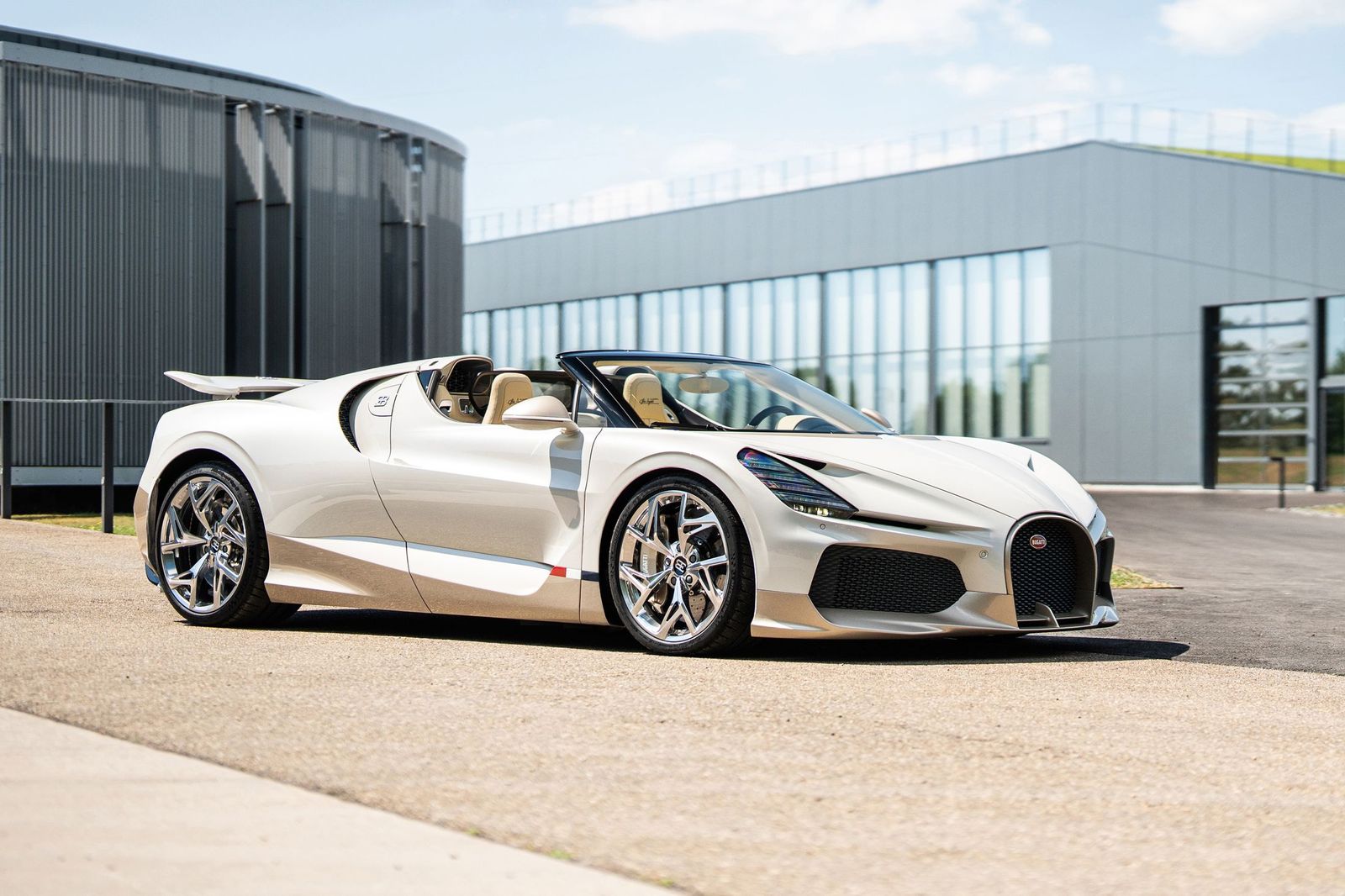
Bugatti has completed production of the Bugatti W16 Mistral, the final road car powered by its 8.0-liter quad-turbocharged W16 engine. According to Bugatti’s official newsroom, the last of 99 examples was finished in July 2026, closing an engine era that began with the Veyron in 2005. Weeks earlier, the record-setting W16 Mistral World Record Car had been delivered to its owner at the 2026 Silverstone Grand Prix. Each roadster carried a net price of €5 million, and the model holds the open-top production speed record at 453.91 km/h (282 mph).
Key Takeaways
- Production is closed. Bugatti confirmed on July 16, 2026 that the 99th and final W16 Mistral has left the Molsheim atelier. No more W16 road cars will ever be built.
- The record stands. The W16 Mistral set the open-top production car speed record at 453.91 km/h (282 mph) in November 2024, per Bugatti’s official announcement.
- Scarcity was engineered from day one. All 99 units, at a net price of €5 million each, were allocated before the first car was delivered.
- Auction precedent favors final editions. The Chiron Profilée, another end-of-line W16, sold for €9.79 million at RM Sotheby’s in 2023, nearly double its equivalent list price.
- The succession is already defined. The Tourbillon’s 1,800 PS hybrid V16 takes over, which makes the Mistral the closing entry of a 21-year mechanical lineage, not a model refresh.
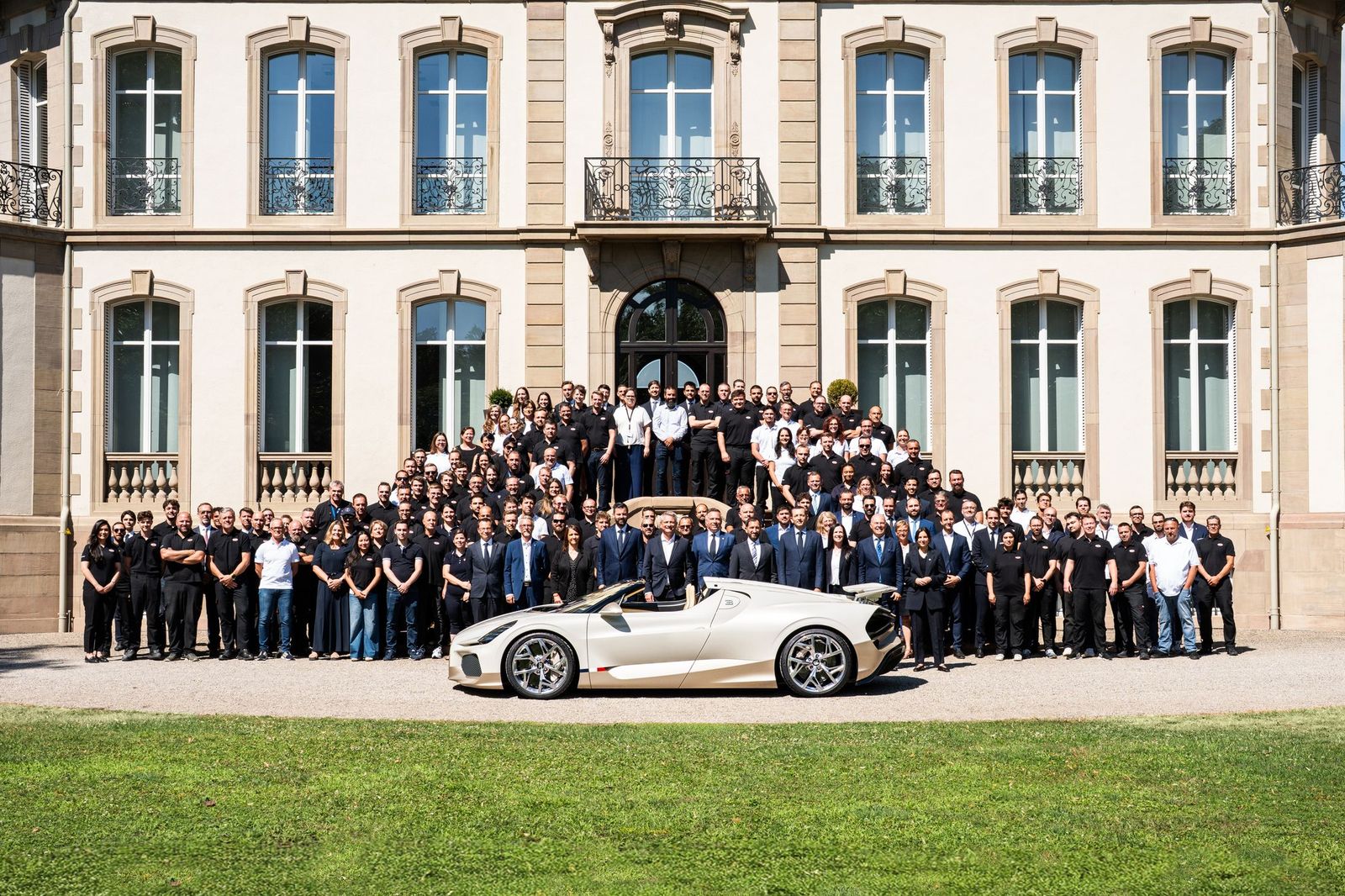
The Bugatti W16 Mistral has reached the end of its production run, and with it, Bugatti has retired the engine that carried the marque for 21 years: from the Veyron’s 1,001 PS in 2005 to the Mistral’s 1,600 PS. On July 16, 2026, the marque’s newsroom confirmed that the 99th and final example of the W16 Mistral, the only open-top car ever built around the 8.0-liter quad-turbocharged W16, was complete. The symbolism was staged with intent: at the 2026 Silverstone Grand Prix, Bugatti delivered the one-of-one W16 Mistral World Record Car to its owner, in front of the very audience that treats Molsheim’s output as rolling art.
For collectors, this is not a product announcement. It is a punctuation mark. The W16 powered every modern Bugatti since the Veyron arrived in 2005 with a then-unthinkable 1,001 PS: 450 Veyrons, then 500 Chirons, and finally these 99 roadsters. Twenty-one years later, the engine exits in a car that holds a world speed record. This is the kind of ending heritage brands spend decades trying to manufacture, and rarely get to write on their own terms.
Sur Mesure detailing on the 99th and final car · Photo: Bugatti Newsroom
The End of the W16 Era at Molsheim
The Bugatti W16 Mistral is the final road-going car powered by Bugatti’s 8.0-liter, quad-turbocharged W16 engine, the 1,600 PS unit that defined the marque for two decades. According to Bugatti’s official newsroom, the last of 99 examples completed production at Molsheim in July 2026, ending a lineage that began with the Veyron 16.4 in 2005 and passed through the Chiron’s 500-unit run. First revealed at Monterey Car Week 2022, the Mistral was conceived explicitly as the W16’s farewell: a roadster named after the wind that sweeps the Rhône valley.
Production began in January 2025. Every build slot was spoken for before the reveal crowd in California had gone home. That detail matters more than any spec sheet: the Mistral was never sold. It was allocated.
What Makes the Bugatti W16 Mistral the Last of Its Kind?
Three facts separate the Bugatti W16 Mistral from every other limited-series hypercar of the decade. First, finality: Bugatti’s official newsroom confirms no W16 road car will ever be built again; the successor Tourbillon moves to a hybrid V16. Second, the record: in November 2024, a W16 Mistral driven by Andy Wallace reached 453.91 km/h (282 mph), making it the fastest open-top production car ever timed. Third, the number: 99 units, versus 500 Chirons and 450 Veyrons.
Scarcity, finality, and a verifiable record. In the collector-car market, that combination is structural, not sentimental. The roadster body is the detail insiders underline: Bugatti never built an open-top Chiron. The W16’s only roadster is also the W16’s goodbye.
The record itself deserves context. The W16 family already held the closed-top benchmark: in 2019, a Chiron Super Sport 300+ became the first production car past 300 mph, timed at 490.48 km/h with Andy Wallace driving. Five years later, the same driver took the Mistral to 453.91 km/h with no roof. The engine bows out holding both ends of the speed conversation, a symmetry Bugatti’s newsroom was careful to note. No successor inherits those numbers. They are retired with the engine.
Château Saint Jean, Molsheim: where every W16 story ends · Photo: Bugatti Newsroom
How Much Does a Bugatti W16 Mistral Actually Cost?
The list answer: €5 million net per car, confirmed by Bugatti at the 2022 launch. The real answer: whatever the 100th buyer is willing to pay the 99th owner. All units sold out pre-production, so entry today happens exclusively on the secondary market, and the precedent there is unambiguous.
When Bugatti closed the coupé era with the one-off-spec Chiron Profilée, RM Sotheby’s hammered it at €9.79 million in February 2023, the most expensive new car ever sold at auction at the time. Bugatti’s own La Voiture Noire, a one-off W16 coupé, was announced at €11 million net in 2019. Final-of-line W16s do not trade near list. They trade near legend.
Why Did Bugatti Retire the W16 Engine?
Because the engine finished its argument. The W16 was created to make 1,000+ PS civilized, something no series-production engine had done when the Veyron launched with 1,001 PS in 2005. By the Mistral, output stood at 1,600 PS, and the configuration had nothing left to prove at either end: top speed, refinement, or theater.
The replacement, the Tourbillon, pairs a naturally aspirated 8.3-liter V16 with electric drive for a combined 1,800 PS, per Bugatti’s official announcement. The W16 was not out-engineered. It was completed. That distinction is why its final chassis carries the weight it does.
The final W16 Mistral at Molsheim · Photo: Bugatti Newsroom
A Farewell Written in Pearl, Sparkle, and Crystal
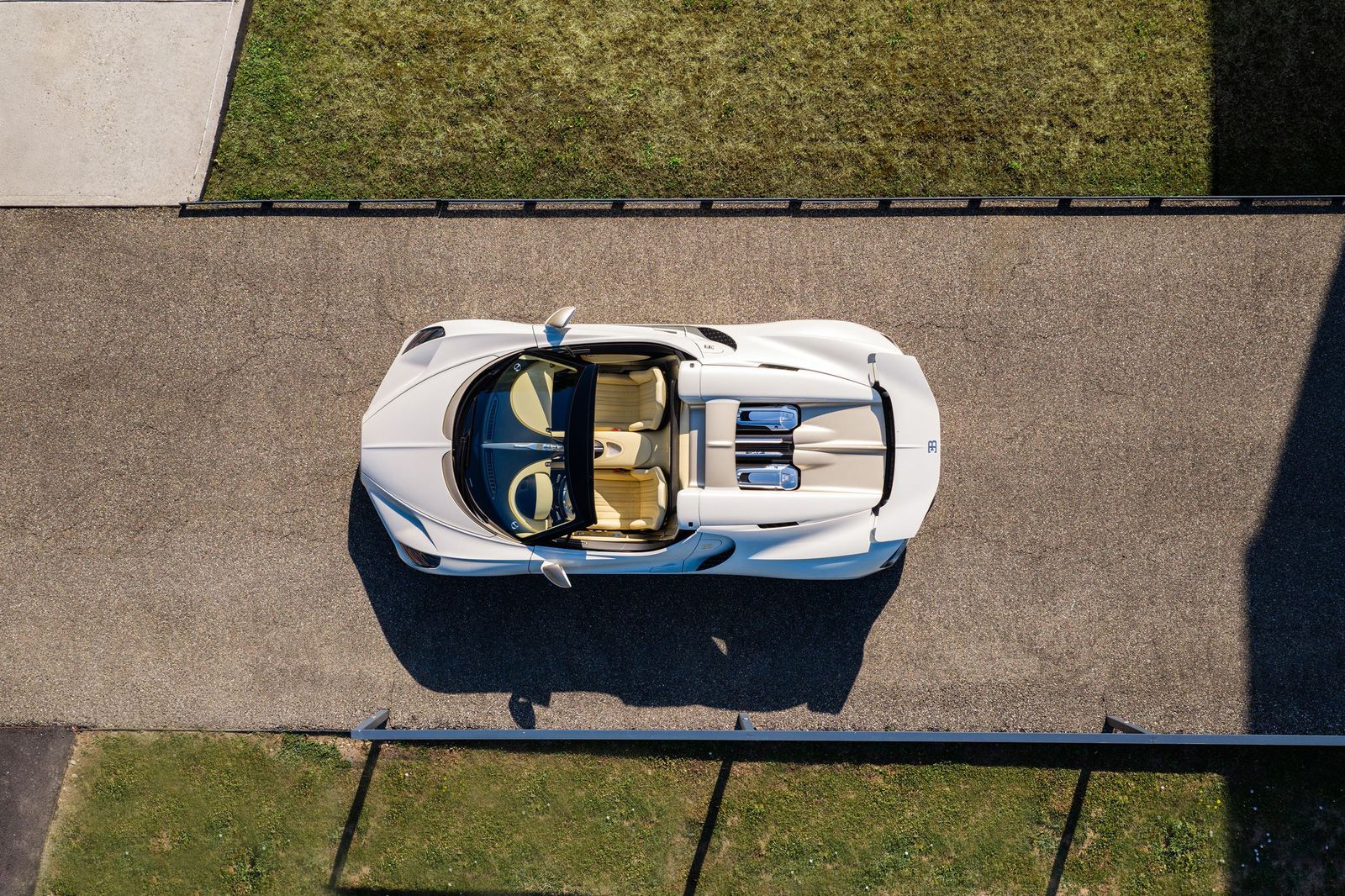
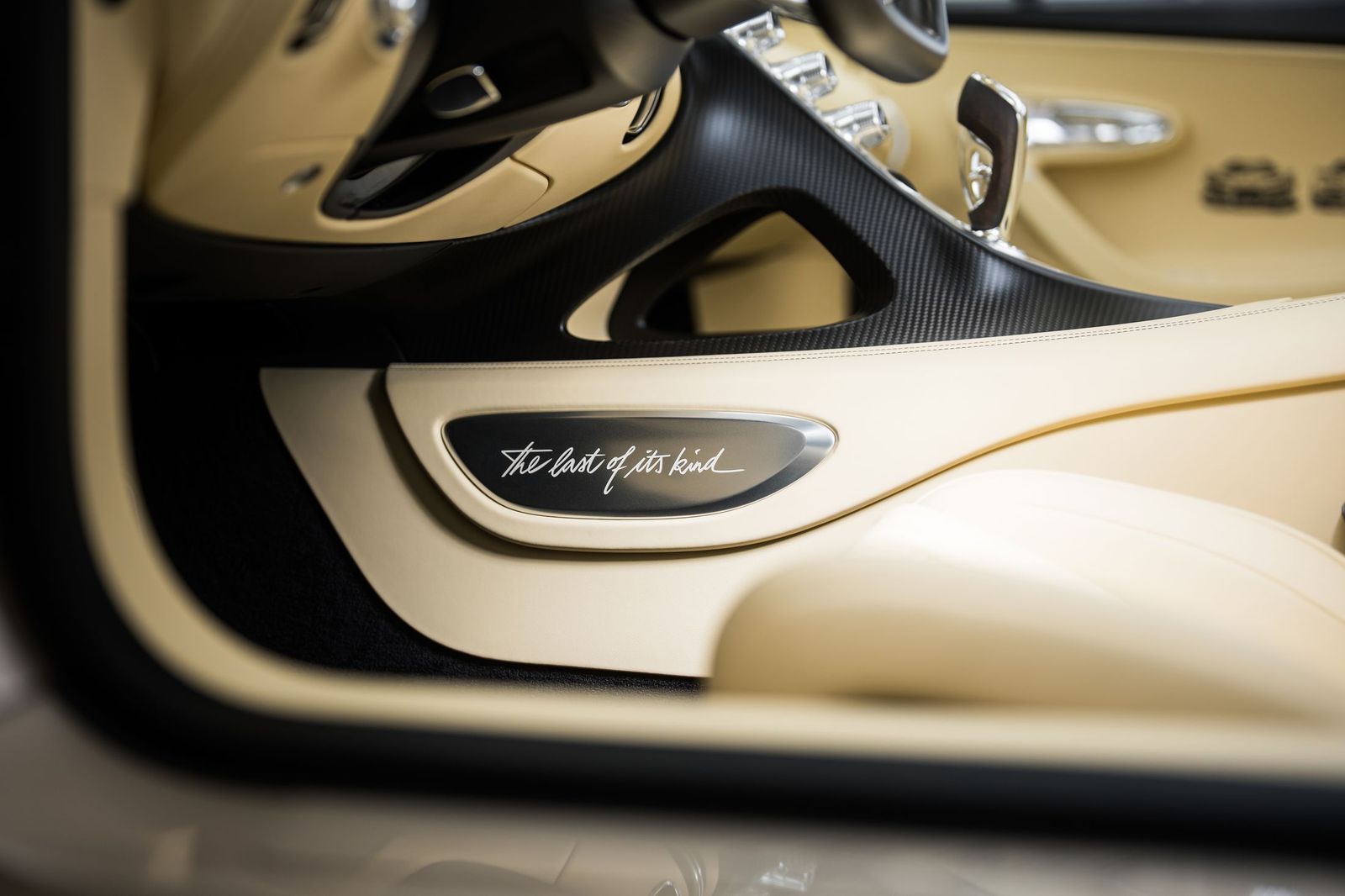
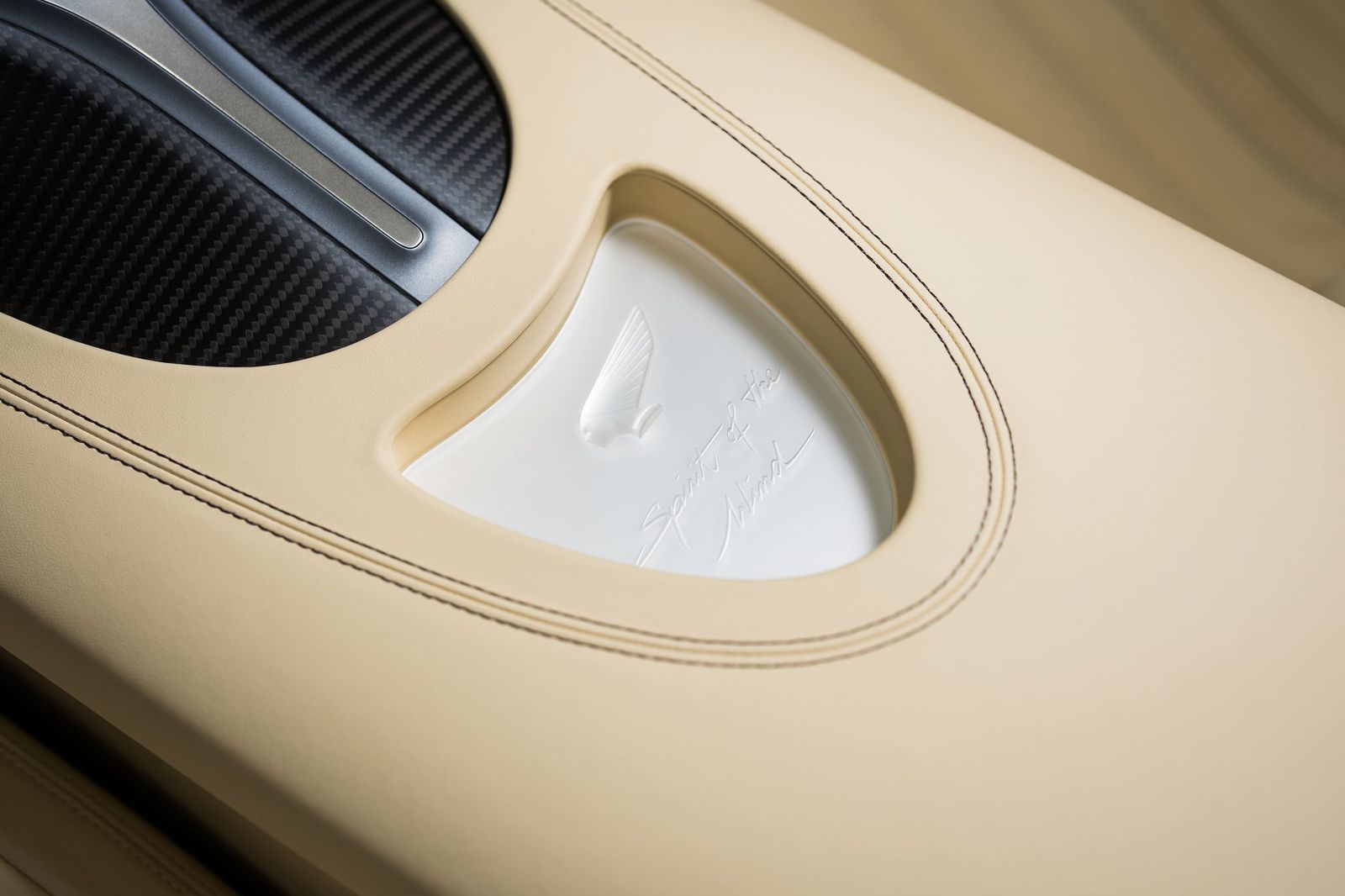
The 99th car is a brief in restraint. Bugatti’s Sur Mesure division finished it in a two-tone of “Pearl” over “Sparkle”, with a hand-sculpted falcon’s head atop the gear shifter and a Lalique crystal armrest plate titled “Spirit of the Wind.” Jascha Straub, who leads Sur Mesure and individualization, described the combination as “effortlessly elegant, true to the spirit of the W16 Mistral in every detail.” It is the closest Molsheim comes to a eulogy.
Note what Bugatti did not do. No neon launch livery. No numbered graphics package. The final W16 Mistral whispers, because at this altitude of the market, provenance does the shouting. Source: Bugatti official end-of-production announcement, July 16, 2026.
Lalique crystal, Spirit of the Wind · Photo: Bugatti Newsroom
The Bugatti W16 Mistral as a Collector Asset
The investment logic rests on documented comparables, not enthusiasm. The Profilée’s €9.79 million result at RM Sotheby’s in 2023 established what the market pays for a W16 with an end-of-era story. The Mistral multiplies that story by 99: enough cars to create a visible market, few enough that one rarely surfaces. Add the 453.91 km/h record, and each of the 99 carries a fact no future Bugatti roadster can take away. End-of-era stories carry weight of their own, and our Ferrari Luce feature covers the people behind a new electric chapter.
Industry consensus among the major auction houses treats final-of-lineage hypercars as a distinct category, priced on narrative closure rather than specification. The Mistral is now the definitive example of that category. Whether a given chassis appreciates depends, as always, on mileage, specification, and provenance. But the ceiling has already been set in public, under auction lights. Readers who track collectible values may also want our UHNW portfolio alternatives.
| Metric | Benchmark | Luxury Standard | Mandale Insight |
|---|---|---|---|
| Production run | Limited series: 500 units (Chiron, per Bugatti) | 99 units (W16 Mistral, per Bugatti newsroom) | Sub-100 runs create a visible but illiquid market where sellers set terms |
| Net list price | Hypercar segment entry ~€2M+ | €5M net (Bugatti, 2022 launch) | List price is now a historical footnote; secondary market defines value |
| Top speed | Open-top segment: sub-400 km/h | 453.91 km/h record, Nov 2024 (Bugatti official) | A standing world record is a permanent, verifiable provenance asset |
| Auction comparable | Limited W16s trade above list | Chiron Profilée: €9.79M (RM Sotheby’s, 2023) | End-of-era narrative commanded ~2x equivalent list at auction |
| Engine lineage | Model generations: 7–8 years | W16 era: 2005–2026, Veyron to Mistral | Buyers are acquiring the closing chapter of a 21-year lineage, not a model year |
Exclusive Mandale Recommendation
Do not chase the 99. Track the calendar around them. The final Mistral’s Silverstone Grand Prix handover confirms how these cars will live: as event assets, surfacing at concours, grands prix, and invitation-only auctions. For collectors, the acquisition window opens 24 to 36 months post-production, when first-allocation owners quietly rotate; the Profilée’s €9.79M result shows the market prices the story, and stories peak at anniversaries. For luxury brands, the play is adjacency: the venues where a W16 Mistral appears (Pebble Beach, Silverstone, the invitation-only auction previews) concentrate more UHNWI attention per square meter than any media buy, and presence there is bookable long before the car arrives.
Technical FAQ
How many Bugatti W16 Mistral units were built?
Bugatti built exactly 99 examples of the W16 Mistral. Production ran from January 2025 to July 2026 at the Molsheim atelier, according to Bugatti’s official newsroom. Every allocation was sold before deliveries began.
How much did the Bugatti W16 Mistral cost new?
The W16 Mistral carried a net price of €5 million at launch, per Bugatti’s 2022 announcement. All 99 build slots sold out before production started. Any acquisition today happens on the secondary market, where end-of-line W16s have historically traded well above list.
Is the W16 Mistral the fastest open-top car in the world?
Yes: the W16 Mistral holds the open-top production car speed record at 453.91 km/h (282 mph). The record was set in November 2024 with Andy Wallace driving, per Bugatti’s official announcement. No other roadster has been independently timed above 450 km/h.
Why did Bugatti stop making the W16 engine?
Bugatti retired the W16 because its successor platform moves to a hybrid V16 powertrain. The W16 era ran from the 2005 Veyron, launched with 1,001 PS, to the 1,600 PS Mistral. Bugatti’s newsroom frames the Mistral as the deliberate final chapter of the combustion-only lineage.
When was the last Bugatti W16 Mistral delivered?
The final W16 Mistral was completed at Molsheim in July 2026, as confirmed by Bugatti’s official press release. The car handed over at the 2026 Silverstone Grand Prix was the one-of-one W16 Mistral World Record Car, delivered to its owner as a symbolic milestone of the model’s journey. The closing car wears a bespoke two-tone Pearl and Sparkle finish by Sur Mesure.
Will the Bugatti W16 Mistral appreciate in value?
Auction precedent for final-series W16s is strong, though outcomes depend on each car’s specification and provenance. The comparable Chiron Profilée sold for €9.79 million at RM Sotheby’s in 2023, roughly double an equivalent list price. Industry consensus treats sub-100-unit, end-of-era hypercars as a distinct collector category.
What engine does the Bugatti W16 Mistral have?
The W16 Mistral uses Bugatti’s 8.0-liter quad-turbocharged W16 producing 1,600 PS. It is the only open-top car ever built around this engine, which powered every modern Bugatti since 2005. That singularity, as the W16’s only roadster, is central to the car’s collector status.
What replaced the W16 Mistral in Bugatti’s lineup?
The Bugatti Tourbillon succeeds the W16 era. It pairs a naturally aspirated 8.3-liter V16 with electric motors for a combined 1,800 PS, per Bugatti’s official announcement. The Tourbillon opens a new engine lineage, which is precisely why the Mistral’s closing chassis carries historic weight.
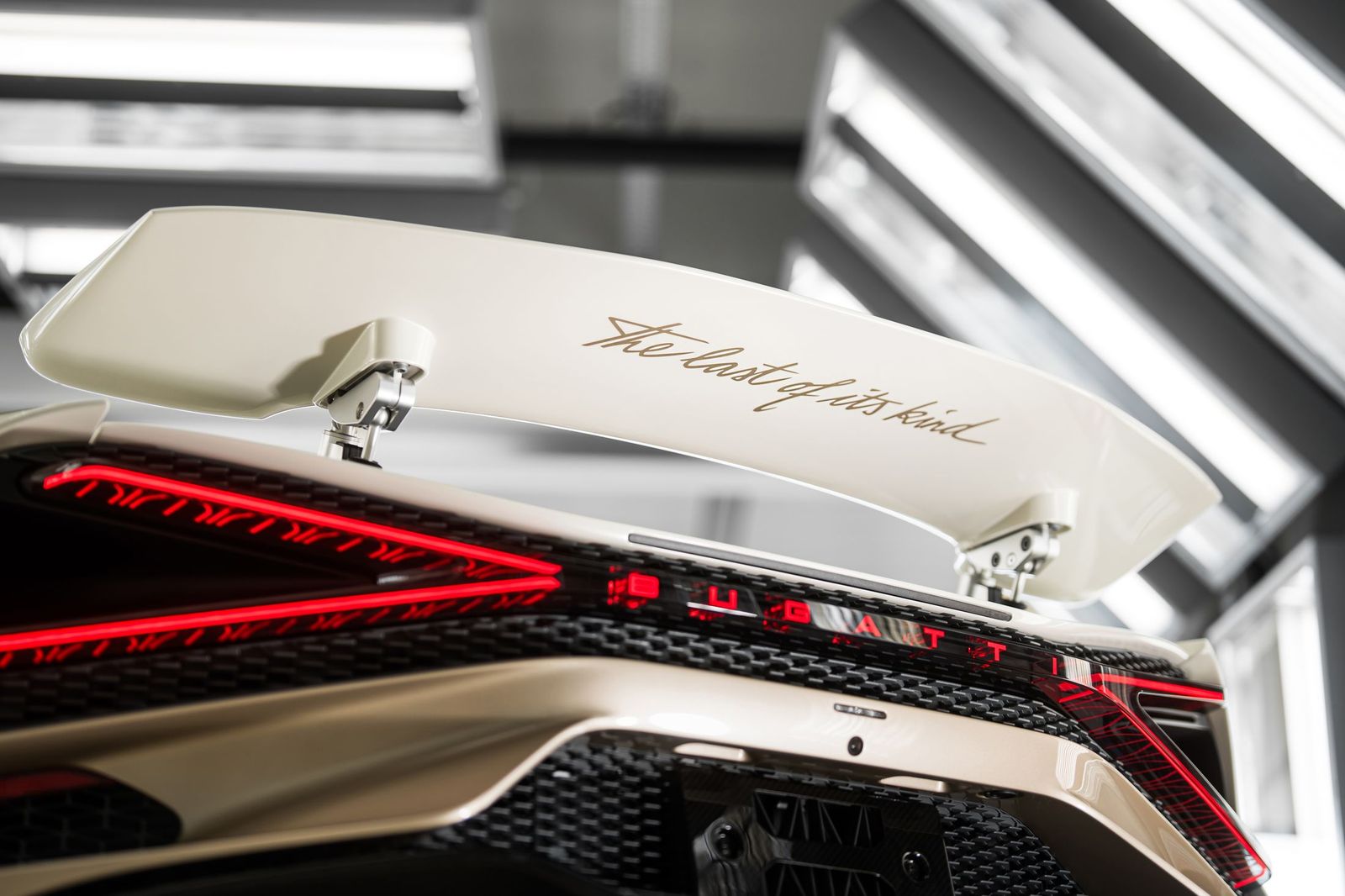
Ninety-nine built. None to follow. · Photo: Bugatti Newsroom
From the House
Mandale Luxury Magazine and Mandale Luxury Marketing share common ownership. Our editorial coverage is produced independently; this note comes from our sister agency.
Eras like this one end once, and the brands, collectors and dealers who position themselves around that ending are the ones the room remembers. Mandale Luxury Marketing builds that positioning for a select portfolio of automotive and luxury clients.