/Food & Drink · Palma de Mallorca
Bazaar Palma: The Fusion Restaurant Turning Mallorca’s Old Town Into a Marketplace of Flavors
On a small square behind Plaça Major, a kitchen sends out pani puri from India, muhammara from Syria and octopus dressed three ways in Mallorcan sobrassada.
Bazaar Palma is where the island remembers it was always a crossroads.
By Mandale Luxury Magazine Editorial Team
Bazaar Palma is a fusion restaurant at Plaça d’en Coll, 3, in Palma de Mallorca’s Old Town, near Plaça Major. It has two spaces: Grand Bazaar, the indoor dining room where reservations are recommended, and Bazaar, the walk-in terrace on the square. The kitchen serves Mediterranean small plates with Indian, Levantine and Asian accents, made to share. Order the octopus with sobrassada, the crispy potato blocks with fresh truffle, the wild mushroom croquettes, the burrata with watermelon, melon and tomato tartare and the honey cake with pistachio.
Every port city keeps a second map, the one drawn by what its ships carried home. Palma’s runs east: to the spice routes, the souks, the long tables of the Levant. Bazaar Palma, a fusion restaurant at Plaça d’en Coll 3 in the Old Town, cooks from that map. The menu calls itself fusion cuisine, the house calls itself a “marketplace of flavours”, and by the second plate the phrase stops sounding like marketing and starts sounding like a description.
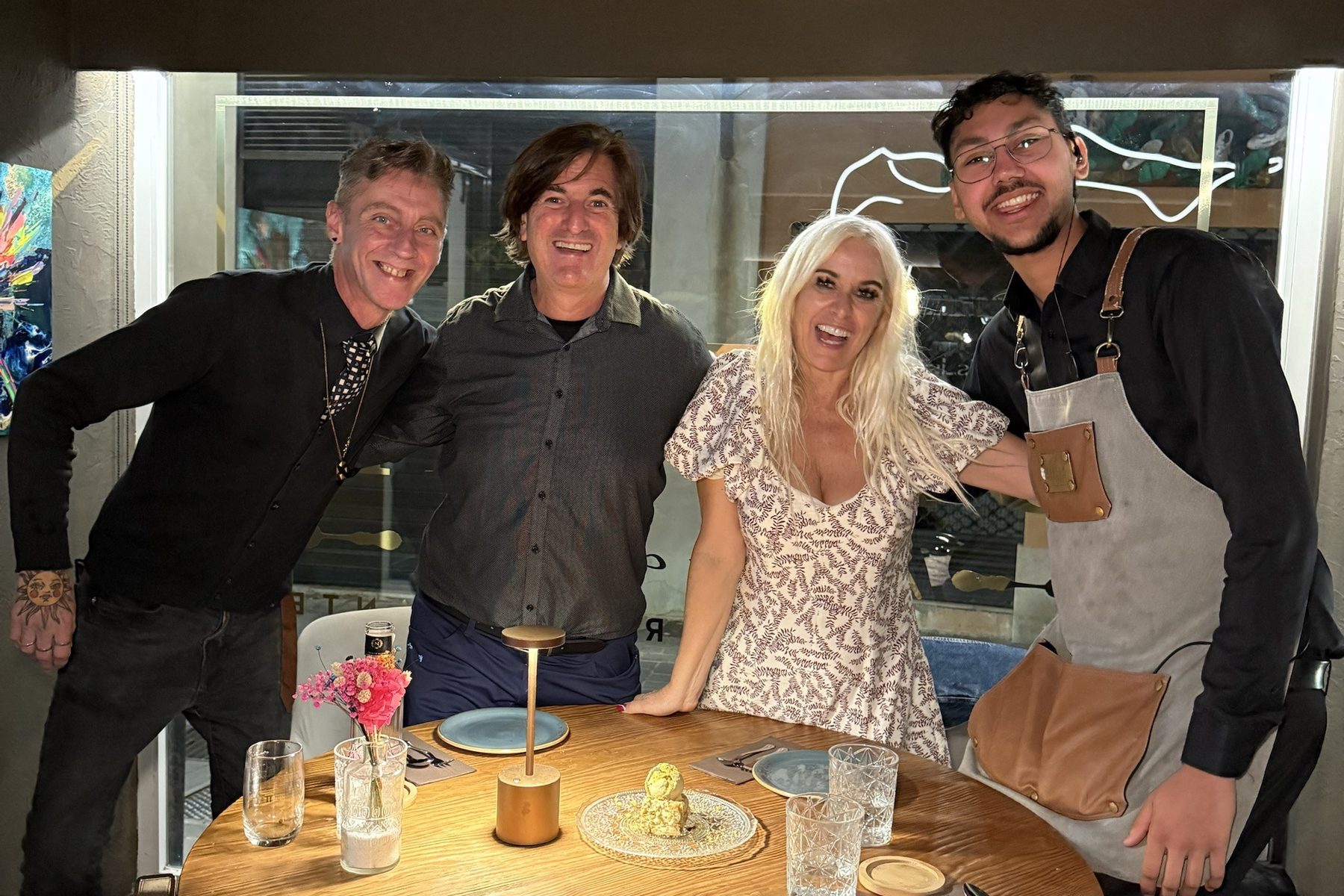
Mandale Luxury Magazine took the round table in the front window this autumn, a party of four, for a menu the kitchen composed for us. What follows is what arrived, how the room works, and who should reserve.
What Is Bazaar Palma?
Bazaar is one address with two moods. Inside is Grand Bazaar: charcoal walls, low light, a dining room the restaurant itself describes as a place of quiet elegance. Outside, on the stone of the square, is Bazaar: terrace tables, tapas and cocktails, no reservations taken. The house says it opens daily from nine in the morning until midnight, with the kitchen running from noon.
The idea behind the name is stated plainly on the restaurant’s own pages. Mallorca has spent centuries as a meeting point of civilizations and sea routes, and the kitchen treats that history as a pantry. Local food writers at Adicta a la Carta credit two brothers, Gleb and Maxim, with the address, and a chef named Michael with the current menu.
What Does the Room Feel Like?
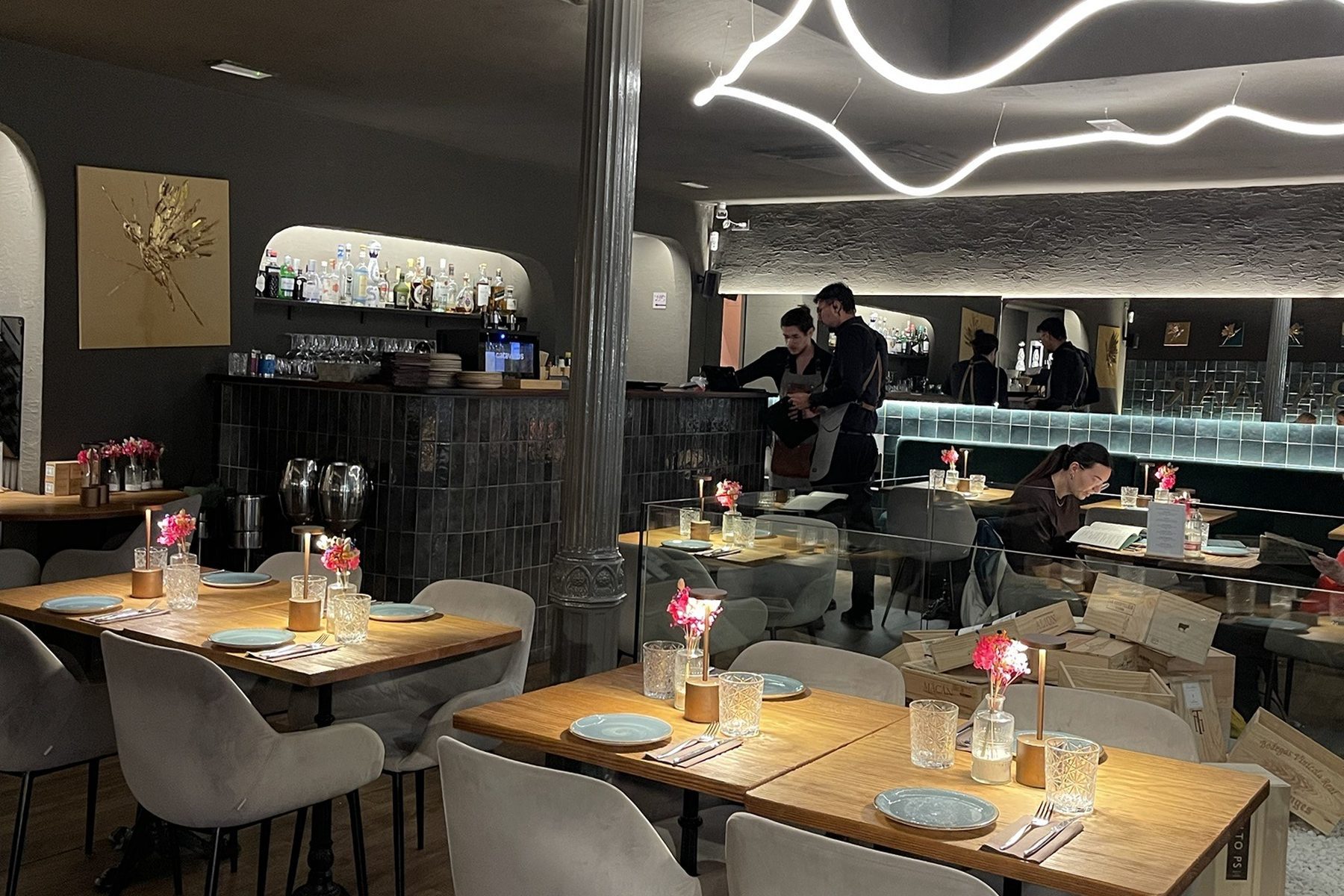
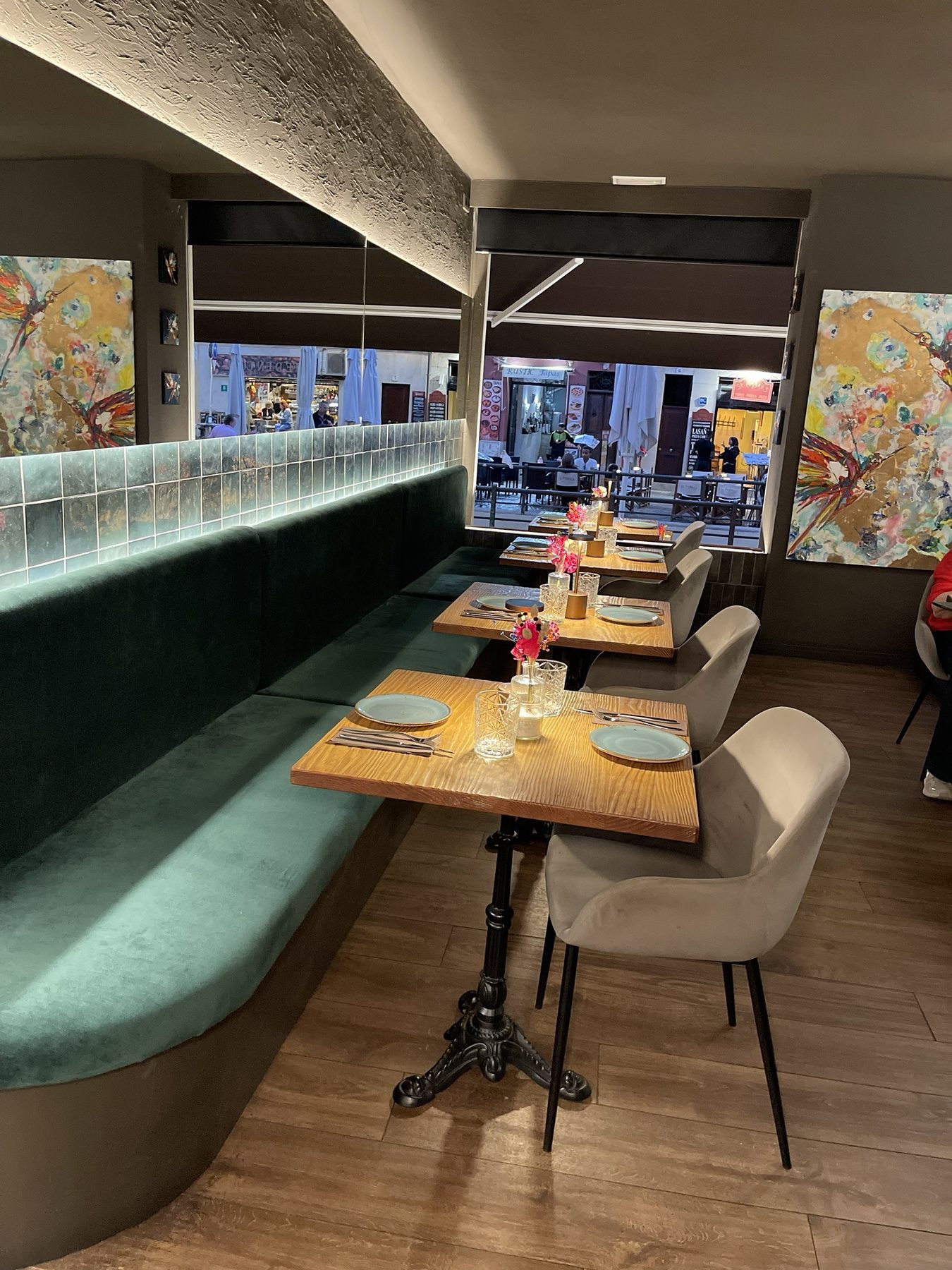
The first thing you read is light. A ribbon of white neon loops across the dark ceiling like a line drawn without lifting the pen. Beneath it, grey velvet armchairs sit at pale pine tables, each with a cordless brass lamp and a small bottle of dried flowers in shocking pink. An emerald velvet banquette runs the length of one wall under glazed sea-green tiles, and canvases of hummingbirds in full color hang against the grey.
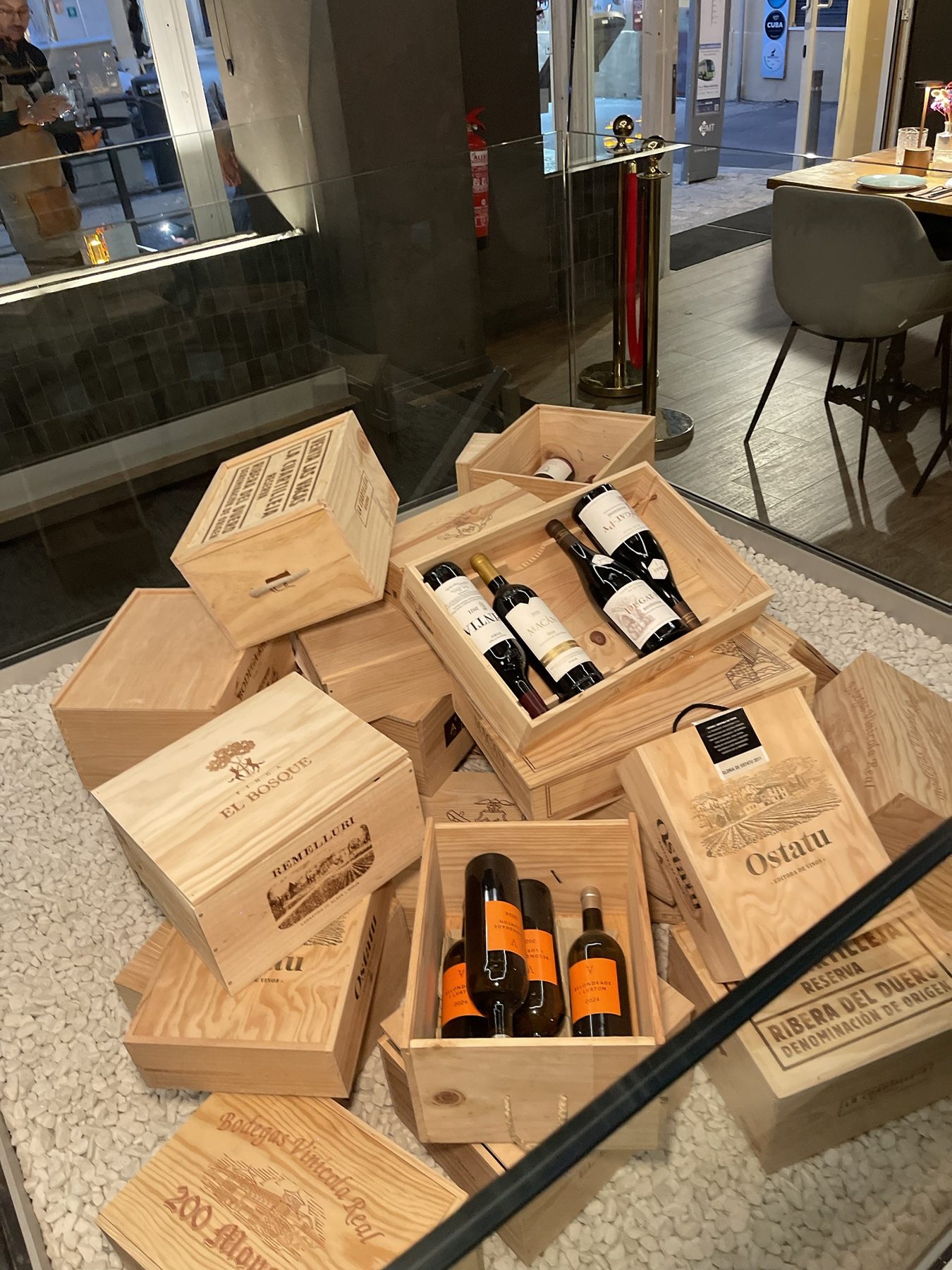
Two details stay with you. A fluted cast-iron column stands in the middle of the floor. And beside the entrance, behind glass, a bed of white pebbles holds a deliberate avalanche of wooden wine cases: Remelluri, Ostatu, Macán, Belondrade y Lurton. It is a cellar staged as an installation, and it tells you how seriously the list is taken before anyone hands you one.
Pani Puri and an Olive With a Secret
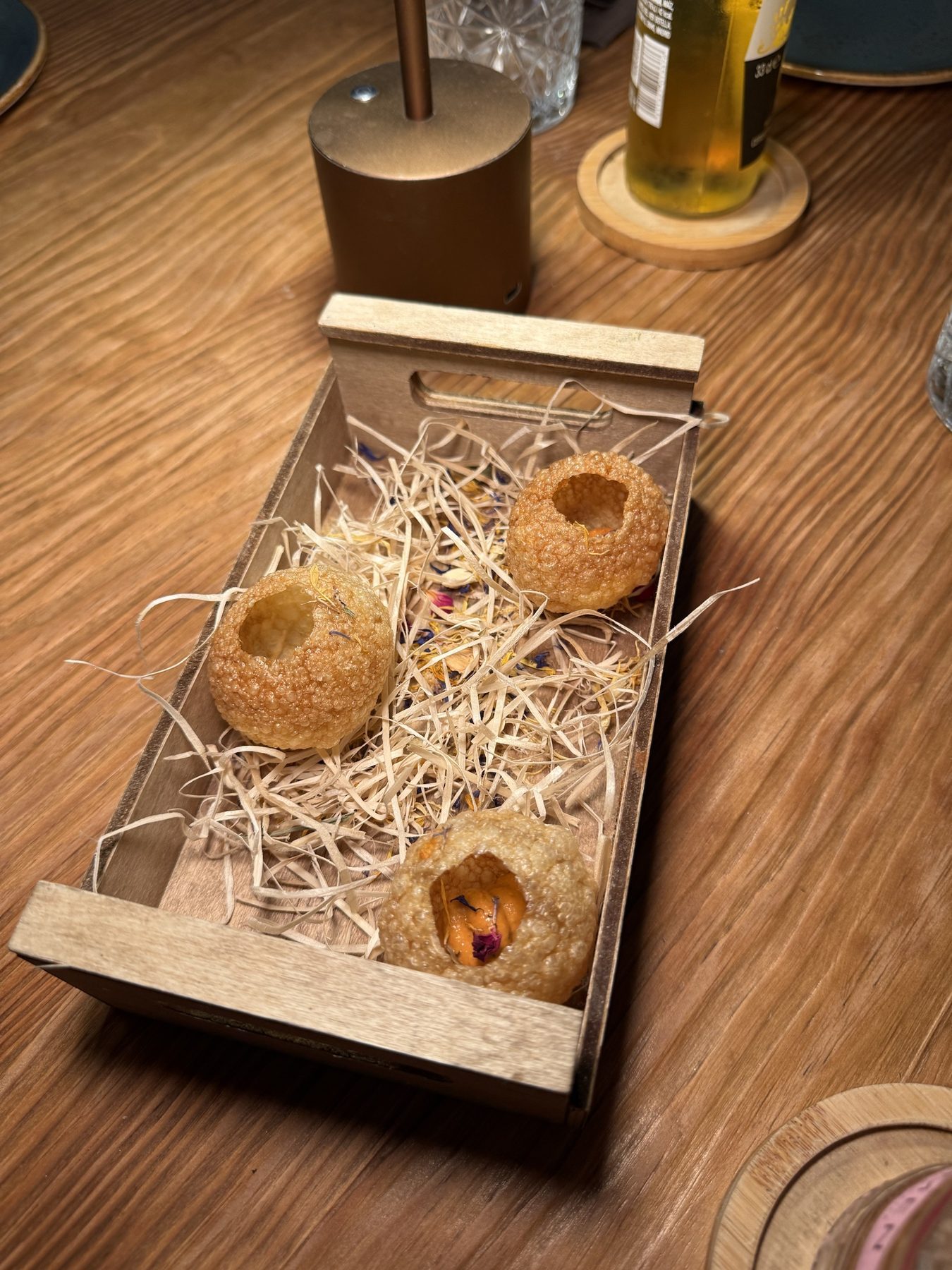
Dinner opened with a gift from the kitchen, delivered in a small wooden crate lined with straw and dried petals. Inside were pani puri, the crisp, hollow shells of Indian street food, filled with muhammara, the roasted pepper sauce of Syrian origin. Our waiter passed on the chef’s one instruction: take it in a single bite, so every flavor lands at once. The table turned it into a contest. Not everyone won.
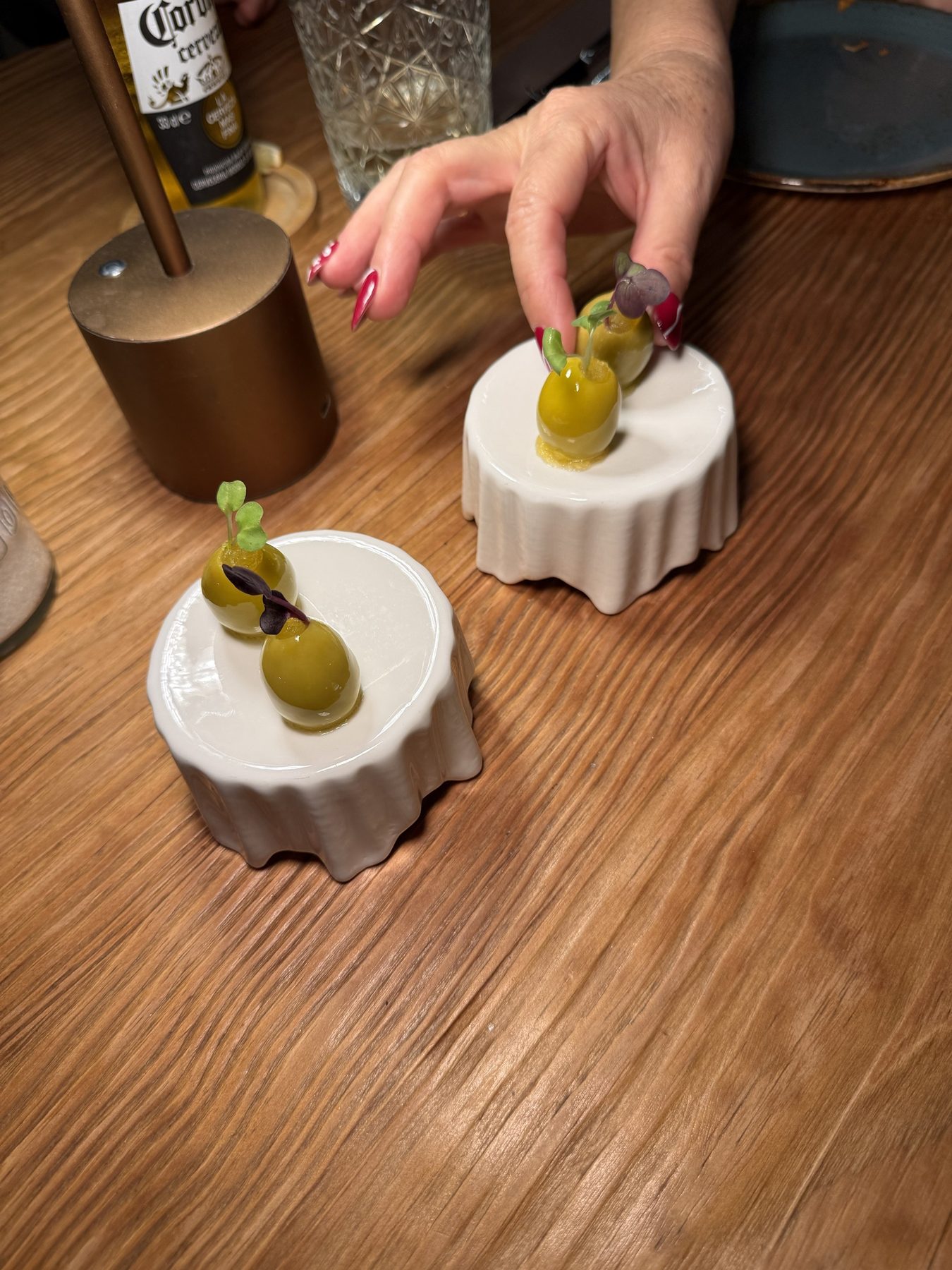
Then came the olives. Two glossy gordal olives per guest, set on a porcelain pedestal shaped like a tiny draped tablecloth and crowned with micro leaves. Each one is filled with a jelly made from a Mallorcan orange liqueur. Brine first, then citrus and a trace of sweetness: the island in one olive.
Bread, Butter and a Flame
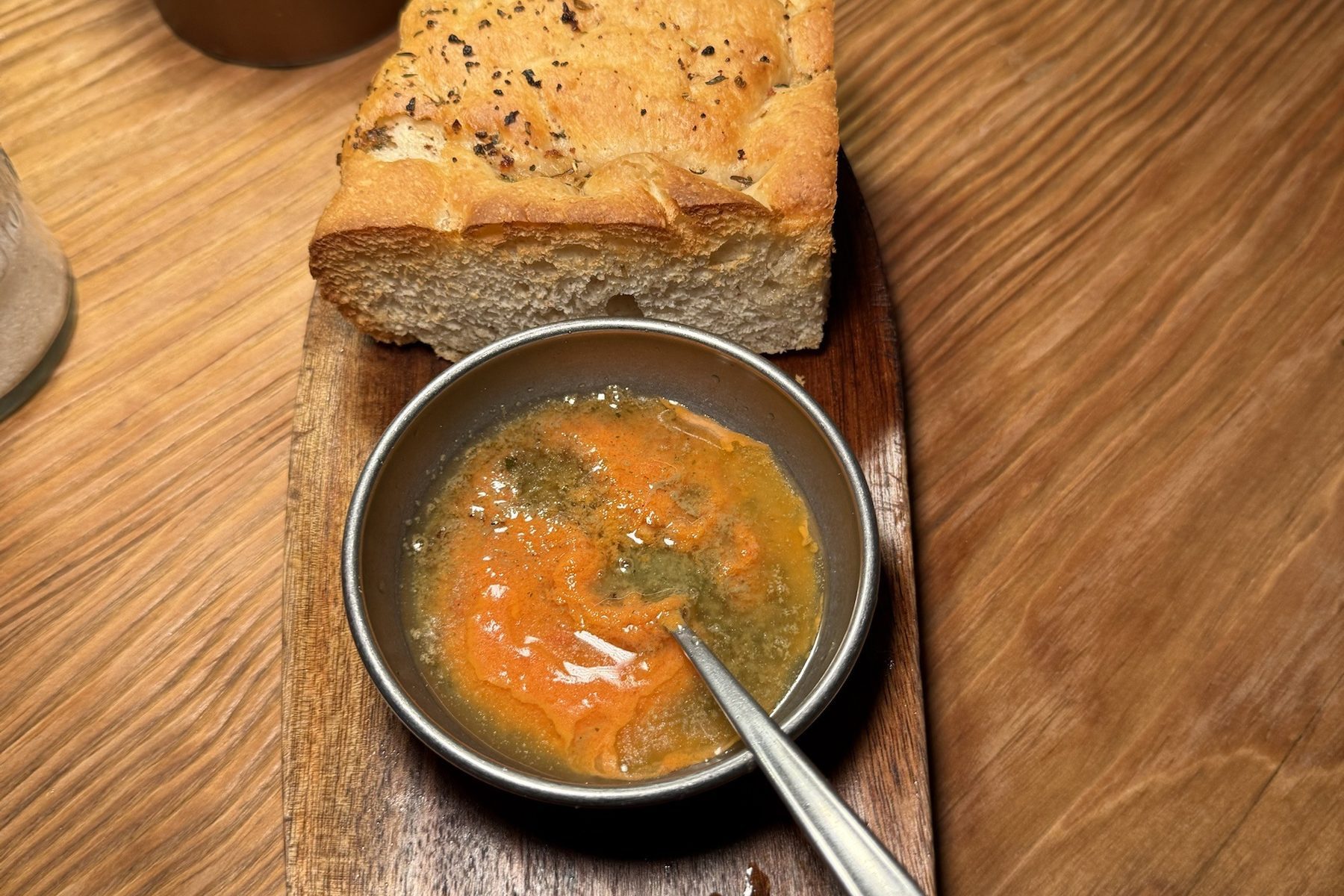
The focaccia arrives on a board with a small steel bowl of tomato and garlic tartare and a measure of anchovy butter. The waiter melts the butter at the table with a blowtorch, then stirs it into the tomato until the bowl turns the color of a sunset. It is theater with a purpose. Warm, salted, faintly marine, the mixture is what the bread was baked for.
The Sharing Course
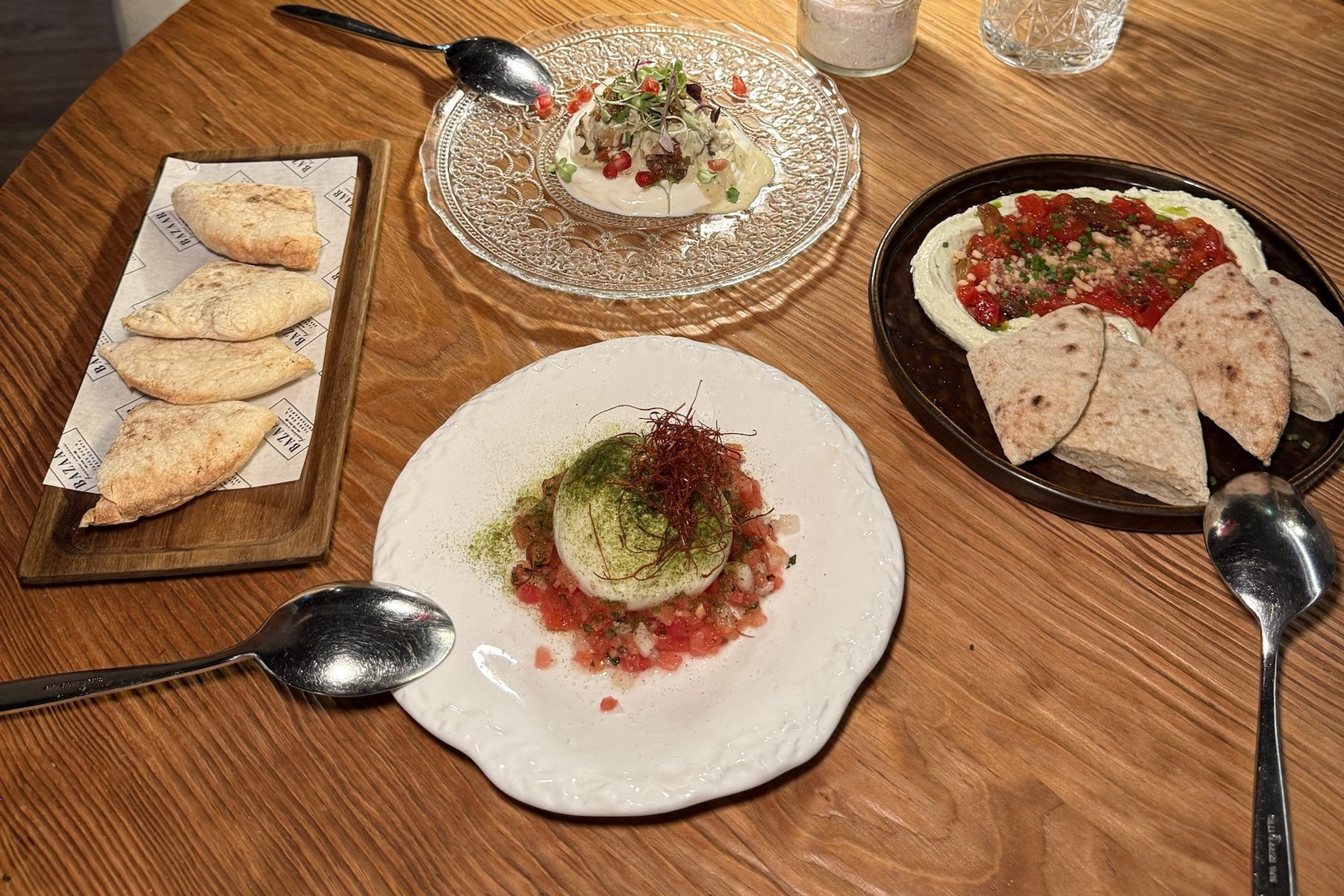
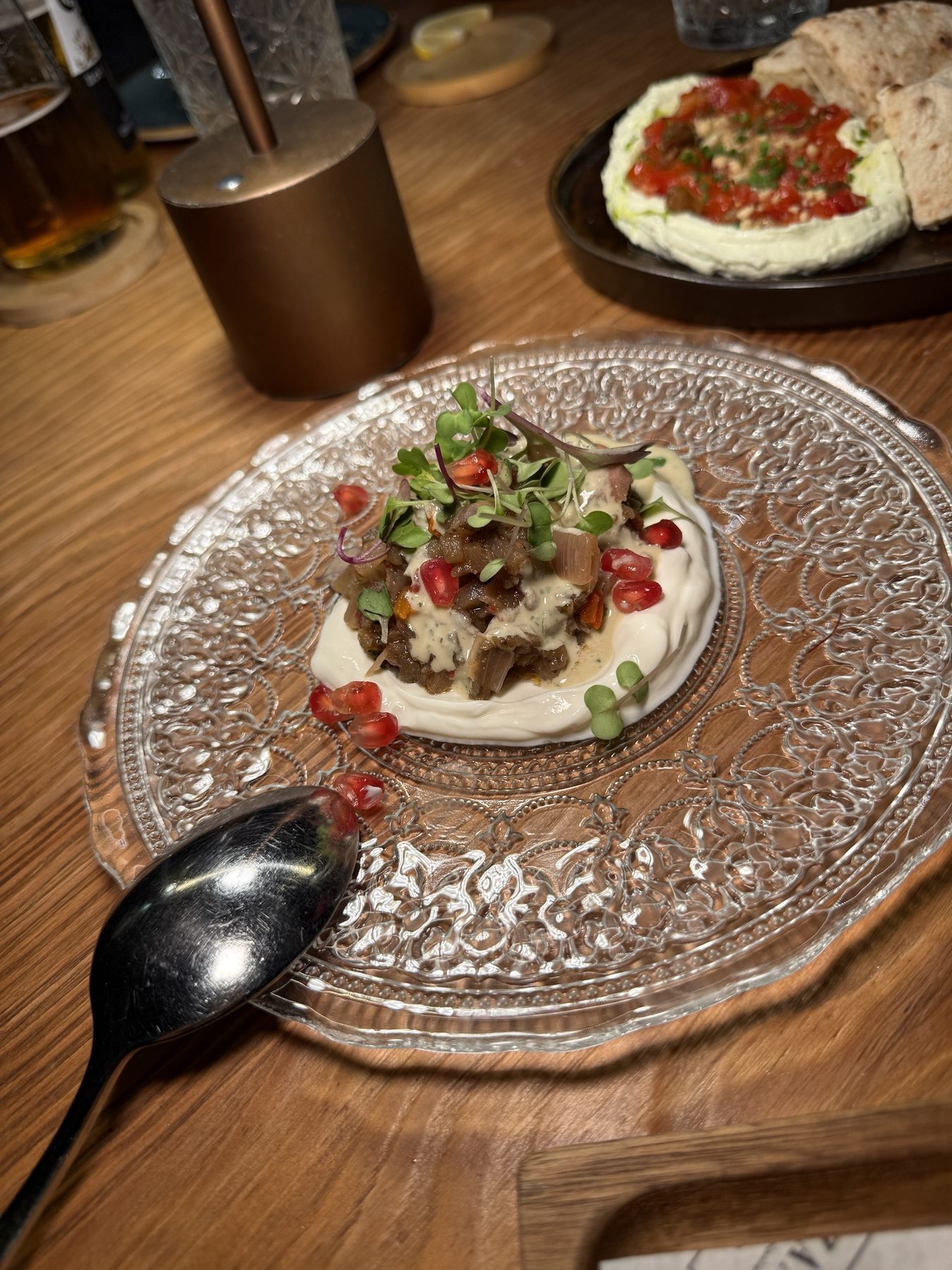
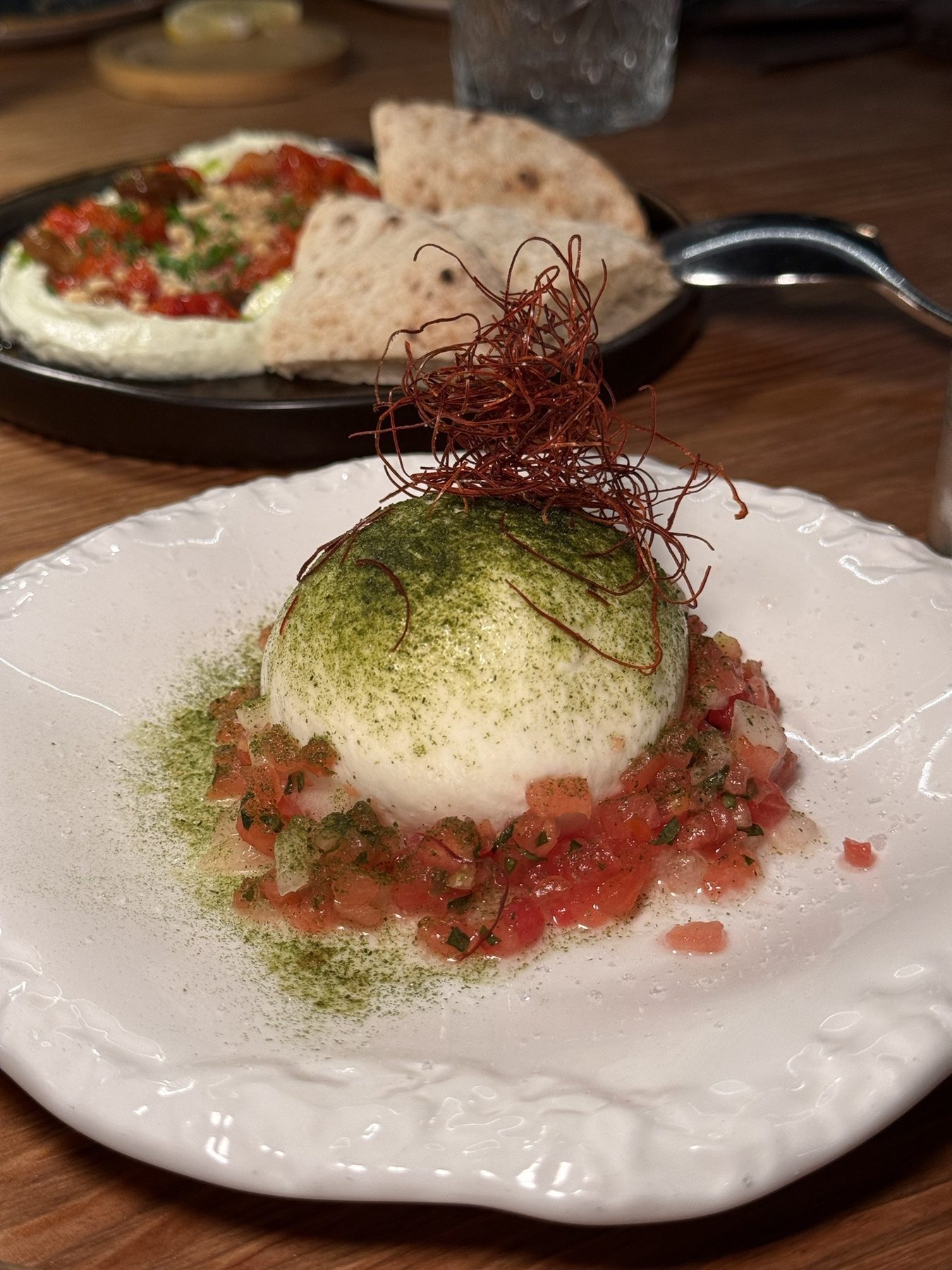
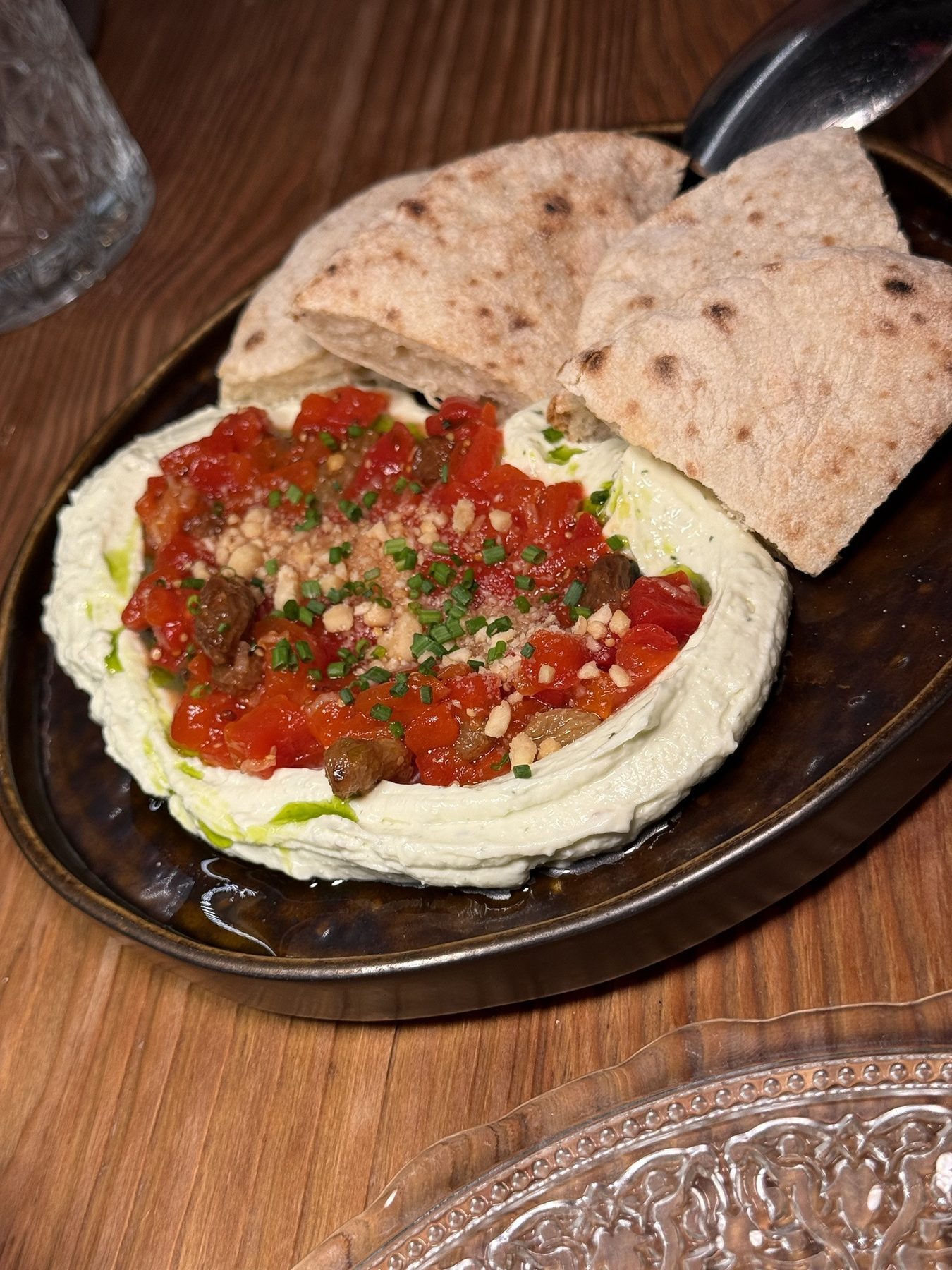
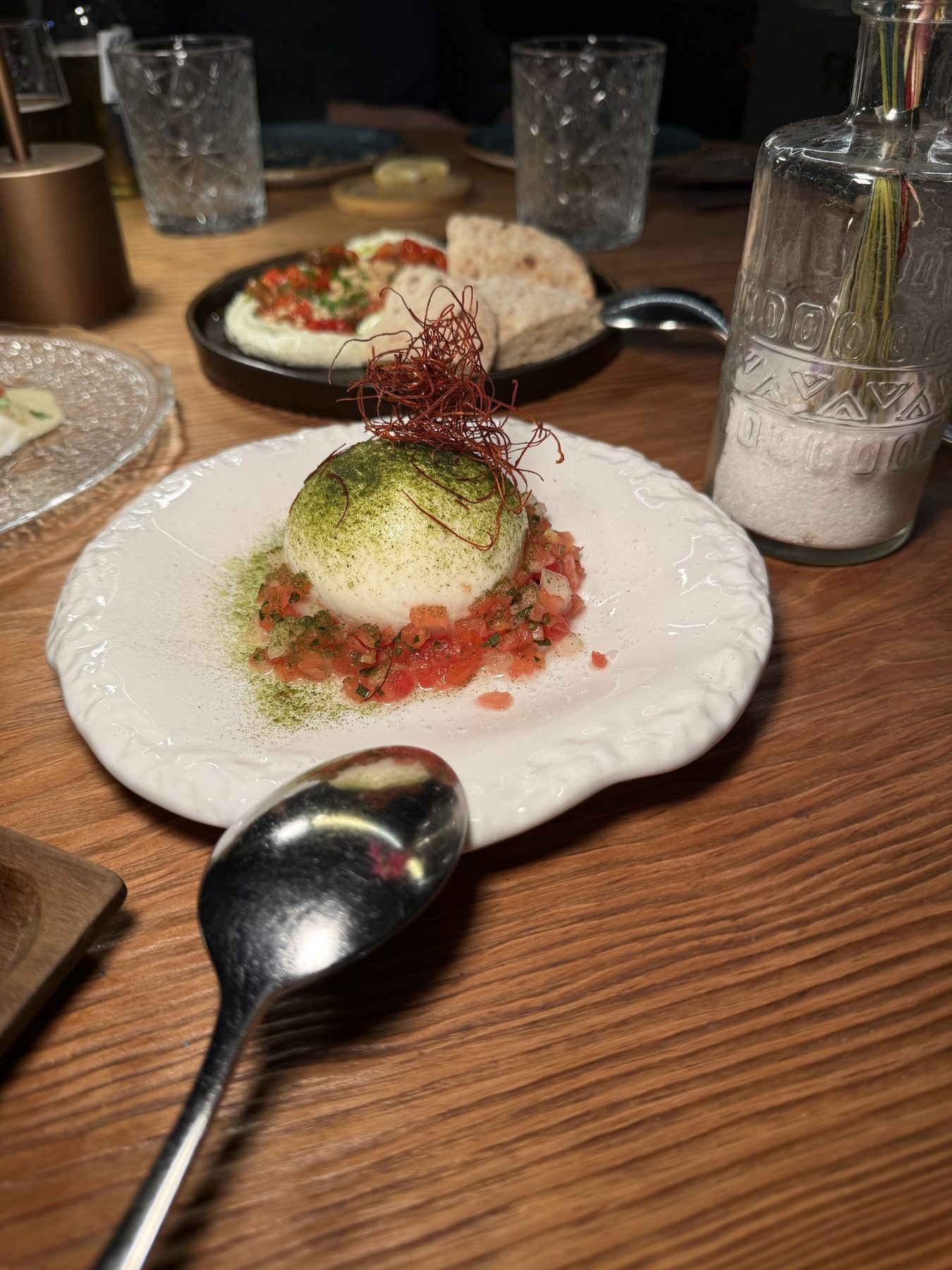
Three plates landed together, with a board of warm pita. The baba ghanoush sits over cool yoghurt on a cut-glass plate, scattered with pomegranate seeds and young leaves. The burrata is the showpiece: a white dome dusted green and crowned with a nest of fine red threads, resting on a tartare of watermelon, melon and tomato that eats like the end of summer. The third plate was a swirl of whipped white cheese under roasted red peppers, raisins, chopped nuts and chives, built for dragging bread through.
Bazaar treats Mallorca’s history as a crossroads of sea routes as a pantry, not a slogan.
Potato, Mushroom and an Octopus That Speaks Mallorcan
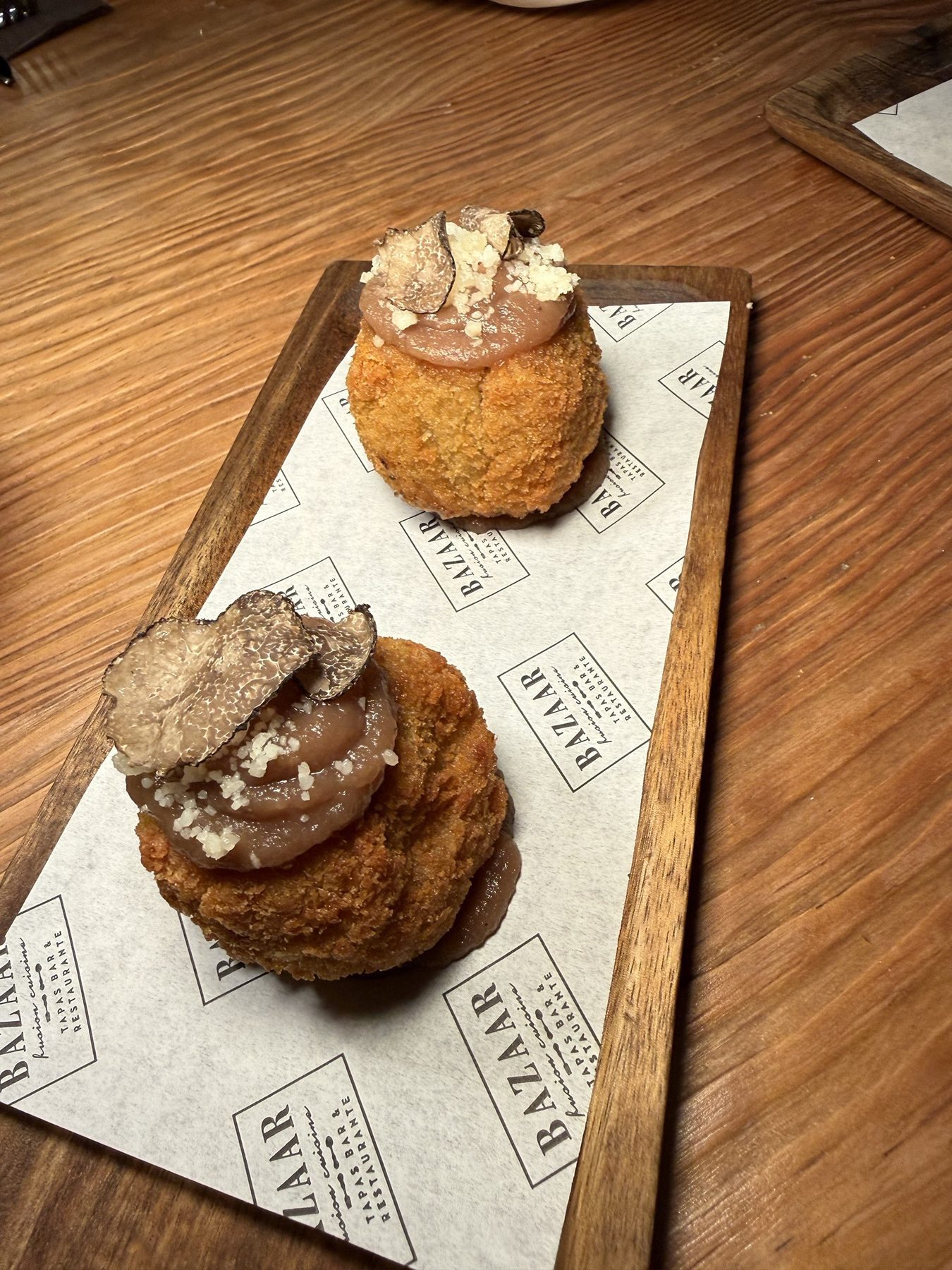
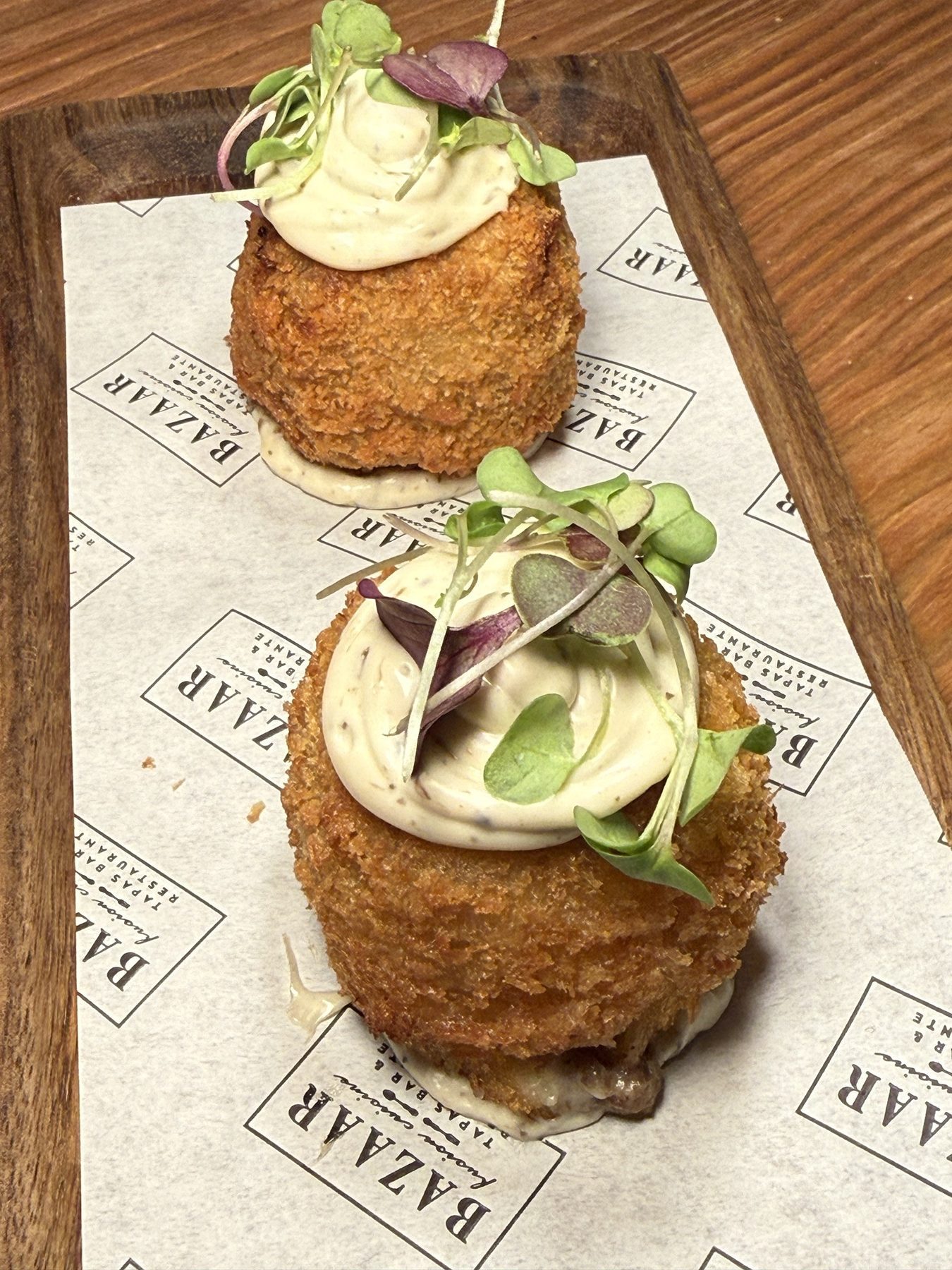
The crispy potato blocks are, in the house’s own words, its version of patatas bravas. Nothing about them resembles the bar classic. Each golden cube is finished with onion jam, Parmesan and shavings of fresh truffle. Beside them, wild mushroom croquettes wear a cap of house truffle aioli and a few micro greens. Both come two to a board and both disappear quickly.
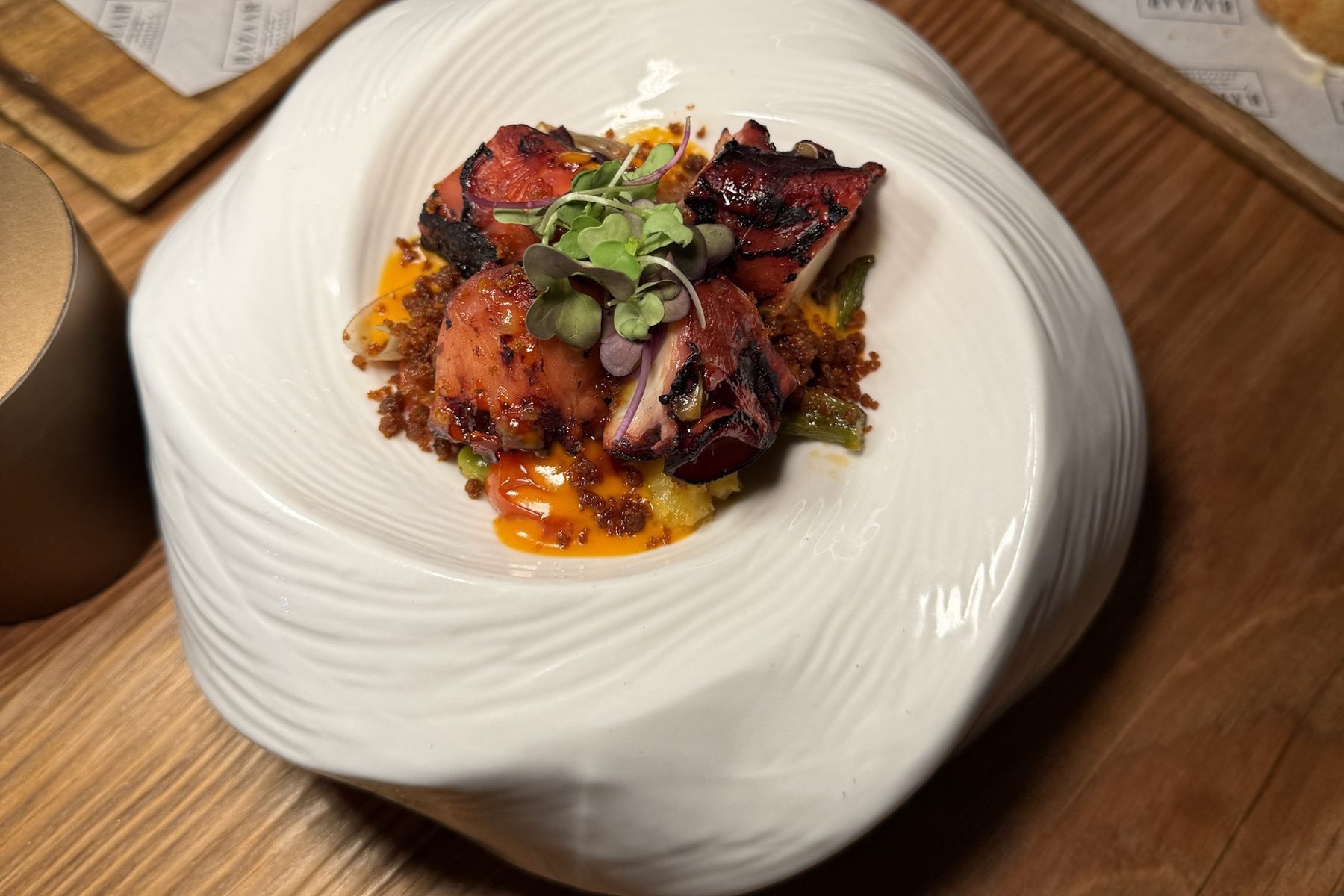
The octopus is the plate that explains the restaurant. The menu calls it “One Octopus Meets Sobrassada”, and our waiter called it octopus in the Mallorcan style. Sobrassada is the island’s classic cured sausage, soft, smoky and brick red, and here it appears three times: as a crumble over the charred octopus, as an aioli at the sides, and as the oil in which the vegetables underneath are fried. Three textures, three flavors, one ingredient. It is the most local dish on a menu that travels constantly, and the best argument for the whole idea.
Honey Cake, With Pistachio
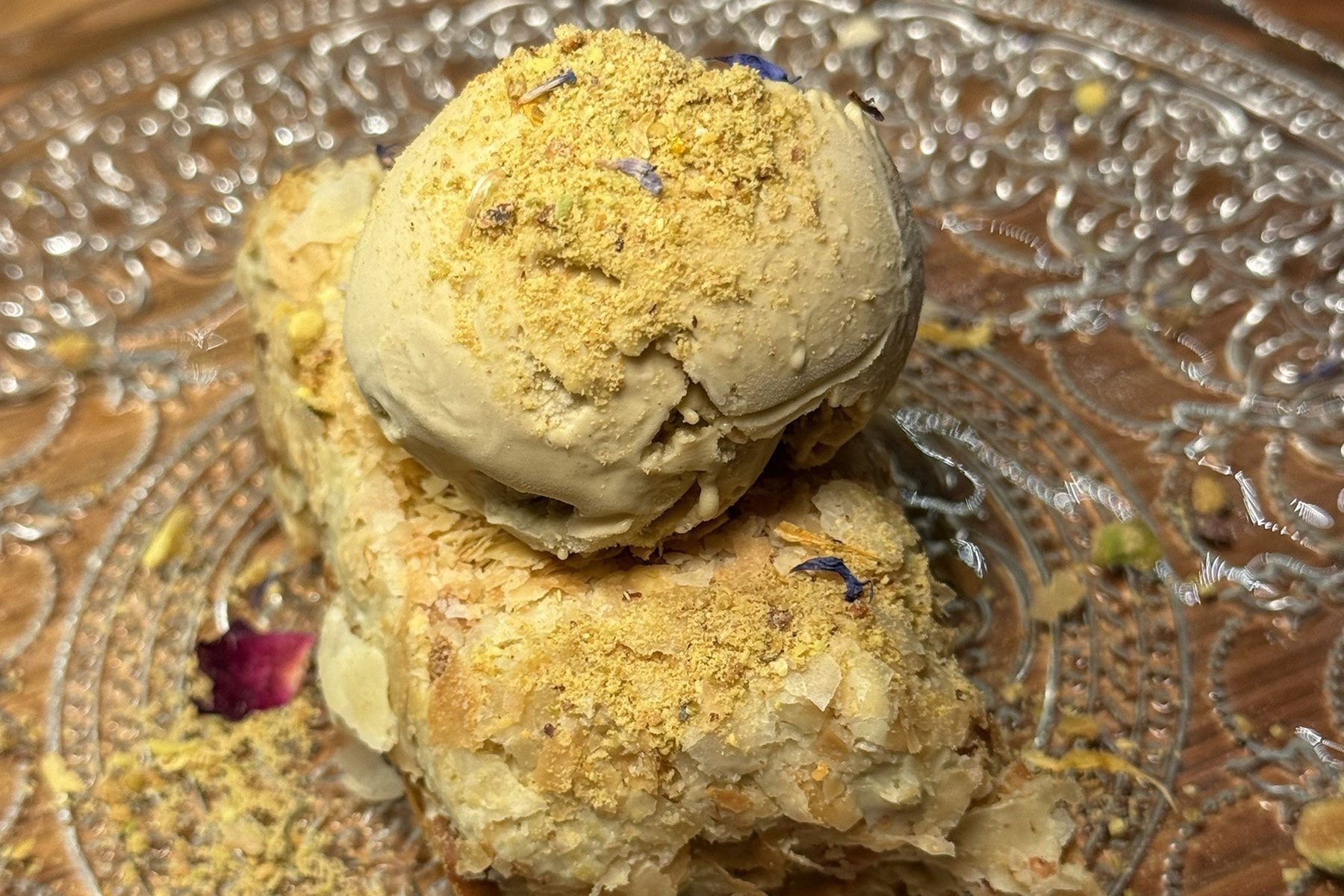
Dessert was the honey cake, introduced at the table as an adaptation of a French classic. Flaky, layered and filled with pistachio cream and honey, it arrives under a scoop of pistachio ice cream on a cut-glass plate dusted with ground pistachio and petals. It is rich without being heavy, and it is the right size to share between two people who claim they have no room.
What Is There to Drink?
The wine list is Spanish at heart, with the crates by the door as a preview. The house list published for this year runs from Verdejo and Albariño to Rioja and Ribera del Duero, includes Gramona Imperial and Laurent-Perrier La Cuvée Rosé for those who want bubbles, and keeps a Mallorcan bottle from Armero i Adrover for anyone drinking the island. The terrace side of the house leans on cocktails and sangria.
How Is the Service?
Every dish at our table arrived with its story: where the pani puri comes from, why the octopus is Mallorcan, what the chef wants you to do with the first bite. That is the difference between a plate of food and a course, and at Bazaar the floor team carries it with warmth and without ceremony. The butter is flamed in front of you, the explanations are generous, and the pace is set by the guests.
“We have three different textures and three different flavors, all from one sausage.”
Grand Bazaar or Bazaar: Which Table Should You Book?
Choose Grand Bazaar, the dining room, for dinner by lamplight, for the full sequence of plates and for a conversation you want to hear. The restaurant recommends reserving. Choose Bazaar, the terrace, for a long lunch in the square, a round of tapas and cocktails, or a spontaneous stop between the shops of the Old Town. It takes no reservations. If you can only do one, book the round table in the front window, under the gold lettering on the glass.
Who Should Go?
Travelers who have already eaten their share of classic Mallorcan cooking and want to see where Palma’s kitchens are heading. Couples who prefer sharing plates to a fixed tasting marathon. Groups of four to six, for whom the menu is naturally designed. Vegetarians, who get their own section of the menu. Anyone staying in the Old Town who wants a serious dinner without leaving the historic center.
Mandale Luxury Magazine dined as a guest of Bazaar. All opinions are our own.
Bazaar · Grand Bazaar, Palma de Mallorca
Fusion is an easy word to distrust. In the wrong hands it means a menu with no address. Bazaar earns the word because it knows exactly where it is standing. The pani puri and the muhammara arrive first, as guests from far away. The olive answers with Mallorcan oranges. And when the table is ready, the octopus comes out dressed three ways in sobrassada, and the island has the last word. For a city that was built by what came in on the tide, that is not fusion for its own sake. It is Palma telling its own story, one small plate at a time. Find the restaurant at bazaar.restaurant.
Bazaar Palma: questions answered
Where is Bazaar in Palma de Mallorca?
Bazaar is at Plaça d’en Coll, 3, 07001 Palma, a small square in the Old Town a short walk from Plaça Major.
What kind of food does Bazaar Palma serve?
Fusion small plates that start in the Mediterranean and travel east: pani puri with muhammara, baba ghanoush over yoghurt, burrata with watermelon, melon and tomato tartare, octopus with Mallorcan sobrassada and a honey cake with pistachio.
Do I need a reservation at Bazaar Palma?
The restaurant recommends reserving for Grand Bazaar, the indoor dining room, through its website. The outdoor Bazaar terrace is for walk-ins only.
What is the difference between Bazaar and Grand Bazaar?
They share one address. Grand Bazaar is the candlelit indoor dining room. Bazaar is the terrace on the square, built for tapas, cocktails and sharing.
What are the signature dishes at Bazaar Palma?
The dishes we would order again are the octopus with sobrassada, the crispy Parmesan potato blocks with fresh truffle and onion jam, the wild mushroom croquettes with truffle aioli, the burrata with watermelon, melon and tomato tartare, and the honey cake with pistachio.
When is Bazaar Palma open?
According to the restaurant’s website, Bazaar opens every day from 09:00 to 24:00, with the kitchen serving from 12:00 until midnight.
The Mandale Newsletter
Hosted stays, private addresses and the people behind them, every week.